

Google, SpaceX, and Blue Origin Plan To Put AI in Space. Will It Produce Skynet or Untold Economic Abundance?
NIMBY opposition is forcing some Big Tech companies to consider locating their data centers in space.
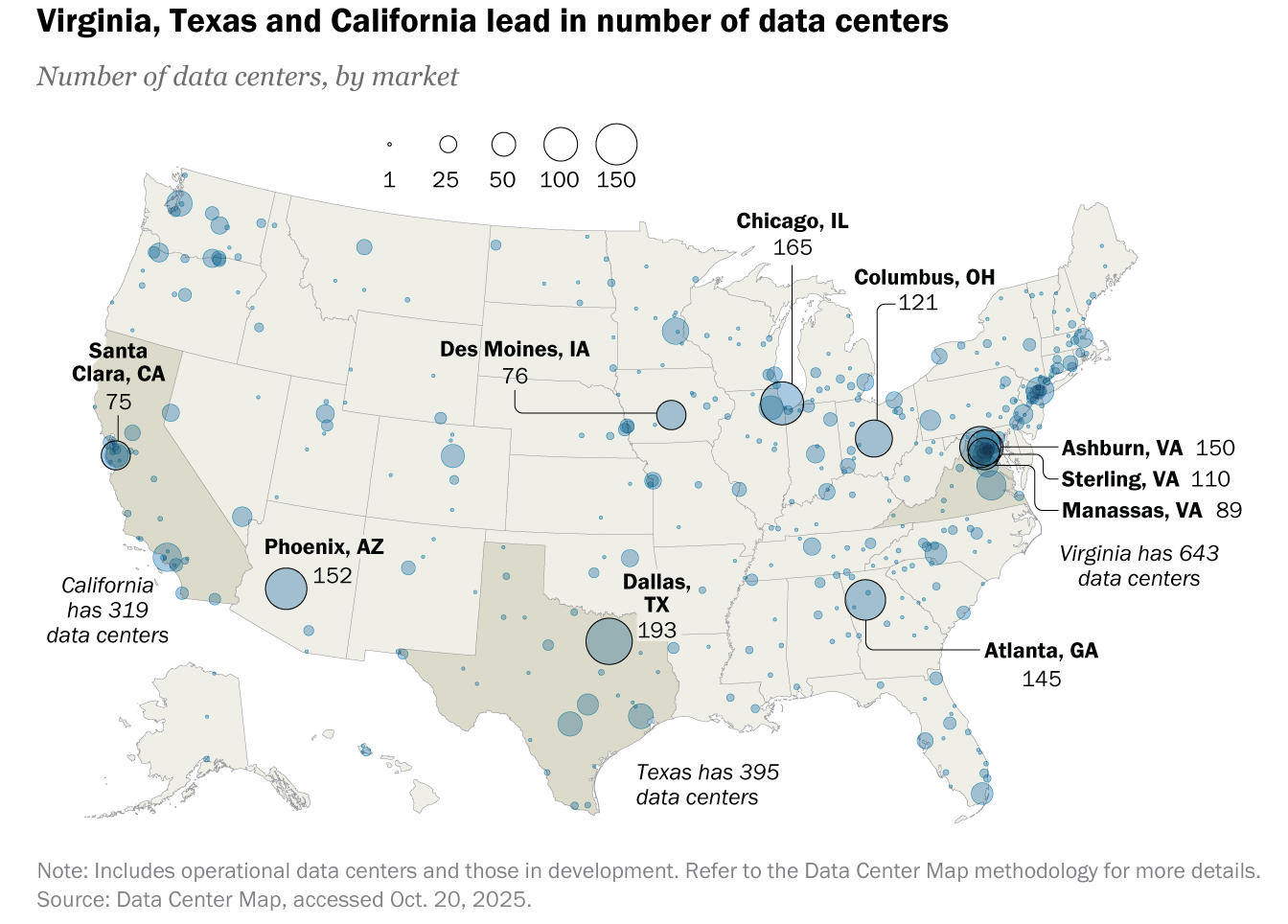
The growth of the U.S. economy is being fueled by the hectic quest to build out massive data centers to run increasingly popular generative AI models like ChatGPT, Claude, Grok, and Gemini. The power-hungry AI data centers are driving up electricity costs in some regions and sparking local "not-in-my-backyard" opposition.
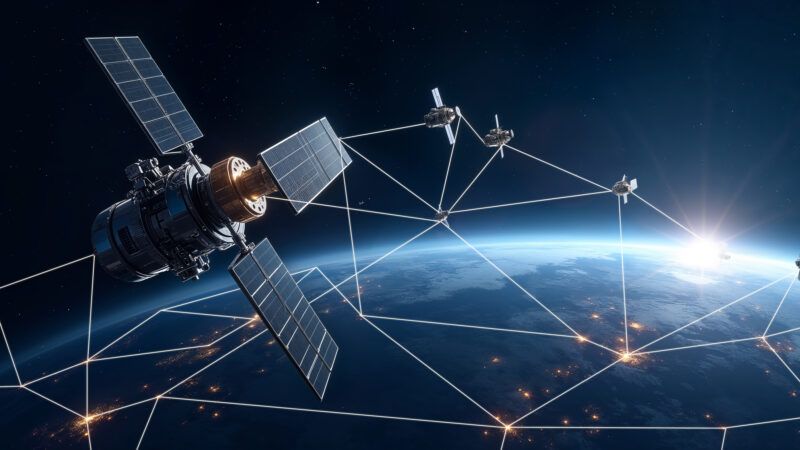
Consequently, some Big Tech players are looking to locate their data centers in space. They think that low earth orbit could mitigate the problem of pesky, annoyed neighbors and offer perpetual sunshine to power constellations of AI satellites.
In November, Google unveiled Project Suncatcher, "a research moonshot to scale machine learning compute in space." A team of Google researchers is exploring how to deploy and fly fleets of solar-powered AI satellites that would beam down data from orbit.
Also in November, SpaceX CEO Elon Musk posted on X that the company's new Starship rocket "should be able to deliver around 300 [gigawatts] GW per year of solar-powered AI satellites to orbit, maybe 500 GW." In 2023, total U.S. utility-scale electric power generation capacity is just under 1,200 GW, according to the Energy Information Administration. The Wall Street Journal reports that Musk's space AI project underpins his hopes for an initial public offering of SpaceX that would value the rocket maker at $800 billion, although some analysts question that plan and think that the valuation may be too high.
In October, Jeff Bezos, the Amazon founder and owner of the Blue Origin spaceflight company, predicted that gigawatt-scale data centers would be built in space within the next 10 to 20 years. Pointing to the advantages of 24/7 solar power in space, Bezos said, "We will be able to beat the cost of terrestrial data centers in space in the next couple of decades."
The Google team thinks that the technical challenges posed by the harsh environment of space can be overcome. The main limitation for near-term deployment is launch costs; the price for getting a kilogram into low earth orbit using SpaceX's Falcon Heavy rocket is around $1,400. However, the Google team projects that deployment costs could drop to less than $200 per kilogram in low earth orbit by the mid-2030s. At this rate, the costs per unit of power in space could be approximately comparable to terrestrial power costs.
Musk apparently expects that SpaceX's Starship will be able to deliver payloads for between $10 and $20 per kilogram. This would clearly fit the Suncatcher benchmark, but some analysts argue that Starship, as currently designed, will fail, which means that launch prices will not fall as low as Musk promises.
Successfully deploying space-based AI could result in creating unprecedented levels of economic growth and human flourishing. On the other hand, have Google, SpaceX, and Blue Origin never heard of Skynet? In the Terminator movie franchise, Skynet is a space-based artificial superintelligence that decides to destroy humanity when humans try to turn it off. Tellingly, Skynet was deployed in 2029.




