

San Francisco Wants To Charge Drivers To Enter Downtown
A congestion pricing proposal would have drivers pay $6.50 every time they enter a downtown zone.
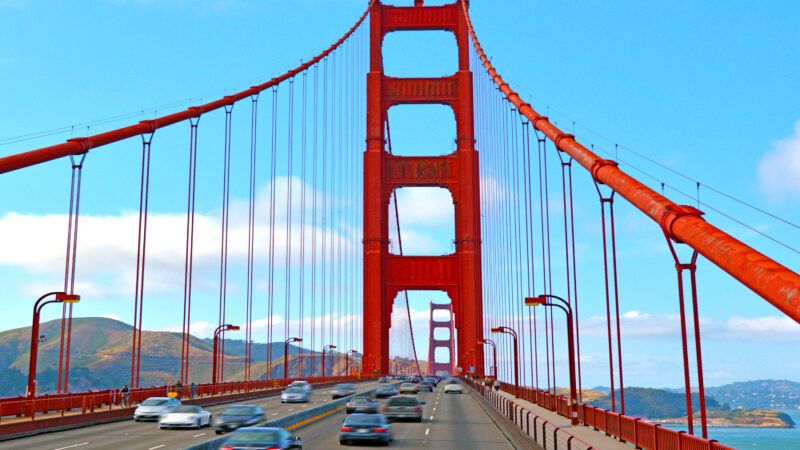
The San Francisco County Transportation Authority (SFCTA) is considering implementing congestion pricing in the city's downtown area to solve some of the city's traffic issues. The main aims of the project are to "get traffic moving and achieve goals around street safety, clean air, and equity."
Congestion pricing is a broad term for a system that charges people based on the use of a roadway. The specific type under consideration for San Francisco is "cordon pricing," which charges people a flat rate every time they enter or exit a certain zone of the city.
According to the San Francisco Chronicle, the SFCTA is currently considering two possible zones for cordon pricing: a small one around the Financial District, Chinatown, Tenderloin, and South of Market neighborhoods, and a larger zone that would include North Beach, Russian Hill, Fisherman's Wharf, and Mission Bay to the south.
Under the current proposal, authorities would only charge the congestion prices during rush hours in the morning and the evening. The plan would also include a full exemption for the lowest-income drivers, and possible exemptions for people with disabilities and those who live inside the zone.
Everyone making $100,000 a year or more would pay $6.50 to enter the city center.
SFCTA claims that most of the people subject to the new fees would be higher-income drivers (making $100,000 a year or more) who commute into office buildings in the city.
Even so, not everyone is enthusiastic about the idea of making it more expensive for people to work or patronize businesses in the heart of downtown San Francisco, especially during a pandemic. It would amount to just one more fee on top of a load of taxes that California residents already pay to live and work in the state.
"CONGESTION PRICING IN SF?" said San Francisco political commentator Richie Greenberg on Twitter, "Nuts, ridiculous, anti-business, anti-tourist, anti-resident. What congestion? SF Financial District is still reeling from pandemic emptying out- it's practically a ghost town STILL, and hitting people in the wallet ISN'T rational at all."
Baruch Feigenbaum of Reason Foundation said "it's complicated" whether congestion pricing in San Francisco would actually reduce traffic.
"There's a concept in transportation called 'induced demand,' which means that if you take a vehicle off the roadway, another vehicle will use it because driving would be preferred over transit for most people," he says. If there is already pent-up demand for driving in San Francisco, then even if some people stop driving because of the congestion prices, others will fill their place when they see that there is less traffic.
Congestion pricing is supported by some libertarians as an alternative, market-based solution to the transportation issues posed by traffic congestion. It's a way to disincentivize driving that is relatively noninvasive and still allows individual drivers to make decisions themselves. And there is some evidence that it has worked quite well internationally.
"Congestion pricing of entire freeway networks has been successfully used to relieve congestion in several cities around the world," writes Randal O'Toole in a Cato Institute policy paper. "In 2004 Santiago de Chile introduced variable tolling of major highways in the city, and this proved to greatly reduce travel times and improve highway safety. Norway instituted congestion pricing on major highways in Bergen, Oslo, and Trondheim, which has both helped finance those roads and relieved congestion. Several highways in France use congestion pricing of all lanes, which has significantly reduced traffic delay."
"Economists do agree that highway congestion should be solved by pricing. Beyond that primary insight, however, there is much disagreement," noted Canadian economics professor Robin Lindsey in an overview of 100 years of economic writing on the topic.
Feigenbaum stresses that the desirability of congestion pricing "depends on how they're using the revenue."
He points to New York City's proposed cordon pricing system, where a majority of the funds will go to the very public transportation systems that the drivers are avoiding. Feigenbaum wrote on the plan, along with intern Joe Hillman, for Reason Foundation. They consider this a drawback because it means that a large part of the benefits paid for by congestion pricing in NYC will go to wealthier people near large public transit hubs and not the people who pay the congestion fees.
"Over the long-term," they say, "the congestion pricing revenue is likely to benefit transit commuters, especially those who live near a subway station in the city or a train station on Long Island, Staten Island or in Connecticut."
As of right now, the SFCTA study on how to implement the program is ongoing. The agency says that preparing a congesting pricing program would take at least five years. What happens between now and then could determine whether this is a good solution to traffic or another way for California to further inconvenience its citizens and waste their money.
This article has been updated to more accurately reflect the details of San Francisco's cordon pricing plan.




