

Reason.com - Free Minds and Free Markets
Reason logo Reason logo
  • Latest
  • Magazine
    • Current Issue
    • Archives
    • Subscribe
    • Crossword
  • Video
    • Reason TV
    • The Reason Roundtable
    • Just Asking Questions
    • Free Media
    • The Reason Interview
  • Podcasts
    • All Shows
    • The Reason Roundtable
    • The Reason Interview With Nick Gillespie
    • The Soho Forum Debates
    • Just Asking Questions
  • Volokh
  • Newsletters
  • Donate
    • Donate Online
    • Donate Crypto
    • Ways To Give To Reason Foundation
    • Torchbearer Society
    • Planned Giving
  • Subscribe
    • Reason Plus Subscription
    • Gift Subscriptions
    • Print Subscription
    • Subscriber Support

Login Form

Create new account
Forgot password
Reason logo

Reason's Annual Webathon is underway! Donate today to see your name here.

Reason is supported by:
Robert Glaser

Donate

Lifestyle

City Mice Go Country

A life of built-in social distancing looks better than ever. 
J.D. Tuccille | From the August/September 2020 issue

Share on FacebookShare on XShare on RedditShare by emailPrint friendly versionCopy page URL Add Reason to Google
Media Contact & Reprint Requests
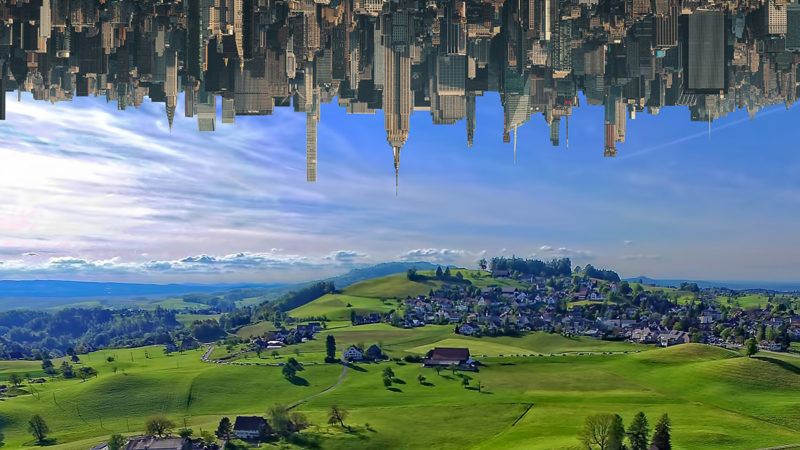
topicslifestyle | Joanna Andreasson. Source images: ricardo-gomez, brian-anupol/Unsplash
(Joanna Andreasson. Source images: ricardo-gomez, brian-anupol/Unsplash)

Cities have a lot of pluses, including their tendency to be dynamic, creative, and vibrant. They're also crowded. Dynamism, creativity, and vibrancy are partially a result of those crowds, but that density became a source of anxiety when COVID-19 started spreading. Those anxieties have been amplified by the protests, looting, and urban unrest that began in late May. Their legacy may reset the long-running city vs. country feud as Americans reconsider the allure of open spaces where social distancing is a regular part of life.

"For years, urban planners have been singing the praises of population density," Steven Greenhut wrote in a mid-pandemic Orange County Register column. "Yet after the dust clears from the lockdowns, more Californians will likely be tempted to rethink the high-density status quo. Obviously, diseases spread more quickly where people live cheek by jowl."

Across the continent, urbanist Joel Kotkin agreed. "What's particularly ominous for New York's future is that the best way to slow the spread of the virus—social distancing—works against the very things that make Gotham so appealing," he noted in Tablet magazine. "The very pleasures and crowded realities of urban life, such as mass transit, are particularly susceptible to pandemics."

While it's early, The New York Times reports evidence of residents "making moves to leave the city, not for short-term stays in weekend houses, as was common when the pandemic first arrived, but more permanently."

That adds to a preexisting exodus, with Chicago, Los Angeles, and New York—America's largest metro areas—losing population in recent years. The high cost of living had already tarnished urban life. Health fears and lockdowns are an extra push toward the exit.

Depending on where they end up, urban refugees may find the problems, such as opiate addiction and economic distress, that the media tell them plague less-dense areas. But new residents will also discover that many of the ills are overstated. Among the oddities of American life is that rural counties are perpetually tagged as underperforming because once they find success, they lose their "country" status.

"Official definitions are regularly updated in such a way that rural counties are continually losing their most successful places to urbanization," The Washington Post noted last year. "When a rural county grows, it transmutes into an urban one."

And there are always opportunities for growth. While the entrepreneurship gap has closed, the Small Business Administration reported in 2017 that "the rate of self-employment has remained higher in rural areas than in other areas."

That doesn't mean that urban refugees must necessarily hang out their own shingles, though. The fears driving people to reconsider the attractions of urban life are also—finally!—normalizing the use of the internet for telecommuting, not just for yelling at people on Twitter.

"Our best estimate is that 25–30 percent of the workforce will be working from home multiple days a week by the end of 2021," predicts Kate Lister, president of Global Workplace Analytics.

For many people, then, exchanging a high-rise for a house doesn't necessarily require changing jobs. But a move does mean a change in culture. Life under an open sky is inherently different from life in a city that never sleeps. Rural dwellers tend to rise and turn in earlier than urbanites, they generally enjoy different hobbies, they often have different values, and—important in a country that turns everything into a political death match—they vote differently.

In recent years, country dwellers have turned overwhelmingly Republican while city residents have become strongly Democratic. After votes were counted in 2019, CityLab reported that "election results show how America is continuing to polarize along an urban-rural continuum." While ex-urbanites may carry their politics with them to their new digs, the reverse could also be true. "The urban-rural political divide…is rooted in geography and not merely differences in the type of people living in these places," researchers at Washington University in St. Louis announced earlier this year.

Rural-dwelling telecommuters, with colleagues scattered over the map, may find a way to bridge the gap. Choosing a new way of life and meeting the neighbors while maintaining contact with old friends could break down the sense of us vs. them and teach more of us to live and let live.

One way or another, we'll likely find out. A post-pandemic, post-riot world is one in which less-dense living looks a lot more attractive.

The Rattler is a weekly newsletter from J.D. Tuccille. If you care about government overreach and tangible threats to everyday liberty, this is for you.

This field is for validation purposes and should be left unchanged.

NEXT: Upload

J.D. Tuccille is a contributing editor at Reason.

LifestyleCoronavirusUrbanRuralPopulationCulturePolitics
Share on FacebookShare on XShare on RedditShare by emailPrint friendly versionCopy page URL Add Reason to Google
Media Contact & Reprint Requests

Show Comments (171)

Webathon 2025: Dec. 2 - Dec. 9 Thanks to 1052 donors, we've reached $628,681 of our $400,000 $600,000 goal!

Reason Webathon 2023

Donate Now

Latest

Trump Is Using the 'Misinformation' Censorship Playbook Republicans Attacked Biden for

David Inserra | 12.9.2025 11:25 AM

If FIFA Doesn't Want People To Think It's Corrupt, It Should Stop Doing Things That Look Corrupt

Jason Russell | 12.9.2025 10:45 AM

Ignore the Entertainment Companies

Liz Wolfe | 12.9.2025 9:31 AM

Reason Is Independent. Help Us Stay Loud. Donate!

Katherine Mangu-Ward | 12.9.2025 8:00 AM

SCOTUS Sounds Ready To Let Trump Fire FTC Commissioner Rebecca Slaughter

Damon Root | 12.9.2025 7:00 AM

Recommended

  • About
  • Browse Topics
  • Events
  • Staff
  • Jobs
  • Donate
  • Advertise
  • Subscribe
  • Contact
  • Media
  • Shop
  • Amazon
Reason Facebook@reason on XReason InstagramReason TikTokReason YoutubeApple PodcastsReason on FlipboardReason RSS Add Reason to Google

© 2025 Reason Foundation | Accessibility | Privacy Policy | Terms Of Use

This site is protected by reCAPTCHA and the Google Privacy Policy and Terms of Service apply.

r

I WANT FREE MINDS AND FREE MARKETS!

Help Reason push back with more of the fact-based reporting we do best. Your support means more reporters, more investigations, and more coverage.

Make a donation today! No thanks
r

I WANT TO FUND FREE MINDS AND FREE MARKETS

Every dollar I give helps to fund more journalists, more videos, and more amazing stories that celebrate liberty.

Yes! I want to put my money where your mouth is! Not interested
r

SUPPORT HONEST JOURNALISM

So much of the media tries telling you what to think. Support journalism that helps you to think for yourself.

I’ll donate to Reason right now! No thanks
r

PUSH BACK

Push back against misleading media lies and bad ideas. Support Reason’s journalism today.

My donation today will help Reason push back! Not today
r

HELP KEEP MEDIA FREE & FEARLESS

Back journalism committed to transparency, independence, and intellectual honesty.

Yes, I’ll donate to Reason today! No thanks
r

STAND FOR FREE MINDS

Support journalism that challenges central planning, big government overreach, and creeping socialism.

Yes, I’ll support Reason today! No thanks
r

PUSH BACK AGAINST SOCIALIST IDEAS

Support journalism that exposes bad economics, failed policies, and threats to open markets.

Yes, I’ll donate to Reason today! No thanks
r

FIGHT BAD IDEAS WITH FACTS

Back independent media that examines the real-world consequences of socialist policies.

Yes, I’ll donate to Reason today! No thanks
r

BAD ECONOMIC IDEAS ARE EVERYWHERE. LET’S FIGHT BACK.

Support journalism that challenges government overreach with rational analysis and clear reasoning.

Yes, I’ll donate to Reason today! No thanks
r

JOIN THE FIGHT FOR FREEDOM

Support journalism that challenges centralized power and defends individual liberty.

Yes, I’ll donate to Reason today! No thanks
r

BACK JOURNALISM THAT PUSHES BACK AGAINST SOCIALISM

Your support helps expose the real-world costs of socialist policy proposals—and highlight better alternatives.

Yes, I’ll donate to Reason today! No thanks
r

FIGHT BACK AGAINST BAD ECONOMICS.

Donate today to fuel reporting that exposes the real costs of heavy-handed government.

Yes, I’ll donate to Reason today! No thanks


