

Lawmakers, White House Finalize $2 Trillion Coronavirus Stimulus: 'The Largest Main Street Financial Package' in U.S. History
The package doubled in cost over the course of the negotiations.
The Senate and the White House struck a deal early Wednesday morning on a final coronavirus stimulus package, which will attempt to resuscitate an economy devastated by fears around the spread of COVID-19.
The bill will cost $2 trillion—double the price of the first stimulus draft—with an additional $4 trillion set aside for Federal Reserve lending power. It is the "largest main street financial package in the history of the United States," said Larry Kudlow, director of the National Economic Council, at a press briefing.
Among the plan's primary provisions are $500 billion in loan guarantees for corporations, $367 billion in loan assistance to small businesses, $130 billion for hospitals, $150 billion for state and local stabilization funds, $200 billion for "domestic priorities" like childcare, seniors, and transportation, a large expansion of unemployment insurance, as well as a $250 billion fund to make direct payments to some Americans.
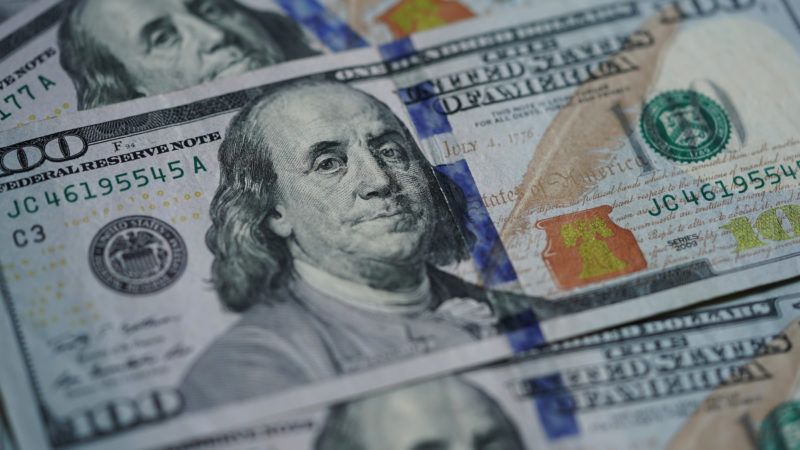
The direct payment portion means a check will be sent to every individual whose income falls below $99,000 and to every married couple who takes home less than a combined $198,000. Payments will amount to $1,200 for individuals who make under $75,000, with that benefit gradually phasing out as incomes rise above that threshold. Parents can also claim an additional $500 per child.
Republicans initially required that such payments be phased in from the bottom, as well: Those with little to no income tax would have received $600, and those who made less than $2,500 would have received nothing whatsoever—a detail that drew broadsides from both sides of the aisle. That component was eliminated from the final bill; anyone who makes under $75,000 (for single individuals) will now receive the same amount.
Payments will be based on 2020 earnings, a change from the originally-stipulated and much-criticized provision that they turn on an individual's 2018 tax filing. The Treasury Department will instead calculate each check using 2018 or 2019's tax return (if 2019 has already been filed) but will reconcile the payment later with any adjustments in income after reviewing 2020 filings.
Although the compromise is a bipartisan one, the fact that it's means-tested will raise eyebrows, particularly when considering that an individual's steady income in 2018 or 2019 does not necessarily relate to how he or she has been impacted by COVID-19. A restaurant owner who made six figures in previous years, for instance, stands to receive no immediate aid in this case, even if his or her business has been decimated by the coronavirus. That doesn't do him or her much good in the near-term, nor does it make up for the fact that government-enforced social isolation measures have prevented or severely limited businesses from serving their patrons.
"Americans need fast, direct relief. Start getting monthly checks to people now," argued Justin Amash (I–Mich.) yesterday. The libertarian-leaning congressman proposed eliminating the means-testing in favor of a temporary universal income, after which Congress could "consider recouping payments made to high-income households."
The final stimulus ballooned in cost over a week of negotiations as both sides sought to insert additional funding for their desired provisions. In the first three stimulus drafts, the corporate loan guarantees—which the federal government must recoup if businesses aren't able to repay their debts—amounted to $208 billion. In the final version, that number had grown to $500 billion.
Overseeing that loan program will be Treasury Secretary Steve Mnuchin, who will have broad power over which corporations receive money. Though Democrats were successful in mandating that an independent inspector general and an oversight board review those lending choices, the overall program expanded far beyond its original scope, more than doubling in cost. Critics rightly reduced it to a corporate slush fund: The federal government will wield great discretion in carefully selecting the businesses that survive coronavirus—a queasy example of corporate welfare.
"The Senate bill put corporations first," House Speaker Nancy Pelosi (D–Calif.) said Monday in a Facebook livestream as she railed against the corporate loan guarantees. "They must move closer to [our version]."
But Pelosi's stimulus bill, which she released Monday, included quite a few slush funds of her own—in the form of expensive demands that had little or no relationship to COVID-19. Pelosi's iteration bailed out the post office to the tune of $20 billion. It carved out grants for election audits and required early voting and same-day voter registration. It ordered the airlines to fully offset their carbon emissions. It mandated that corporations receiving aid pay workers a $15 minimum wage and establish corporate board diversity. It allocated $100 million for the Legal Services Corporation and set aside $35 million for the John F. Kennedy Center for the Performing Arts.
Those requests transparently resembled left-leaning policy goals rather than coronavirus-response measures. That may not surprise those who read Pelosi's earlier coronavirus aid package, which attempted to enshrine into law a permanent paid leave program, including for victims of stalking.
It was also not lost on Republican lawmakers.
"We've got families that are suffering," said Sen. Ben Sasse (R–Neb.) on the Senate floor Monday. "We've got small businesses that are closing literally by the hour. We have doctors fighting to prevent their hospitals from being overwhelmed. And what does Speaker Pelosi try to do? She's trying to take hostages about her dream legislation, all sorts of dream legislative provisions that have nothing to do with this moment."
While Pelosi failed to push most of those dream measures through, she successfully lobbied for increased unemployment insurance eligibility, with recipients taking home an additional $600 per week for the next four months on top of state sums. She also pushed for bolstered hospital financial support and for the stabilization fund, which will address cash shortages in states and localities.
The $367 billion small business provision—a rare area of stimulus bipartisanship—grew by $17 billion from recent discussions in order to pave the way for a six-month loan forbearance period, according to Sen. Marco Rubio (R–Fla.). Businesses will be eligible for a loan that is 250 percent the size of their payroll.
A final vote in Congress is expected later today.




