

The Volokh Conspiracy
Mostly law professors | Sometimes contrarian | Often libertarian | Always independent
U. Colorado Regent-vs.-Regents Lawsuit, Cannabis, Race, and Legislative Immunity
From James v. Rennison, decided Friday by Judge Philip Brimmer (D. Colo.), plaintiff's allegations:
Regent Wanda James is an elected member of the University of Colorado Board of Regents …. Regent James is the second Black woman to be elected to the Board and is the only Black regent currently on the Board. Regent James is also a prominent Black cannabis owner and was the first Black owner of a cannabis dispensary in the United States. Regent James has used her position on the Board to advocate for communities of color.
In late 2024 and early 2025, the Colorado School of Public Health ("CSPH") developed a public health campaign called Tea on THC. The Tea on THC campaign included use of the following image:
Regent James used her position as a regent and as a private citizen to criticize the Tea on THC campaign, asserting that it invoked racist stereotypes. After Regent James criticized the Tea on THC campaign, the CSPH issued a public statement stating that it regretted any distress caused by the imagery used in the campaign and that it acknowledged its responsibility to reflect cultural awareness and sensitivity. In addition to criticizing the Tea on THC campaign, Regent James spoke publicly about the lack of Black leadership within the University of Colorado….
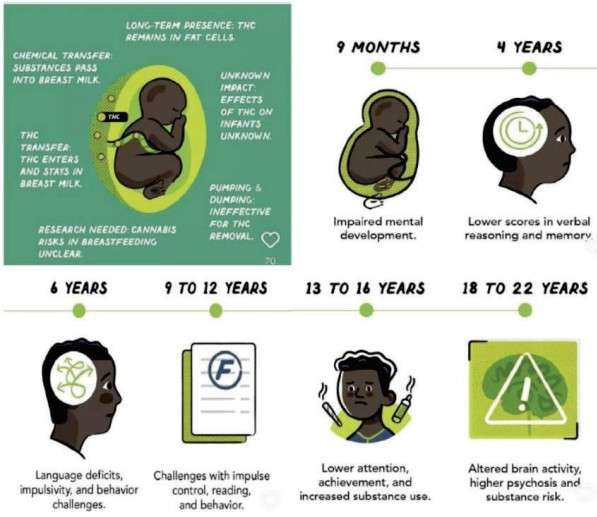
Approximately a month after Regent James spoke out against the Tea on THC campaign and the lack of Black leadership within the University of Colorado, the Board retained two law firms to evaluate allegations against Regent James. The allegations involved Regent James's speech. On July 2, 2025, the Board met to consider censure and sanctions against Regent James. The Board claimed that Regent James was responsible for CSPH's budget being reduced by 50%, although the budget reduction occurred before Regent James spoke about the Tea on THC campaign. Moreover, on January 31, 2025, the Governor's Office communicated to the legislature that it was seeking full elimination of CSPH's cannabis-related funding. At the July 2, 2025 meeting, by a vote of seven-to-one, the Board voted to censure Regent James under Regent Policy 2.M, finding that she had violated Regent Policy 2.J.1 and Regent Policy 2.J.2, which respectively confer regents with a duty of care and duty of loyalty.
In addition to censuring Regent James, the Board adopted a sanctions resolution. The sanctions resolution removed Regent James from all regent committee assignments, precluded Regent James from any future regent committee assignments, and barred Regent James from attending internal or external University of Colorado events in her official capacity.
Regent James sued the other regents, alleging violation of the First Amendment and race discrimination, but the court held that their actions were protected by absolute legislative immunity:
"The principle that legislators are absolutely immune from liability for their legislative activities has long been recognized in Anglo–American law." … Legislative immunity is "similar in origin and rationale to that accorded Congressmen under the Speech or Debate Clause." …
"Absolute legislative immunity attaches to all actions taken in the sphere of legitimate legislative activity." … Courts have found that board members of educational districts and facilities are entitled to legislative immunity, provided that they are acting in a legislative capacity.
Certain duties of the regents appear to be done in a legislative capacity. Traditionally, legislators have "[t]he authority to pass laws and the power of the purse." The Board of Regents "enact[s] laws for the government of the university," and has "control and direction of all funds of and appropriations to the university." Furthermore, the regents must be elected. Thus, the regents bear similarities to legislators in traditional legislative bodies, such as state legislatures….
"[C]ourts have repeatedly recognized that a legislature voting to censure or discipline one of its own members is a core legislative act," thus falling within … the functional test of legislative immunity…. Defendants sanctioned Regent James for violating the duty of care and duty of loyalty. The sanctions resolution indicates that this was due to, among other things, allegations that Regent James requested that officials in the executive and legislative branches pull funding from the Colorado School of Public Health and shift funding from the Tea on THC campaign to grants for marijuana business owners. If the regents were unable to enforce the Board's internal policies, the adoption of such policies would be meaningless, and the regents would be hindered exercising their duties. For example, the regent's statutory power over the "control and direction of all funds of and appropriations to the university," would be diminished if regents could not enforce internal policies prohibiting a regent from acting contrary to the financial interests of the University of Colorado.
{Legislative immunity does not turn "on the official's motive or intent," so it is irrelevant to the immunity analysis whether defendants actually censured and sanctioned Regent James due to violations of the duties of loyalty and/or care or if that was a pretext to censure and sanction Regent James for discriminatory reasons.} …
Frederick Richard Yarger, Meghan Frei Berglind, and William Daniel Hauptman (Wheeler Trigg O'Donnell LLP) represent defendants.



