The Volokh Conspiracy
Mostly law professors | Sometimes contrarian | Often libertarian | Always independent

Today in Supreme Court History: February 15, 1790
Editor's Note: We invite comments and request that they be civil and on-topic. We do not moderate or assume any responsibility for comments, which are owned by the readers who post them. Comments do not represent the views of Reason.com or Reason Foundation. We reserve the right to delete any comment for any reason at any time. Comments may only be edited within 5 minutes of posting. Report abuses.
Please to post comments

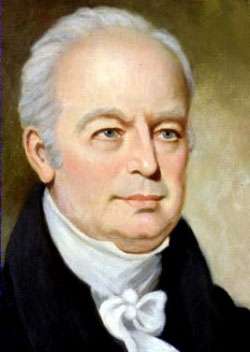
After Rutledge served as Associate Justice, he took a break where he was a South Carolina state judge. Then President Washington gave him a recess appointment as Chief Justice. The Senate rejected the nomination after Rutledge denounced the Jay Treaty.
Then he tried to drown himself, only to be fished out of the water by some enslaved Black people.
https://en.wikipedia.org/wiki/John_Rutledge
I think there's some tension, to put it mildly, between the recess-appointment clause and federal judges' good-behavior tenure.
He is still the only recess appointment to the Supreme Court not to be confirmed. There have been more recess appointments than I realized. Eisenhower made three: Earl Warren, Walter Brennan and Potter Stewart, all of whom, of course, were easily confirmed when it came time. Stewart was the most recent. Most of the recess appointments were quickly confirmed.
I'm curious: was Rutledge the only Chief Justice nominee to be rejected by the Senate or Judiciary Committee? I'm not counting William Cushing, who declined the appointment after being confirmed by the Senate.
Kind of.
President Grant withdrew the nomination of George Henry Williams in 1873, after the nomination ran into problems in the Senate.
https://en.wikipedia.org/wiki/George_Henry_Williams
Abe Fortas was nominated for Chief Justice in 1968 but the nomination was filibustered to death.
https://en.wikipedia.org/wiki/Abe_Fortas