

The Volokh Conspiracy
Mostly law professors | Sometimes contrarian | Often libertarian | Always independent
Donald Trump Makes the Case for Decentralized Control of Elections Great Again
Trump's call to "nationalize elections" leads prominent election law scholar Rick Hasen to reverse his longstanding support for such a policy.
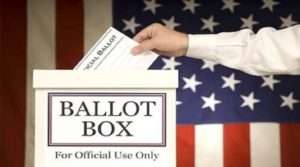
Donald Trump's recent calls for Republicans to "nationalize elections" have led UCLA law Prof. Rick Hasen - one of the nations leading election law scholars - to reconsider his longstanding support for such nationalization. In an insightful recent article in Slate, Hasen explains the reasons for this change of heart:
If you look around the world at advanced democracies from Australia to Canada, they have an independent governmental body in charge [of] all national elections. The body imposes uniform standards for registration, ballot access, voting machinery, and much more….
In The Voting Wars [a 2012 book], I argued that by joining other advanced democracies we could decrease the amount of partisan fighting and litigation over election rules, increase the competence of election administration, and assure we have a system run with integrity and fair access to voting….
Donald Trump has caused me to abandon this argument. As I wrote in the New York Times last summer, when the president tried to impose his authority over various aspects of American elections via an executive order: "What I had not factored into my thinking was that centralizing power over elections within the federal government could be dangerous in the hands of a president not committed to democratic principles." At this point, American democracy is too weak and fragile to have centralized power over elections in the hands of a federal government that could be coerced or coopted by a president hell-bent, like Trump, on election subversion. Courts have ruled that parts of Trump's executive order are unconstitutional because the president has no role to play in the administration of elections.
Trump's comments on nationalizing elections ironically prove the point that we should not nationalize elections. He apparently wants to target the administration at blue states, doing who-knows-what to make it harder for people to vote for Democrats. He desperately fears a Congress controlled by Democrats that could check his and his administration's power…..
Hasen adds that the Supreme Court's turn towards unitary executive theory magnifies these risks:
The Supreme Court provides another reason for not nationalizing our elections. The court could soon fully embrace that "unitary executive" theory that there can be no exercise of executive power by the federal government that ultimately does not report to the president. (It's an argument with an exception likely to be applied to the United States Federal Reserve, in order to protect the value of the justices' 401(k)s.) The unitary executive theory, if adopted, would mean that presidential control over an election body might be constitutionally required. The Trump experience shows why that would be far too risky.
If, as is likely, the Supreme Court makes an exception for the Federal Reserve, I think the main motive for that will be maintaining the integrity and independence of the monetary system, not just protecting the justices' retirement accounts. That said, Hasen is right that unitary executive theory magnifies the risks of nationalizing elections.
I myself am a longtime advocate of decentralizing most functions of government as much as possible, primarily because it increases opportunities for people to "vote with their feet," enhances and protects diversity, and reduces the dangers of political polarization. I have never been as enthusiastic about decentralization of election administration as about most other policies, because I think few if any people engage in foot voting based on the former. Many people decide what jurisdiction to live in based on such factors as taxes, job opportunities (heavily influenced by government policy), crime, education, and housing policy. Very few move because State A is better at election administration and vote counting than State B. Also, like Hasen, I recognize that some other federal democracies, such as Canada, do reasonably well with centralized election administration.
That said, as Hasen now recognizes, there are serious dangers to election centralization in our system, ones having little to do with foot voting. For these types of reasons, I have never been a supporter of election centralization, though I wasn't as strongly opposed to it as I am on many other issues. Hasen is right to note that Trump's actions make the dangers of centralization greater and more obvious than they might have been in the past. Thus, it is clear that I, too, underrated the benefits of electoral decentralization, albeit perhaps not as much as Hasen did.
As Hasen notes, Article 1, Section 4 of the Constitution the Constitution gives states primary responsibility for election administration, subject to override by congressional legislation. It is unlikely that Congress will enact any significant legislation along those lines anytime soon, and any such effort should be opposed. Unless and until Congress does act, courts should strike down Trump's efforts to nationalize elections by executive fiat, as several have already done in response to his attempts to change voter ID rules by executive order and gain access to state voter rolls.
Finally, kudos to Hasen for his willingness to publicly reverse a position he had prominently advocated in the past, when the evidence warrants doing so. Many academics and other public intellectuals either stick to their guns no matter what the evidence indicates, or shift without ever acknowledging that they previously held the opposite view.
I myself have shifted a few positions over the years, but none of these reversals were on issues as central to my work or my worldview as nationalizing election administration was for Hasen. For example, it wasn't hard for me to change my view on unitary executive theory, because UET was never a central commitment for me to begin with. Other academics and intellectuals can learn from Hasen's example.

Editor's Note: We invite comments and request that they be civil and on-topic. We do not moderate or assume any responsibility for comments, which are owned by the readers who post them. Comments do not represent the views of Reason.com or Reason Foundation. We reserve the right to delete any comment for any reason at any time. Comments may only be edited within 5 minutes of posting. Report abuses.
Please to post comments
Of course Somin is pro election fraud so long as it elects Marxist revolutionaries so this is not unexpected if him.
What is the point of a comment like this? It literally has no words in it that correspond to the English words they superficially look like.
Marxism is a good description of Somin's politics. Here, he just celebrates a Trump-hater reversing him to go against Trump.
Schlafly, your mother was evil, but she wasn't this stupid.
No, Marxism isn't a good description of Somin's politics. Not remotely. If anything, he's closer to an anarcho-capitalist.
Schlafly's "reasoning" appears to be: "I hate Somin's ideas. I hate Marx's ideas. Therefore, Somin is Marx."
(To be clear, by "Marx's ideas," I do not mean to imply that Schlafly knows what Marx's ideas actually are. I just mean that Schlafly hates the things that he believes are Marx's ideas.)
David does have a serious reading comprehension problem.
By all means, make the case.
I welcome Prof. Hasen's change of heart on federalism, and I hope he'll keep that position under a Democratic administration.
To be sure, there's one area in which the federal government should have "national standards," and that's enforcing the Fifteenth Amendment - no racial discrimination in voting. That's a major exception, because of course there are still *some* politicians who want to at least nibble around the edges of the Fifteenth by trying to dilute some votes on account of race, and they need to be kept in check by the feds.
Well he essentially admitted his position depends on what Trump likes or dislikes. If people like him and Ilya are so intellectually bankrupt their philosophies they've held for years which they are richly paid full time professional specialists in crumble immediately upon contact with notion that it might benefit the opposition. Then how can you trust them in anything else?
he essentially admitted his position depends on what Trump likes or dislikes
Has he?
Separately, when is the last time you took issue with anything Trump's done?
Yes, they will reverse just to oppose Trump.
Yes, the Unitary Executive is the US's version of elected dictatorship, the way people like Victor Orban have it as well. It's great for the person who gets to be the elected dictator, but not so good for people who want to see their country properly governed. A sensible system for running elections is just one of the many things the US is incapable of adopting until such time as it amends its constitution to wipe all suggestion of the UET from the statute books. (Another one is, of course, allies abroad.)
While I don't disagree with you I will point out that under the previous system we weren't seeing the nation governed well either.
"What I had not factored into my thinking was that centralizing power over elections within the federal government could be dangerous in the hands of a president not committed to democratic principles."
Stop and think what a staggering indictment of Hasen's judgement it is, that he'd never before Trump taken this into account.
This guy gets paid six figures to do a worse job than a teenager who can understand basic logic.
You may be committed to the idea that Trump isn't extraordinary, but get used to the fact that for lots of other people he is an extreme outlier.
We have had 44 presidents over 2¼ centuries before Trump. Some of them were stupid, some were personally corrupt, some were feckless. But none of them actively hated the United States before Trump.
Even if that were true, "It didn't occur to me that I should worry about fire safety until an arsonist moved in next door," is a confession of foolishness. He was eager to dangerously centralize control of elections, assuming that power would always be in the hands of people he approved of.
That's an irresponsible approach to governance.
Sigh. No. Still completely wrong.
Yes, you are.
That is one of the most idiotic things that you have ever said, David. You want a President, and esp his wife, hating the US, you need to go back no further than Barack Husain and Michelle Obama. Has Melania ever said that she was embarrassed to be an American? Of course not. But Michelle certainly did.
“[F]or the first time in my adult lifetime, I am really proud of my country. And not just because Barack has done well, but because I think people are hungry for change. I have been desperate to see our country moving in that direction...” Michelle Obama.
His middle name, you illiterate racist¹, is spelled "Hussein." And why would you say that Michelle Obama — who was not the fucking president,² and thus irrelevant to this discussion — said something and then quote her not saying that?
¹None of you people say "Donald John Trump." Or "Joe Robinette Biden." There is zero reason to use a name that Obama didn't go by except to emphasize the Muslim sounding aspect of "Hussein." But none of you are even competent to spell it correctly.
²Though she was presumably fucking the president.
Obama does have Moslem origins, and that is a significant part of who he is.
David is just trying to divert us from his ridiculous statement that Trump hates the US. One of those Presidents gave Iran billions in cash for their nuclear program, while the other bombed it to smithereens. Whatever you say about Trump. He’s the most America First President in my memory.
1. Citing a pro-Nazi slogan isn't really a very convincing way to make the case that Trump doesn't hate America.
2. Nobody could listen to Trump's American Carnage speech and not conclude that he hates the country.
3. Nobody could pay attention to anything Trump has said or done and not conclude that he hates everything America stands for. There are no American values that he shares. Liberty, democracy, the rule of law, equality, the international order: you name it, Trump's against it.
4. That Trump is a bully who likes killing weaker people is not a pro-America stance. (Also, dropping a few bombs is not doing anything to smithereens, as the Pentagon concluded. Trump may be evil, but he's also lazy.)
Your Obama whatabouting is both stupid and wrong. And also whatabouting. Setting aside that it was Iran's money, I think the JCPOA was a bad idea, but Obama did not give Iran anything "for their nuclear program." Obama waived some sanctions as part of the deal to constrain Iran's nuclear program.
The word is normally spelled Muslim, and he does not, in fact, have "Muslim origins," whatever that might mean. His parents were Christian (though his stepfather, with whom he only lived for a few years, was Muslim). He spent a few years in Indonesia, but the vast majority of his childhood and life was in the U.S., and just as you growing up in a majority-Christian country doesn't make you a good Christian, him spending a few years in a majority-Muslim country doesn't make him a Muslim.
I occasionally write the first. You got me on rhe second: I write "Joseph Robinette Biden" instead of abbreviating his first name because, unlike you, I can be consistent (in this case about spelling things out).
What the (Redacted) was the Voting Rights Act but “Nationalizing” Erections? Anyone think the VRA was a bad idea?
Frank
Yes, the VRA was a bad idea.
Congress has a say only over congressional elections. It neither has control over presidential elections, which take place in December , nor, except solely for setting the date at which elector appointment must be finalized, over states’ presidential elector appointment procedures, which take place in November.
Sure. But no state is going to justify special election laws that elect President electors, that allow and encourage election fraud, but don’t apply to Senators and Representatives.
There is utterly no way to have any meaningful discussion about what does or does not need to be done with the systems of elections in the U.S. when anyone present has the "belief" that the 2020 election was "stolen" and in fact any election where Democrats or liberals win is a fraud.
Such people just aren't connected to reality. There will be no reasoning with them because reason is simply not their thing. It is all about winning and holding on to power. If they can't win, they will settle for the illusion of winning and keep the power that way. Facts don't matter. The only laws that matters are those that favor their candidates.
Free and fair elections is a core liberal value. Therefore, with today's conservatives and Republicans (most of them) it is a non-starter.
There are a lot of those people present.
I feel somewhat the same about people who think there's nothing wrong with using a pandemic as an excuse to make ad hoc changes to election administration without going through the legislature, or even contrary to their enacted laws.
Elections are about the very last part of government that should be subject to ad hoc procedures.
You came at an issue of fact with an opinion about policy.
A telling failure to distinguish fact from opinion.
A reason, not an "excuse." And as you have been told repeatedly, ad hoc changes are routine in election administration.
Not like these. Not ones that explicitly violate the state voting laws. Not like, for example, Fulton County, GA, shown to have counted most of their ballots with Republican election judges locked out of the counting room, the various election tapes unsigned by election judges, ballots counted without any provenance like matching signatures, ballots mailed without being requested, unable to reconcile, etc. One single county in GA, with more than a third of a million votes counted, contrary to state law. In a state won by Biden by roughly 11k votes. Is this the type of ad hoc voting law changes that you are talking about.
This is, of course, why the FBI raided the Fulton County election storage area last week, and seized all of their 2020 election material.
I see that Bruce Hayden isw back to just flat-out lying. This was debunked by GOP state officials.
Not only was that irrelevant to anything, but it wasn't a change in election procedures, ad hoc or otherwise, which is the topic we're discussing. It was just someone failing to complete some paperwork. I guarantee every year someone forgets to sign some piece of paper somewhere.
More just complete fiction.
No votes were counted contrary to state law.
Well, we don't actually know since we haven't seen the warrant application, but it can't be, because you haven't identified any crimes and a warrant requires probable cause to believe a crime was committed.
David - it was BS excuses, not reasons, for your ad hoc violations of state voting laws. In 2020, I voted in person, just as I always do. It was comparable to going to a teller at a bank, and safer than going to the grocery store. Just clean the pens between users, and swab down the voting booth between voters.
The COVID-19 measures were absurd in themselves. Social Distancing was almost literally pulled out of their asses. Europe was doing 3 foot, so we would double that, to be double safe. There was no scientific literature showing that masking would reduce the spread of a respiratory virus, before being mandated. And really nothing credible since. My theory that masking was implemented for the benefit of AntiFA. The ModRNA genetic treatments were never proven either safe nor effective. They were neither. (Fully vaxed and boosted Dr Fauci and Joe Biden each caught the virus at least five times). But were mandated, regardless, even for demographics that faced less than 1/1,000,000 chance of death from the virus (e.g. those <20).
Probably most of us. Clearly a majority, knew most of this before the 2020 elections. By our trip from AZ to MT in early June that year, through AZ, NM, CO, WY, and MT, the only place still enforcing masking (even in Blue NM and CO) was within a couple blocks of the U of MT in Missoula. In Denver, masking was maybe 20%. Everywhere else (except in that one small corner of Missoula), it was running maybe 5%.
So. Yes, it was Excuses, not Reasons, used to ad hoc violate state election laws.
1) "I don't think those measures were necessary to deal with COVID" != "Those measures weren't enacted to deal with COVID."
1b) Your conspiracy theories about vaccines are neither true nor relevant. (But that reminds me that for at least a year after the Pfizer vaccine was fully approved (as opposed to an EUA), you were still falsely claiming it had not been.)
2) Also, you may be unaware, but a significant chunk of poll workers are retired people — the group most vulnerable to COVID, and (more importantly) the group most worried about COVID. Talk to people who actually administered elections in 2020; they were having trouble getting workers.
3) You're doing the "Why do I need an umbrella when I'm not getting wet?" thing. The changes to election procedures dramatically cut down on the amount of in person voting — and on the amount of concurrent in person voting — which made it much easier to keep people separated and keep equipment clean.
4) Changing the rules is not "violating" the laws. It's changing the rules.
What is free and fair in elections with flagrant ad hoc (thank you, DN) violations of state election laws? What are free and fair elections where illegal aliens, dead people, and non-residents are allowed to vote? (Apparently, in MN, at least, illegal aliens are not only allowed to vote - they are paid to vote).
1. Changes to laws are not "violations" of laws.
2. There is no evidence of any illegal aliens, dead people, or non-residents voting.
3. Nobody is paid to vote. Why the fuck would anyone pay illegal aliens to vote?
Why? Because they want to win elections.
The laws weren’t changed. They just were violated. With impunity and lack of consequences.
The good news is that the Supreme Court decided last week that at least candidates had standing to sue for election law violations. The bulk of election fraud cases for the 2020 election were dismissed for that reason alone.
The worst case was, I think, in Pennsylvania, which in '19 enacted "Act 77", an election law omnibus bill that allowed for no-excuse absentee ballots. It was written with an explicit anti-severability clause stating that if ANY part of the law was not upheld, the whole law was void, and state election law reverted to its previous status.
Then in Democratic Party v Boockvar, the Pennsylvania supreme court proceeded to circumvent that clause by declaring the law entirely constitutional, but directing that parts of it none the less not be followed.
A result that effectively deprived the state legislature of its control over election law.
Once again, Brett doing Brettlaw.
1) The Pennsylvania Supreme Court, not Brett Bellmore, decides how severability clauses work in Pennsylvania law.
2) The Pennsylvania Supreme Court did not do whatever you have decided in your head it did. It upheld an as applied challenge to the law. That is neither declaring the law unconstitutional nor "entirely constitutional." Which is why — well, see point #1.
The laws were changed. Sometimes through new legislation, sometimes through powers legislatively granted to governors to change state procedures in declared states of emergency.
Continuing your pattern of bad lawyering, you misunderstand SCOTUS's Bost decision. The whole point of it was that candidates should have standing to challenge before an election because waiting until after an election to see how the election turned out before challenging election procedures would be improper. Most of Trump's challenges were… wait for it… after the election.
Also, in a significant percentage of the cases where courts found lack of standing — some of which were in state court and thus unaffected by Bost — the judges went on to opine on the merits anyway and found them meritless.
Not connected with reality? Let me suggest the contrary, that those claiming a free and fair election in 2020 are the ones divorced from reality. Over a third of a million votes illegally (under GA state law) counted in one single (Fulton) county in GA, in a state won by Biden by roughly 1/30th (11k) of that number of votes. (Their ballots, their provenance, tally tapes, etc, for 2020 seized by the FBI last week).
You're both a liar and a pathetic excuse for a l,awyer. No, zero, none, zilch, zip votes were "illegally counted" "under GA state law." There is no Georgia law that allows — let alone requires — lawfully cast votes not to be counted. Whether an election worker signs a form has nothing whatsoever to do with whether the ballots were lawfully cast.
What about the 2000 election? Is it ok to believe it was stolen?
Or the 2024 election? Are we allowed to believe that one was stolen?
You can believe any crazy things you want, from, some random guy dying and then coming back to life to lizard people stealing elections to a vaccine causing a trillion people to die suddenly. It's only acting on those crazy beliefs that's a problem.
Oh, they’re connected to reality all right. You may not be aware of this, but they run the country. That means they have the power, with one bullet, to disconnect you from reality, so far as this earth is concerned, completely.
That's hilarious. Hasen's principles are so flexible, he'll change whatever beliefs he needs to stay Never Trump. What integrity!
Sorry, I mean: What integrity?
I don't think you understand what a principle is. "X is a better policy than Y" is not a principle; it's just a judgment call. If the facts change, judgment calls should change.
Facts like Orange Man Bad demanding that state election laws be violated.
Yes, exactly.
So why didn't Hasen change his mind in 2021, or even 2020?
I don't know what your basis is for determining that he didn't. Nothing in his essay specifies when he changed his mind.
Assuming he didn't change it back then, well, I can't speak for Hasen, but in 2020, we knew we had a terrible human being/a terrible president in the oval office, but we did not know that (a) this person was actually such a thug that he would actually try to steal an election; and (b) that the GOP was so in thrall to him that they would take a dive rather than stop him. In 2021, it didn't seem likely we'd have such a president again.
Also, you apparently didn't bother to read the whole Hasen post, because he explained that an aggravating factor was SCOTUS's full embrace¹ of the unitary executive theory. Until 2025, it would've been reasonable to assume that any federal body overseeing elections would have been designed with a requirement of bipartisan membership and full for cause removal protection. And that even a senate of the president's party wouldn't confirm rabid, utterly unqualified, crazy people to office. And that DOJ wouldn't manufacture fake crimes to try to get rid of those people just because the president ranted on twitter. Now we know that none of those guardrails are in place.
¹Yeah, yeah, except the Fed.
Of course. And it goes without saying that the SAVE act is also totally unnecessary. A photo ID to vote in federal elections? Proof of US citizenshipt? And ongoing verification and enforcement? WTF? It's not like the Constitution provides any such authority to Congress to alter the time, place or manner of elections. And why not allow various democrat states to register anything that moves to vote, bulk mail ballots, and rubber stamp any received ballots as valid and timely? Nothing wrong with that. Isn't that the way the rest of the world does it? States should be allowed to experiment recklessly with policies that make elections more insecure and susceptible to fraud.
https://babylonbee.com/news/democrats-push-for-death-certificates-to-be-accepted-as-voter-id
"It is unlikely that Congress will enact any significant legislation along those lines anytime soon, and any such effort should be opposed. "
Really? Without regard to the details of such legislation?
Yes.
Thanks to idiots with opinions like yours with respect to compromising with the opposition.
It speaks rather poorly of a "leading election law scholar" that it takes 'a politician you personally don't like' to suddenly realize the moral hazard of letting politician's control their own elections.
That's not what moral hazard means.
And, again, it's pretty weak to be outraged that people who find Trump to be an out of context occurrence and react accordingly.
True, it's a gross conflict of interest, not moral hazard.
I stand corrected. Thank you.
MAGA simply does not understand that the objection to Trump is not due to "not liking" him.
Hence, your justification for county level ad hoc state election law changes and waivers in order to prevent Trump’s re-election in 2020.
The justification for changes to election procedure in 2020 was the pandemic, you imbecile. That's why they happened nationwide. Every single state — red, purple, and blue — made changes to accommodate the situation.
They gave that excuse, but the changes were unnecessary, favoring the Democrats and fraudsters, and often contrary to statute.
Schlafly's opinion that the changes were unnecessary is neither accurate nor relevant. What matters is what they thought.
Encouraging and facilitating vote by mail did not "favor the Democrats." Republican and Democratic voters alike could take advantage of that; it's just that Trump had a weird mental illness about the thing, and his cult members did whatever he told them to.
What, you think I should have said 'he was a threat to democracy', ignoring all the things that Biden and Obama did that also threatened democracy? My point stands - when your sudden flash of insight only occurs when it's your ox being gored, that may be human but it is an indictment against someone claiming to be a "leading election law scholar".
Biden and Obama both pursued plenty of policies I disagreed with, some I hated, and a few I thought were illegal. But none were a threat to democracy.
Your partisan blinders are noted.
Partisan? You think DMN is partisan what? Partisan Democrat?
I don't really think "Guy who was all in favour of nationalised elections is now opposed to nationalised elections because Trump" says much about whether nationalised elections are a good idea. Says plenty about the guy in question though.
The only better example of TDS than this nationally recognized expert's opinion depending entirely on Trump being President is Ilya's applause depending on the expert's TDS.
The Constitution sets forth certain baseline requirements, and national legislation is appropriate, along with court enforcement to secure them.
People should not be able to "vote with their feet" to avoid them.
They currently can, in certain cases, including partisan gerrymandering. National legislation can help there. Shelby County v. Holder also warrants a legislative fix to update the voting rights law. Other things might be considered.
Federal power can be abused by a tyrant. Federalism provides a check. But it doesn't override the appropriate national power. Other checks should be in place. If they aren't, federalism can lead to difficulties.
The Constitution sets certain national rules. It provides a national legislature to protect such things, including to help guarantee a republican form of government. Secure and fair elections included.
I'm fine with some flexibility in procedures. Hasen's original proposal might have gone too far. I'm agnostic. We should, however, not go too far the other way.
We need to secure an adequate national system, with true checks and balances. Voting with one's feet is not the only solution.
There are a whole host of federal behaviors politicians of both parties should be second guessing their support for, now.
>Trump's call to "nationalize elections" leads prominent election law scholar Rick Hasen to reverse his longstanding support for such a policy.
If the man reversed his stance *because Trump!* then we know his stance was never about the good of the country - it was about helping his political team secure power.
Fuck him.
Likewise Somin.
I think Hasen's new position is absolutely right. The only thing that surprises me is that this argument hadn't persuaded him before Trump. I thought the core reason for having federal elections administered by the states was always that any federal administration of elections, under our constitution, would have to be done by people reporting to the President, and that would create too obvious a route for a sitting president to commit some kind of election fraud. The constitution has placed all executive power in the hands of the President since long before Hasen was born, did he never read that bit?
He was tacitly assuming that, in a properly functioning electoral system, Democrats will be in control most of the time, and RINOs the rest of the time. It's a standard unstated premise of much of what he writes: That people he personally trusts will be in charge.
That's why he's opposed to basically all election security measures: Elections are run by trustworthy people, why would you need security measures?
Oh really, he's tacitly assuming that, eh?
Oh right, because you've decided most of the GOP are sekret liberals.
A little false consciousness to go along with 'true capitalism has never been tried.'
You truly are a mirror-tankie.
I've been reading Election Law Blog for many years, Sarcastr0.
What's your explanation for why it took Trump for Hasen to realize that nationalizing election administration could be problematic, if he wasn't previously assuming it would always be controlled by people he approved of?
Trump is an out of context event. It's new facts.
New facts can mean reevaluating your positions.
You may have decided he's normal and within expectations. Most of the rest of us have not.
I'm not sure why you can't understand this.
re: "Trump is an out of context event."
No, he's really not. If you think he is, you need to read more history.
There is no figure like him in American history who got anywhere near the levers of national power. (Sure, there might have been occasional senators or representatives who were also power-mad sociopaths, but a single senator or representative has little power.)
Because — for about the twentieth time in this discussion alone — the issue with Trump is not "disapproval." I am quite sure Hasen "disapproved of" Reagan, and Nixon (retroactively; he's not old enough) and Bush, and plenty of other Republican presidential nominees who didn't win. But none of them would be a threat to democracy.
He was not. He was tacitly assuming that non-sociopaths would be in control 100% of the time. RINOs have been a figment of your imagination for decades.
" I thought the core reason for having federal elections administered by the states was always that"
States were supposed to be doing EVERYTHING that didn't absolutely have to be done at the federal level.
Antebellum thinking.
The constitution could've said that; it did not.
Occasional commenter Dilan Esper has argued the flip side of what you do: he argues that the constitution is actually written to give the federal government authority to do anything best done at the national level. It doesn't say that, either.
There is neither a "If the states aren't able to achieve X, then the federal government must have the power to do X" nor a "If the states are able to achieve X, then the federal government doesn't have the authority to do X" clause.
The constitution does in fact say that. Tacitly in the whole 'enumerated powers' structure of the main document* and then explicitly in the 10th Amendment. The fact that SCOTUS has effectively gutted the 10A doesn't mean it's not still there.
* I will concede that you have to accept that what the Founders wrote in their list of enumerated powers are the things that "absolutely have to be done at the federal level".


