
The Volokh Conspiracy
Mostly law professors | Sometimes contrarian | Often libertarian | Always independent
Today in Supreme Court History: November 16, 1939
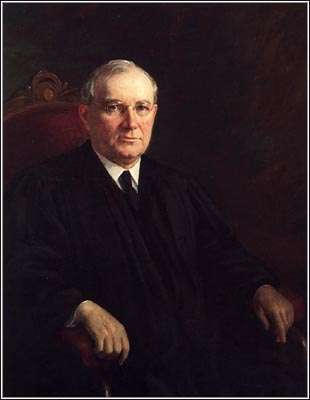
11/16/1939: Justice Pierce Butler dies.

Editor's Note: We invite comments and request that they be civil and on-topic. We do not moderate or assume any responsibility for comments, which are owned by the readers who post them. Comments do not represent the views of Reason.com or Reason Foundation. We reserve the right to delete any comment for any reason at any time. Comments may only be edited within 5 minutes of posting. Report abuses.
Please to post comments
Regarding Felix Frankfurter's acolytes, I have seen them referenced as both "Frankfurter's hot dogs" and his "happy hot dogs."
In the past, a comment referenced "A Supreme Court Justice is Appointed" by David J. Danelski, which discusses his nomination. I found it interesting until the final chapters. Those were a more academic analysis, more suitable for a specialist.
Butler was the only one of the "four horsemen" who died in office. His Wikipedia page has a photo from his funeral & of his gravestone. He was replaced by the very liberal Frank Murphy.
Butler had his libertarian moments. He was the only person who dissented in Buck v. Bell. He did not write a dissent there.
Justice Douglas, in his concurrence for Doe v. Bolton, cited Butler's opinion in Sinclair v. U.S. as one of the precedents that honored a right to privacy. Butler noted:
It has always been recognized in this country, and it is well to remember, that few if any of the rights of the people guarded by fundamental law are of greater importance to their happiness and safety than the right to be exempt from all unauthorized, arbitrary or unreasonable inquiries and disclosures in respect of their personal and private affairs. In order to illustrate the purpose of the courts well to uphold the right of privacy, we quote from some of their decisions.
Butler also dissented in Olmstead v. U.S., which involved electronic eavesdropping. He perhaps somewhat surprisingly noted:
The direct operation or literal meaning of the words used do not measure the purpose or scope of its provisions. Under the principles established and applied by this Court, the Fourth Amendment safeguards against all evils that are like and equivalent to those embraced within the ordinary meaning of its words.
The dissent argued that both constitutional powers and rights should follow a "rule of liberal construction." His judgment on what the involved led him in various directions.



