
Trump's Iowa Steel Mill Is a Win for Steelmakers. What About Everyone Else?
U.S. steel prices have surged, while overall manufacturing employment has fallen.


U.S. steel prices have surged, while overall manufacturing employment has fallen.

They cost each American household roughly $1,000 in 2025, with more coming in 2026.
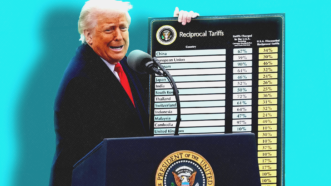
However, the tariffs did shift supply chains away from China and towards other countries with low-cost manufacturing, like Vietnam, Malaysia, and India.
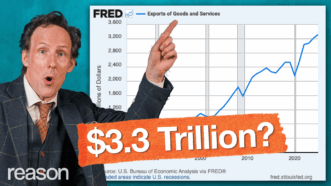

More than 89,000 manufacturing workers lost their jobs in the past year as tariffs caused input prices to rise and squeezed blue-collar industries.

American businesses and consumers absorbed nearly 90 percent of the 2025 tariffs' economic burden, the Federal Reserve Bank of New York found.

Meanwhile, Trump is touting low gas prices, which are due in part to the lack of tariffs on oil and gasoline.
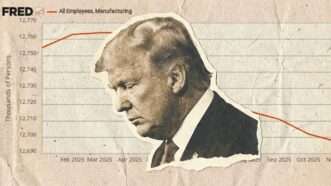
These metrics are bad proxies for prosperity, but they reveal just how flawed the president's arguments have been.

It's also not the whole story. Federal spending isn't falling and the private sector job market is stagnant.
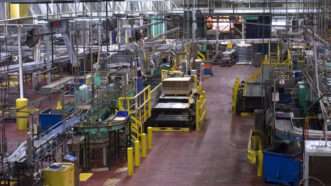
Real industrial policy has been tried—in many countries, by governments of every ideology. It fails every time for the same reason.
Celebrate your independence with a subscription to Reason magazine, your most trusted source of honest, insightful news and analysis.




