
Can This AI Predict How You Will Die?
Delphi-2M was trained on the world's most comprehensive biomedical database with health information from over 400,000 people.
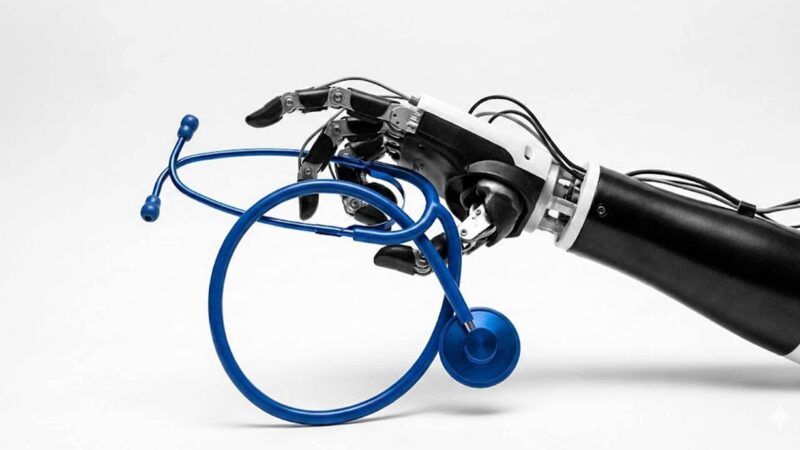
How high is your risk of developing pancreatic cancer or suffering a heart attack in the next 20 years? A new generative artificial intelligence system called Delphi-2M aims to answer that question and offer personalized forecasts of your long-term health trajectory.
Developed by a team of European biomedical researchers and detailed in a September 2025 Nature article, Delphi-2M represents one of the most ambitious efforts yet to apply AI to predictive medicine. Large language models (LLMs) that power chatbots such as ChatGPT trained on massive amounts of text data to predict the next word in a sentence. Delphi-2M trained on a vast amount of medical data to predict the next stage in a person's health.
Delphi-2M treats medical histories as sequences of events, much as ChatGPT processes words. Its training data came from the health records of more than 400,000 participants in UK Biobank—the world's most comprehensive biomedical database, encompassing health, lifestyle, and genetic information. The model also incorporated top-level diagnostic codes from the International Classification of Diseases, 10th Revision—the global standard physicians use to code diagnoses—along with data on sex, body mass, smoking and alcohol habits, and mortality.
To validate the model's predictions, the researchers tested Delphi-2M using 1.9 million electronic health records from Denmark's National Patient Registry, spanning five decades of hospitalization data. By crunching all these data, the researchers write, Delphi-2M can "learn lifetime health trajectories and accurately predict future disease rates for more than 1,000 diseases simultaneously," using prior diagnoses, lifestyle factors, and other medical indicators.
Its predictive accuracy rivals that of specialized tools such as the Framingham cardiovascular risk score and the UK Biobank Dementia Risk Score, but unlike those single-purpose models, Delphi-2M can assess these and 1,000 other disease risks all at once.
With its ability to integrate diverse health information, Delphi-2M—and future models like it—could help doctors identify high-risk patients who would benefit most from early diagnostic tests or regular screenings.
Still, experts caution against treating predictive models as oracles. "Patients must understand that these forecasts are not destiny," University of Potsdam medical ethicist Robert Ranisch told Medscape. "However, they can provide guidance for preventive or therapeutic decisions."
For now, Delphi-2M remains a research tool. But as predictive models grow more reliable and privacy safeguards improve, such tools could become a routine part of clinical practice—or even appear in consumer health apps.
This article originally appeared in print under the headline "Does AI Know How You Will Die?."
