
Lawmakers in Texas and Ohio Consider Abolishing Property Taxes
People don't like property taxes—but they are also not eager to cut the government services they fund.
In a 1995 episode of The Simpsons, teachers at the dilapidated Springfield Elementary School make an impassioned plea for more school funding at a PTA meeting, telling parents, "It's for your children's future." Principal Skinner easily changes their minds by simply rubbing his fingers together. "Oh yeah, the taxes, the finger thing means the taxes," exclaim the disgruntled parents, who then reject any funding that requires a tax increase.
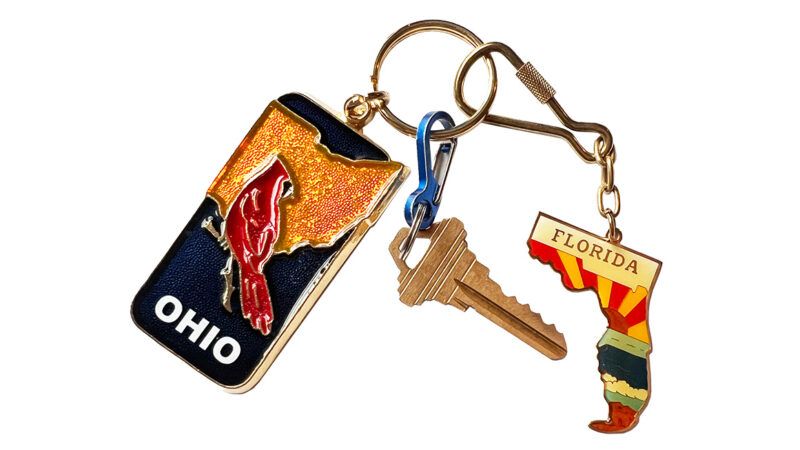
There are several parallels between that episode and the real-life property tax revolts sweeping Florida and Ohio. In both states, spiking property values have led to rising property taxes and growing anti-tax sentiment among homeowners. Lawmakers and activists are responding with proposals to cap, cut, or even eliminate property taxes altogether.
Florida lawmakers have unveiled not one, not two, but seven different proposed constitutional amendments that would pare back property taxes. The two most far-reaching would eliminate nonschool homestead property taxes on owner-occupied primary residences. One would go into effect immediately, while the other would be phased in over 10 years.
In Ohio, petitioners are gathering signatures for a constitutional amendment that would eliminate all taxes on real property.
Taxation is theft, the libertarian adage goes. Therefore, one could be forgiven for giving unqualified support for these efforts to eliminate property taxes. Unfortunately, both Ohio and Florida's property tax critics have the same contradictory attitude toward local government budgets as the fictional Springfield parents. They don't like property taxes but they are also not eager to cut the government services they fund.
When The Columbus Dispatch interviewed voters headed to the polls in November 2025, almost all said they liked the idea of property tax abolition but didn't want to see the quality of local services degrade.
None of Florida's proposed property tax reforms include any plan to offset the lost revenue. The two measures that would eliminate homestead property taxes also include clauses forbidding local governments from cutting law enforcement funding.
The Ohio nonprofit Citizens for Property Tax Reform notably does not call for offsetting spending cuts. Instead, it suggests increases to sales taxes and local school district income taxes.
Neither state is likely to adopt the novel revenue solution Springfield Elementary settles on: charging the prison system to stash prisoners in spare coatrooms.
Making up for the revenue lost from property tax cuts would be a tall order. The Tax Foundation estimates that Florida's combined local and state average sales tax rate would have to rise from 7 percent to 15 percent in order to make up for lost property tax revenues. In Ohio, that rate would have to rise from 4.2 percent to 12.6 percent.
Property taxes pay for nearly 30 percent of local government services in both Ohio and Florida. States trying to replace every dollar of property tax revenue with sales or income tax revenue would ultimately reduce overall economic efficiency as well.
Milton Friedman called the property tax (and particularly the tax on the value of unimproved land) the "least bad tax" because it discouraged less economic activity than sales and income taxes.
Property taxes are also less distortionary. People and firms can move to places where they are less heavily taxed to avoid local sales and income taxes. Real estate, in contrast, generally has to stay put.
There's a political reason to prefer property taxes, too.
In most states, property taxes are levied by local governments on local residents to pay for local services. Ohio's localities depend on property taxes for 65 percent of their revenues. Some 73 percent of Florida counties' tax revenues come from property taxes.
That creates a measure of democratic accountability. People can discern a pretty clear relationship between the costs and benefits of their local government and vote accordingly.
For the same reason, property taxes are often more akin to a user fee paid by the consumers of government services for the benefits they receive than a true tax.
Homeowners' associations notably raise funds via their own private property fees.
This is not to say that property tax cuts are a bad idea. Far from it. But the piper—and the school district—need to be paid somehow.
If property tax cuts are financed by spending cuts and service privatization, that's good. But Florida and Ohio's plans to simply shift the tax burden from property owners to wage earners or consumers would be cartoonishly inefficient.
