
For Most of History, Night Was a Time of Terror. Cheap, Abundant Light Changed That.
Humanity has waged a long war on darkness, and victory is finally coming into sight.
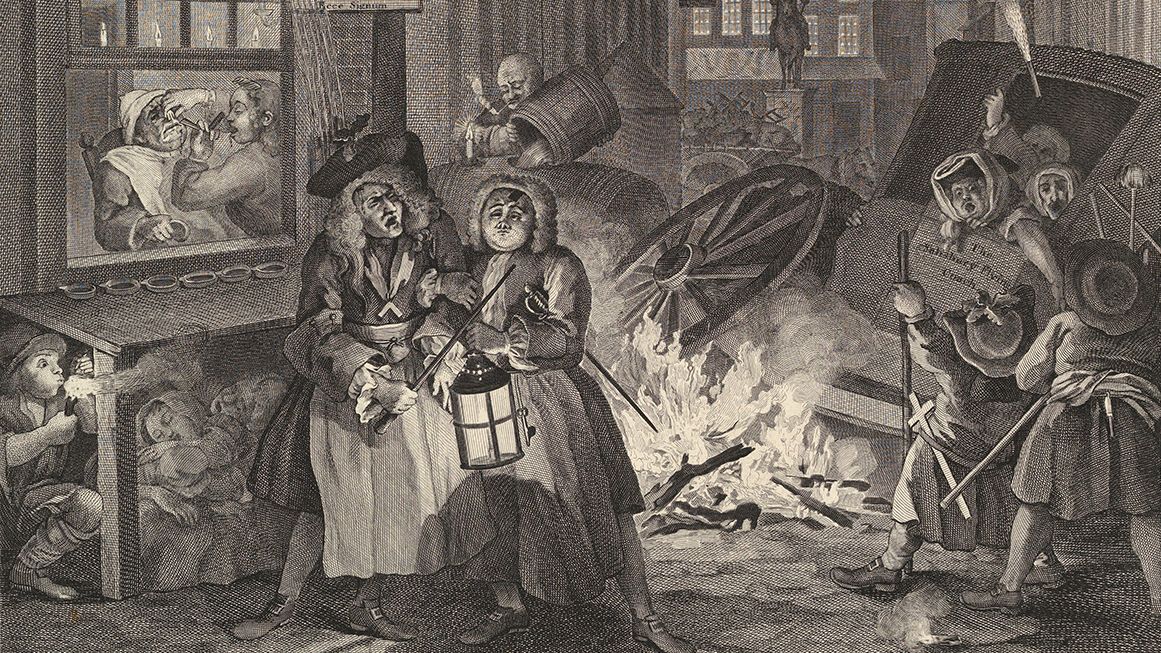
Imagine the impenetrable darkness that encompassed the preindustrial world each night. In the 16th century, "if you could have seen the earth from above, cities, towns, and villages would have appeared nearly as dark as the oak forests," writes Jane Brox in Brilliant, her history of artificial light. It would hardly have been better illuminated indoors. "Within, candles and lamps no brighter than those of Roman times would have lit only a bowl of porridge, a book, a shirtsleeve in need of mending, another. If someone reached for a thread or let out a long sigh, the flame would quiver, and the shadows would quiver, too….Such small light was precious and meted out sparingly."
It was only toward the 18th century that cities and towns began taking tentative steps to make public spaces usable after dark. Indeed, "before the seventeenth century, street lighting was almost nonexistent everywhere in the world….Renaissance Florence had no streetlights, nor did imperial Rome." Artificial lighting transformed the world, "granting more working hours in the day and creating a night that is no longer impenetrable, no longer a void, a night easily traveled through and expansive with free time." … [Subscribe to continue reading]
Read the full story when when you subscribe to Reason Plus.
Free minds and free markets: Independent journalism on politics, culture, and ideas since 1968.
Become a subscriber
Digital access for $25/year
Unlimited online access & the magazine
- Every article, every issue, every archive going back to 1968
- The print or digital edition delivered monthly
- Subscribers-only newsletter from the editor
- Listen to every article with our audio player
Cancel anytime. Or give a Reason Plus subscription as a gift..
Already have an account?
Log in to keep reading.
Log In
Enter the code from your authenticator app to finish logging in.
You're already a member. Log in to keep reading.
We sent this story to your inbox because you're one of our subscribers. One quick login and you'll be reading in seconds.
- Your subscription includes digital access
- Log in once and stay logged in for 1 year
- Resume reading exactly where the email left off