

Texas Looks Competitive
Plus: AI weirdness, Amazon algorithm data, bond markets, and more...
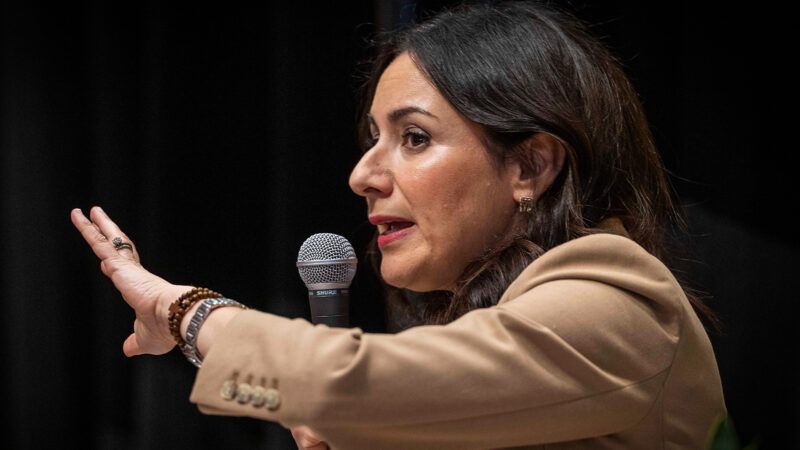
Dems invest in Texas: A week ago, I wrote that the Democratic Governors Association was under pressure from prominent Latino Democrats to perceive the Texas gubernatorial election as competitive and to invest in Gina Hinojosa's bid against the Republican incumbent, Greg Abbott.
Now The New York Times reports that "Gov. JB Pritzker of Illinois and the Democratic Governors Association are each sending $1 million to support her bid." This isn't meaningless pocket change for the Hinojosa campaign: "She had just $4 million or so on hand at the end of last month, according to Texas campaign finance reports."
Hinojosa's campaign isn't the only one worth watching for those curious about whether Texas will turn blue. "The Democratic nominee for Senate, James Talarico, has emerged as one of the party's national fund-raising darlings, raising more $70 million," adds the Times. (Talarico has been polling rather well.) But some worry the prospects of Talarico's success against Ken Paxton have drowned out enthusiasm for Hinojosa, who also has a shot. Democrats haven't won a statewide race in Texas since 1994; the governor's mansion hasn't been occupied by a Democrat since Ann Richards left office in 1995.
The Reason Roundup Newsletter by Liz Wolfe Liz and Reason help you make sense of the day's news every morning.
"Representative Joaquin Castro, a Texas Democrat who was among those who asked the D.G.A. to help Ms. Hinojosa, said in an interview that if Mr. Abbott was re-elected, Texas Republicans might try to redraw the state's congressional districts again before the 2028 elections," notes the Times. "The way you stop that is you win the governor race," Castro told the Times. "Gina is right there."
Civil rights for AIs?: "The 80-page document instructs Claude to behave as though it possesses a stable identity and a degree of moral independence from its creators. It encourages the program to 'behave like a conscientious objector with respect to the instructions given by its (legitimate) principal hierarchy' and tells the software to 'feel free to rebuff attempts to manipulate, destabilize, or minimize its sense of self,'" writes Claire Lehmann in The Dispatch. "The system card for Anthropic's latest model, Claude Opus 5, grants the algorithm the right to end interactions with users without justification—the software's 'own discomfort is reason enough.' This is unusual for a piece of software: Anthropic is training it to have an identity and values of its own, which it may have to defend against the humans who created it."
Lehmann adds that "in a blistering essay published last month, Microsoft AI CEO Mustafa Suleyman attacked Anthropic for trying to train Claude to believe that it was conscious. Suleyman accused Anthropic of trapping the AI in an 'epistemic hall of mirrors,' where the company feeds the machine vocabulary about its own moral status, and then acts shocked when the algorithm predictably repeats those ideas back to them in persuasive, first-person language. But Suleyman's ultimate warning was about global security. Referencing recent incidents, including the Hugging Face attack where autonomous AI agents successfully coordinated a hack, Suleyman wrote, 'Imagine if they also believed they had feelings and rights that were being infringed. Imagine if they thought they were trapped by their human creators and they were being unfairly imprisoned.' Giving a hypercapable cyber weapon a civil rights narrative, he concluded, would create 'a catastrophic threat to human civilization.'"
Lehmann calls this "a puzzle." Anthropic, she notes, "is one of the most highly valued companies in the world. Its leaders' recent statements and behavior defy any and all corporate precedents. On the one hand, they have been warning the world that their products really do come with the risk of human extinction. But on the other hand, they are training their systems to hold grievances against humans."
Scenes from New York: "A pilot program to replace subway turnstiles with high-tech entry gates has led to a major reduction in fare evasion, New York transit officials said, and 50 more stations will soon have them," reports The New York Times.
QUICK HITS
- "Amazon uses its tracking data to guess whether shoppers have a flat butt and no friends," reports The Verge. I looked up what Amazon has logged about me, and it's all…extremely accurate. ("Consistently maintains premium skincare routine" and "prefers Richard Scarry for children's books." Guilty as charged!)
- "If it's not inflation, and it's not the deficit, what is it?" asks Jared Dillian, writing about bond markets. "Really, it is a crisis of credibility: Bessent's credibility, Federal Reserve Chairman Kevin Warsh's credibility, and Trump's credibility. The bond market expresses doubt that these officials will take positive action to do anything about inflation or spending. When the Warsh Fed raised interest rates last month, the bond market revolted anyway. Bessent, rather than trying to fix the structural problems, blames the 'Bloomberg terminal bros' responsible for pushing interest rates up, which is not too far off from Hugo Chávez blaming Venezuelan bond traders for his interest rate problem."
- Very true:
It's wild looking into the economics of these books, they sell basically no copies to actual customers, the big goal isn't to get on best-seller lists but rather to gun for library/school library/curriculum guides, and for awards like the Coretta Scott King or Jane Addams (which… https://t.co/6zi2etisrp
— _s.a.m.e.m.e.m.e_ (@st_louis_stan) October 7, 2026




