

I Went Looking for a Libertarian Miracle in Argentina. I Found Something Messier.
After a week in Buenos Aires, I found Milei’s economic revolution is real—and deeply divisive.
"The first thing we have to understand is that the state is not the solution," Javier Milei said in his famous 2023 Afuera! video. "The state is the problem."
The world was shocked, and many gawked, as they watched a politician who espoused contempt for the state actually deliver electoral success. In the three years since, Milei has made good on his promise to shrink the size of the state—eliminating 200 departments and 10 ministries.
After spending a week in the country's capital, Buenos Aires, eating empanadas and way too much steak (if that is even possible), hanging out with strangers in bars, and meeting the libertarians who fostered the intellectual movement that put a self-described anarcho-capitalist in charge, it's safe to say that Argentines agree things have changed. There is disagreement, however, on whether these changes have been for the better.
Last week, I was in Argentina to attend the Winds of Change conference, hosted by Reason Foundation (the nonprofit that publishes this magazine), the Archbridge Institute, and Libertad y Progreso—a Buenos Aires-based think tank. The final session was a keynote address by Milei himself. Unsurprisingly, attendees were almost fanatical about the president, who spoke for over an hour, mostly about his success in curbing inflation—which has fallen from 211 percent in 2023 to 31.6 percent in 2025.

While Milei's liberalism has been staunch and successful when it comes to the economy, libertarians at the conference and abroad have raised concerns about the president's views on social issues. He opposes abortion and the "LGBT agenda," and after citing a story about a gay American couple who were jailed for abusing their children, he said that "in its most extreme forms, gender ideology is outright child abuse. They are pedophiles." Argentina's vice president, Victoria Villarruel, has also been criticized for her conservative views on abortion and same-sex marriage.
Some of Milei's foreign policy has also cut against the anarcho-capitalist views that the president has become famous for. The day after Milei's conference speech, he restated Argentina's sovereignty claim over the Falkland Islands, announcing sanctions on oil companies drilling in the area and funding a new naval base near the islands. I may have paid closer attention to the announcement because I am British and have visited the Falkland Islands (the conference attendees I spoke to seemed unbothered by the announcement), but using the power of the state to threaten islands whose population recently voted 99.8 percent to remain British is certainly antithetical to his "slash the state" mantra. Perhaps he saw the announcement as a low-stakes, high-reward move to boost popularity.
Outside of the conference, I asked almost everyone I met what they thought of Milei. The response was mixed.
Inflation was the subject that came up most often in my conversations with Buenos Aires locals. Since 2001, inflation has spiraled, with the 20 years that followed accumulating an extraordinary rise of over 10,197 percent. Young people have no memory of life without extreme price hikes, largely as a result of the Kirchnerist governments. Former Presidents Néstor Kirchner (who was in office 2003–2007) and Cristina Fernández de Kirchner (2007–2015) saw government spending skyrocket and raised taxes to finance it, resulting in the Argentine central bank expanding the money supply and causing inflation.
A woman in her early 30s said that inflation made planning for the next few months extremely difficult. She said that before Milei, prices fluctuated so much that she had little idea what everyday goods might cost a few months down the line.
"Now I can plan," she said, and the difference is "extreme." She used egg prices as an example of welcome price stabilization. After rising from 401 pesos (about $1.53) to 1,531 pesos (about $5.85)—a more than 280 percent increase—in 2023, egg prices are now sitting at just over 3,800 pesos (about $2.51) per dozen in Buenos Aires, according to Expatisan.com, a global price index site for expats. She can think about what she might buy or do four months from now with some confidence that the cost won't change beyond recognition.
She also pointed to a new clothing market as a more material change. As Argentina has opened itself up to more imports, cheaper clothing from China (especially from retailers like Shein) has become easier to access. She joked that Argentine women tend to wear black, partly because their choices have long been constrained by an expensive and protected domestic clothing market. After complimenting my bright red dress, she wondered whether cheaper imported clothes might allow Argentine women to start wearing different colors.
On a tour of the capital, our 52-year-old guide felt similarly optimistic. A mother of three, she said that her children in particular were excited about the prospect of economic change under Milei. For her, falling inflation was the clearest sign that the new direction was working. "We were driving on the left, and now we're driving on the right," she says.
But not everyone I met in Buenos Aires was as convinced. Bouncers at a cocktail bar told me they disliked Milei, citing the rising cost of living. (I also found Buenos Aires more expensive than I had anticipated. Two McDonald's large meals and a side of chicken nuggets were $39—and restaurant meals were comparable to prices in U.S. cities.)
One Uber driver said that, in his view, "working people don't like him." Milei's supporters, he suggested, were more likely to be the wealthy. While Milei attracted substantial support from low-income voters—including recipients of welfare programs—in 2023, there are signs that sentiment might be shifting. According to a survey conducted by the Instituto Universitario that was published in July, 42 percent of young, working-class voters in Buenos Aires who voted for Milei said they would not do so again.
There is still substantial support for Peronism, which could spell trouble for Milei's libertarian vision. As I stood outside the Buenos Aires home of former President Cristina Fernández de Kirchner—where she is serving a sentence under house arrest for corruption—cars occasionally drove past and honked their horns in support of the former president. Nearby, graffiti declared "love is repaid with love" and "thank you for your dignity."
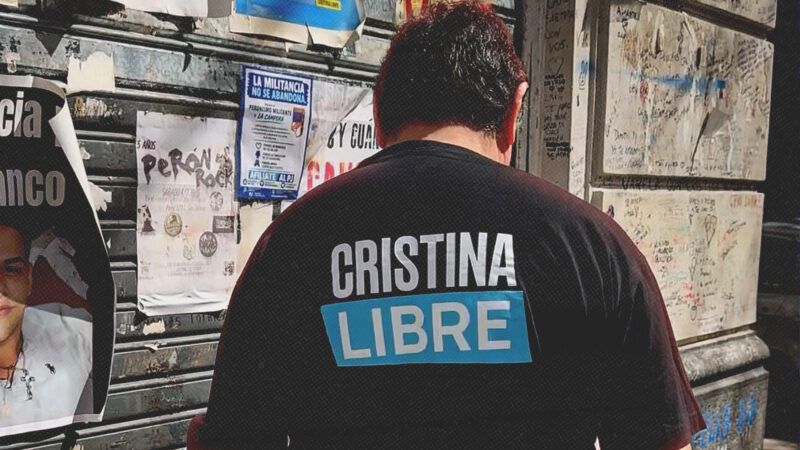
I also met a man outside who, after getting past my broken Spanish, enthusiastically confirmed that he was a Cristina supporter. On the front of his T-shirt were the words "La Cámpora Esteban Echeverría," referring to a local branch of the Kirchnerist political organization. He turned around to reveal the slogan emblazoned across the back: "Cristina Libre" ("Free Cristina").
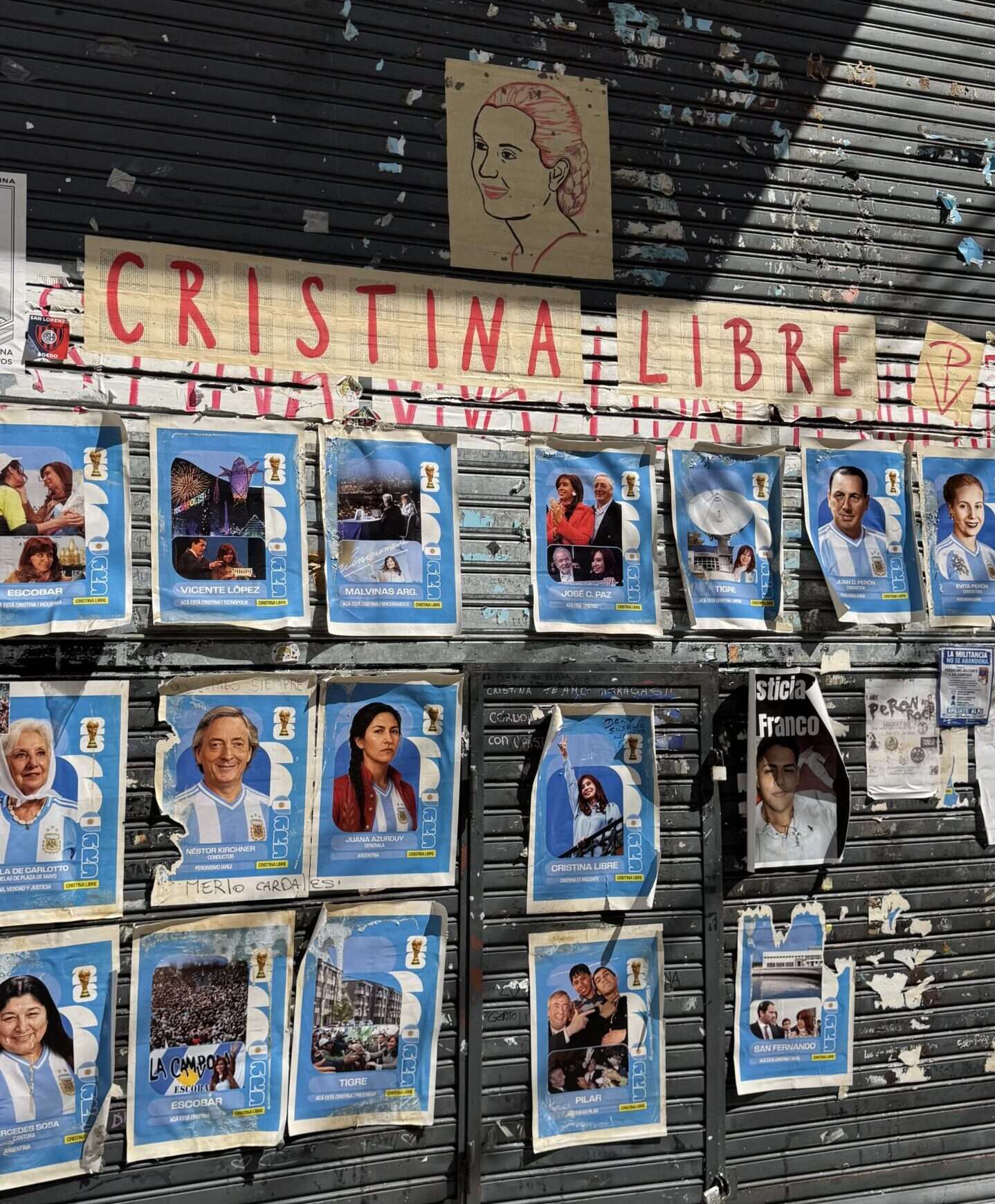
Because of her conviction, Cristina can no longer run for president, but there are other leftists Milei has to worry about. Ground News reports that Buenos Aires governor Axel Kicillof has consolidated enough Peronist support to become the leading opponent of Milei. However, Kicillof's unpopularity within his own district and heterodoxical economic views (he does not even accept that the main cause of inflation has been money printing), could work out in the president's favor. With no obvious alternative commanding broad support, Milei's party remains the favorite for its next election in 2027.
After a week in Argentina, I'm not sure I found a libertarian miracle. Peronism is still alive, Milei remains divisive, and the Argentines I met have not become puritanical anarcho-capitalists.
But something has changed. Milei promised Argentines a radical break from a political and economic model that had dominated the country for decades. Whether his experiment ultimately succeeds will take years to answer, but for a country accustomed to economic crisis, the new path toward greater economic liberalization is certainly exciting.




