

Harry and Meghan's Security Problem Is Really a Gun-Control Problem
Taxpayers shouldn’t have to pay for the royal family’s security, but British law prevents them from paying for armed security themselves.
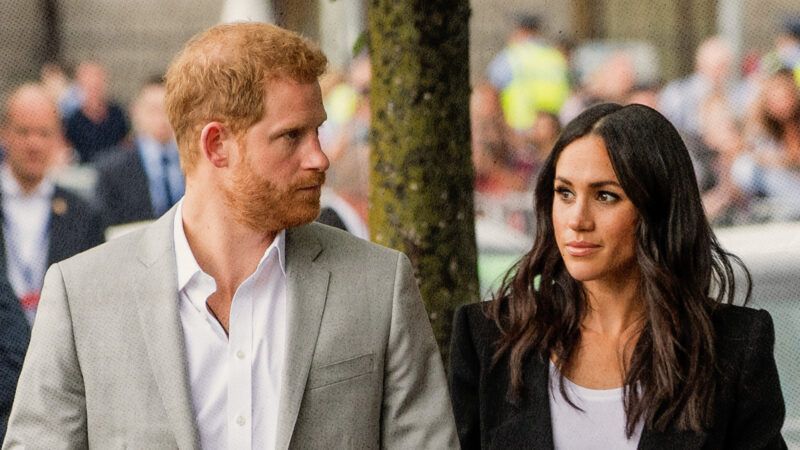
Prince Harry and his American wife Meghan Markle are reportedly moving back to the United Kingdom after living in the United States for over six years. While the return has already sparked conversations about their rift with the royal family, whether their children Prince Archie and Princess Lilibet will be able to spend more time with King Charles, and the exact reasons for the move, there is one aspect of the conversation that has gone overlooked: British gun laws.
Their decision to return to the U.K. is certainly a surprise, especially because Prince Harry himself said that they would not be returning for security reasons.
"I can't see a world in which I'd be bringing my wife and children back to the U.K. at this point," Harry told the BBC in an emotional interview last year. "Look at the risks. Look at the threat. Look at the impact. If anything was to happen to me, my wife or my father's grandchildren—if anything was to happen to them—look where the responsibility lies, you know? So there's a duty of care that has been completely thrown out the window," Harry told the BBC.
Safety concerns were a central reason for Harry and Meghan's decision to leave Britain in 2020. After leaving the royal family and stepping back from official responsibilities, the couple lost their publicly funded security privileges. Harry subsequently filed a request for a judicial review of the U.K. Home Office's decision to take away their security. He even offered to pay for the security himself, so that it would not be at the expense of the taxpayer. The request was denied, prompting the family to move to the United States.
Their return reopens the debate about their security, and it certainly raises the question of why they cannot simply fund their own private armed security.
The Firearms Act 1968 subjects firearms to a strict licensing regime, while most handguns are entirely prohibited. In practice, this means that legal gun access is limited. If you live in the countryside, obtaining a shotgun license is doable, and rifles and other firearms can be licensed for approved purposes, such as hunting, pest control, and target shooting. According to the most recent data, just over half a million people in England and Wales—less than 1 percent of the population—hold a firearm or shotgun certificate.
One thing the government explicitly refuses to recognize as a legitimate reason for possessing a firearm is self-defense. "It has been the view of successive Governments for many years that the private possession and carriage of firearms for personal protection is likely to lead to an increase in levels of violence," reads the government's guide. "This principle should be maintained in the case of applications from representatives of banks and firms protecting valuables or large quantities of money, or from private security guards and bodyguards." Bizarrely, this includes pepper spray, which the Firearms Act categorizes as a weapon and entirely prohibits.
Britain is unusual enough in its aversion to firearms that even its police are overwhelmingly unarmed. Just 4 percent of officers in England and Wales are operationally deployable firearms officers. Of course, these police officers are only deployed to deal with the most serious of crimes, such as a comedian making a joke.
At the heart of Harry and Meghan's woes is a dispute over a legal system which prohibits private armed security. In the U.S., private armed security is legal and is an enormous industry in itself. More than 1.28 million security guards work across America and, subject to the law, many can legally work armed. In Britain, self-defense is not a legally permitted reason to obtain a firearm, and even American FBI agents must get special permission from the government to carry.
There are plenty of reasons to be skeptical of Harry and Meghan's complaints about their overall treatment in Britain, but on security, they do have a reason to be concerned. Harry can hire private security, but those guards not only lack access to intelligence—British law prevents those guards from carrying the firearms that would allow them to provide comparable armed protection.
The question raised is bigger than the royal family. If an individual faces a credible threat and is willing to pay for highly trained, vetted private security, why should the government prevent them from doing so? Like America, Britain ought to allow the creation of a security market. The U.K. does not have to make taxpayers foot the bill for Harry and Meghan's security, but neither should it maintain a monopoly on the kind of protection they are allowed to buy.




