

Casino Lobbyists Wrote a Letter Attacking Prediction Markets. Maryland Copied It and Sent It to Federal Regulators.
The cronyism committed by the Maryland Lottery and Gaming Control Agency is a little too obvious.
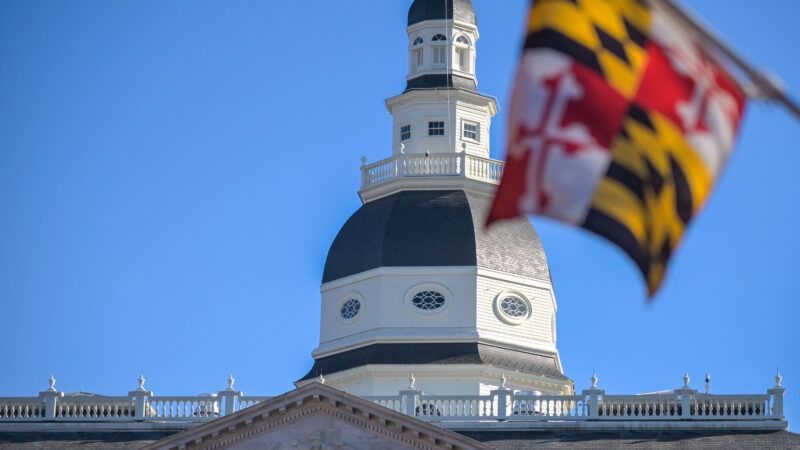
The American Gaming Association, a casino trade group, wants the feds to crack down on the sports prediction markets hosted on such platforms as Kalshi and Polymarket. So does the Maryland Lottery and Gaming Control Agency: In April 2025, according to public records obtained by WBFF-TV's Spotlight on Maryland unit, it sent a letter to the Commodity Futures Trading Commission demanding just that. The letter was an almost word-for-word match with a letter drafted earlier by the casino lobby.
"As the regulatory bodies charged with licensing and overseeing the legal gaming industry in our states," the association's model letter began, "we write today to express our grave concerns regarding the introduction of so-called 'sport event contracts.'" The Maryland letter changed "bodies" to "body" and "in our states" to "in Maryland," but otherwise its sentence was the same. The original letter then accused the platforms of putting "citizens at risk" by avoiding the "carefully crafted statutory and regulatory safeguards developed in each of our states." The Maryland letter said the exact same thing—including that phrase "each of our states." (So much for carefully crafted, state-by-state language.) This went on for three paragraphs, with hardly any differences between the texts.
A spokesman for the Maryland agency insisted to Spotlight on Maryland that the state had "independently" evaluated the issue. Maybe so, in the same way a student who nods thoughtfully as he copies a friend's homework arrives "independently" at the answers.
In the world of lobbying and government affairs, it's perfectly normal for industry insiders to draft legislative language for congressional offices to think about integrating into bills. But this went well beyond that: An interest group was menacing its competitors by using the state government like a sock puppet. It's a classic case of cronyism—of regulators getting too close to established businesses and going to bat to protect their interests.
The rapid rise of prediction markets has raised some valid questions about whether event contracts fall under state or federal jurisdiction. The Commodity Futures Trading Commission and the affected industries will hammer that out in court. What should not happen is what occurred in Maryland, where the distinction between government regulators and market competition was all but erased.
Casinos are naturally at odds with gaming apps because the apps threaten foot traffic into brick-and-mortar locations where consumers may eat, drink, and spend more money. But in that sense, all sorts of enterprises are competing with casinos—someone who goes to a nightclub is choosing not to go to a casino too. Meanwhile, prediction markets offer distinct products and services for investors that you'll never find in a casino.
A Kalshi or Polymarket contract is a price between zero and a dollar that moves in real time as new information arrives, converting scattered private knowledge into a single public number anyone can read. When Kalshi's markets correctly called 19 of 24 Oscar categories this year, that was the opinion of thousands of people with scraps of insider knowledge or expertise—people paid to be right—aggregated into a forecast more accurate than any single pundit could produce.
As Kalshi's Tarek Mansour has put it, the incentive structure of these markets rewards truth because it generates volume and liquidity. Compare that to the news media's incentive structure, which, for two decades, has rewarded whichever headline gets the click and drives ad revenue.
We shouldn't let casinos write the rulebook on prediction markets. They aren't worried about consumer harm—they're worried that fewer customers will walk through their doors.




