

Review: Latest Bridgerton Season Explores Personal Autonomy
A gossip column runs up against monarchical censorship.
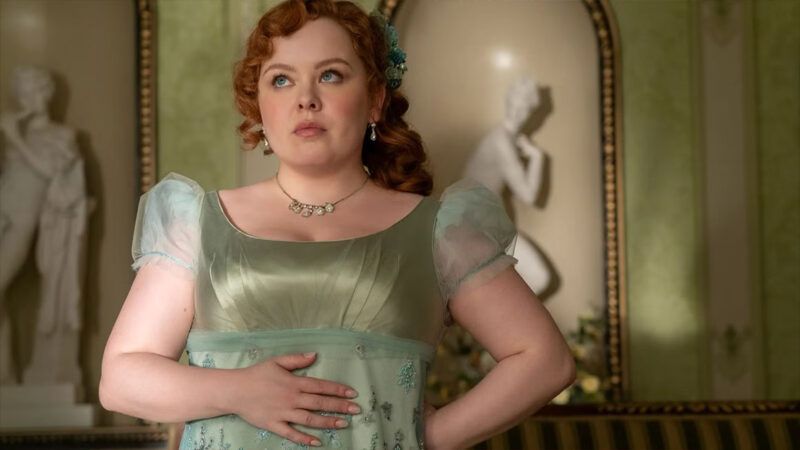
Netflix's Bridgerton is a Regency-era drama known for its lavish balls and magnificently over-the-top dresses. In the show's fourth season, released on Netflix in January and February, the show circles timely themes of journalistic freedom and personal autonomy amid all the pomp and pretension.
Set in an alternate-history version of early 19th century London, Bridgerton follows young men and women navigating the "marriage mart" under the watchful eyes of several judgmental aristocratic families, Queen Charlotte, and an ever-present gossip column written by the mysterious Lady Whistledown.
The identity of the author of those pseudonymous missives was outed in Season 3 as Penelope Featherington. Operating outside of polite society's rules, Penelope becomes the show's quiet radical. Her anonymous gossip pamphlet is an enormous success, so much so that she earns an income. Of course, the state attempts to control it.
In the newest season, Penelope is summoned to the queen's palace, where she is told who and what she must write about. Coverage of the "maid wars," a shortage of domestic help that causes havoc and forces households to raise wages, is not interesting enough for the queen. The queen demands gossip!
When the gossip writer seeks permission to give up her column entirely, Queen Charlotte refuses. Penelope is forced to choose between having her thoughts and words censored by the queen or risking everything—social standing, financial security, and more—to defy the bullying head of state.
For all its romantic escapism, Bridgerton quietly reminds viewers that the fight for freedom to write freely and earn a living has always been a radical act—especially for women.




