

Is Ukraine Helping Al Qaeda Conquer West Africa?
The proliferation of drones to Malian rebels is a bizarre, unexpected form of blowback.
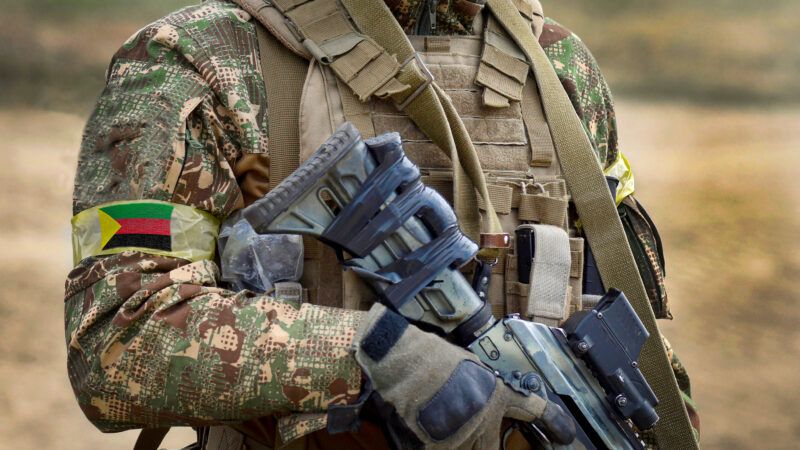
The fastest-growing branch of Al Qaeda today is in West Africa. Earlier this week, former rock star Iyad Ag Ghali and his followers, known as JNIM, launched a massive uprising in the African nation of Mali, capturing several cities, killing Defense Minister Sadio Camara, and threatening Bamako, the capital. This lightning offensive by Al Qaeda had an unlikely source of support: Ukrainian-trained drone pilots.
For at least two years, Ukrainian spies have been supporting Azawad, an unrecognized ethnic Tuareg secessionist state, in its fight against the Malian government, which is backed by Russian troops. This week, the Azawad Liberation Front announced that it was "in partnership with JNIM, equally engaged in the defense of the people against the Bamako military regime." The Tuareg fighters, who had studied drone warfare in Ukraine, are now providing air support to Al Qaeda.
Technically, Ukraine was not and is not directly supporting Al Qaeda. The movement for an independent Azawad, which is older than JNIM, has actually fought against the Islamist organization. But right now, Ukraine's Tuareg proxies are helping Al Qaeda capture and hold territory in Africa, using the same tactics that Ukraine had honed fighting Russia. It is a strange, unexpected case of foreign policy blowback.
From the Ukrainian perspective, support for Azawad is accomplishing its goals, hurting and humiliating Russian troops. Ukraine has similarly backed anti-Russian forces in Sudan and Syria.
In 2022, the Malian government kicked out French troops and hired Russian mercenaries to help combat Tuareg and Islamist opposition. Ukrainian support soon flowed to the former. Beginning with a dramatic July 2024 ambush, Ukrainian-trained Tuareg drone pilots have killed dozens of Russians. In this week's offensive, the Azawad Liberation Front forced an entire Russian garrison to surrender and withdraw from northern Mali.
But from the perspective of Ukraine's European and American backers, this war is leading to some alarming results. Even as French diplomats anonymously sneer that the uprising is "proof of the failure" of Russia's intervention, the French government is warning its citizens to evacuate the "extremely volatile" situation. Both the European Union and the United States called the actions of JNIM and the Azawad Liberation Front "terrorist attack[s]."
The U.S. military has spent hundreds of millions of dollars since 2007 trying to prevent Al Qaeda and the Islamic State group from gaining a foothold in Africa. In the same time period, the continent has seen a 100,000 percent increase in attacks. JNIM has been one of the biggest beneficiaries of the chaos, recruiting thousands of fighters across at least six countries. This week's offensive raised the specter of an entire country run by Al Qaeda. The Azawad Liberation Front has reportedly agreed to implement Islamic law as part of its alliance with JNIM.
The dilemma over Ukrainian support for Azawad echoes some other uncomfortable moments in U.S. foreign policy. In the 1980s, the U.S. supported Cambodian anticommunists led by former Prince Norodom Sihanouk and former Prime Minister Son Sann—who happened to be allied with the recently overthrown Khmer Rouge. Although the U.S. government "scrupulously avoided" contact with the Khmer Rouge itself, Sihanouk laughed to journalists that "the devils, they are there with Sihanouk and Son Sann."
Khmer Rouge leader Pol Pot, who spent the end of his life hiding among the insurgents, never faced justice for his genocidal crimes.
And the U.S. has been aligned with Al Qaeda itself at times. During the Syrian civil war, the CIA provided anti-tank missiles "to vetted members of the moderate armed opposition," requiring them to carefully document each missile they used to ensure that none of them went to Jabhat al-Nusra, the Syrian branch of Al Qaeda. But like Prince Sihanouk and Pol Pot, all of these groups were fighting in the same trenches, so victories by the "moderate armed opposition" objectively helped Jabhat al-Nusra, which then cannibalized the U.S.-backed rebels.
Years after the CIA cut support, the law of unintended consequences turned in Washington's favor. Ahmad al-Sharaa, the leader of Jabhat al-Nusra, ended up breaking away from Al Qaeda and becoming a U.S. partner. It was a relieving, albeit unlikely, end to that whole adventure.
Ukraine, of course, is in a very different position than the U.S. was in Cambodia and Syria. Its defense against Russia is not a war of choice. Rather than trying to run a global empire, Ukraine has been looking to make the best use of scarce resources and hit Russian interests beyond the front lines. Still, Ukraine's African adventure highlights how U.S. interests are often at odds with each other—and how the blowback from covert action is impossible to predict.




