

Review: Queer Eye Helped Promote LGBTQ Acceptance Without Yelling at People
The show, now in its final season, reminds viewers that people of different races, political parties, and sexual orientations can have mutually enriching interactions.
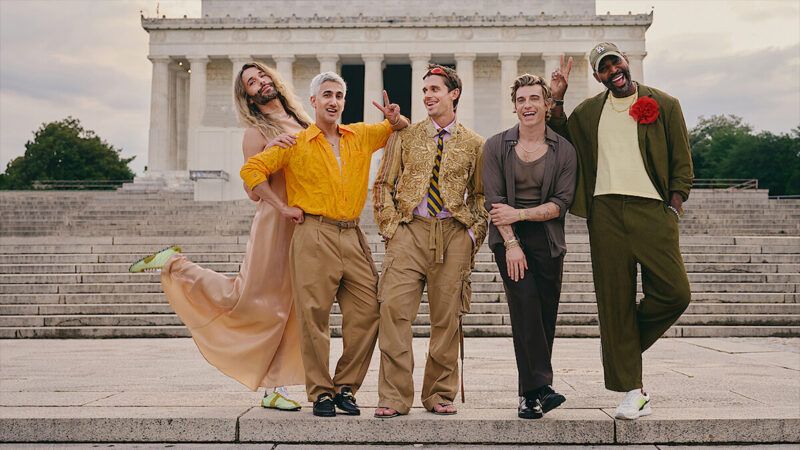
In the 10th season of Queer Eye, the Fab Five come to Washington, D.C., where they provide their "make-better" personal style revamps to two sisters, a charter school teacher, a firefighting single mom, a boat repairman, and a stepfather with a large blended family. The season includes many of the gimmicks Queer Eye viewers have come to expect (or loathe).
Since its launch in 2003 on Bravo and reboot by Netflix in 2018, the show has undermined cultural stereotypes about the LGBTQ community. It didn't do this by yelling at people, nor did it demand that the state punish bigots. It just highlighted helpful human interactions and met people where they were at. As this popular show did its thing, cultural attitudes changed. In June 2003, according to Gallup, only 39 percent of Americans accepted same-sex marriages; today, it's 68 percent.
Queer Eye, which is bowing out after this season, furthered this cultural change with a unifying message: No matter your race, political party, or sexual orientation, we can have mutually enriching interactions.




