Lawsuit: Trump's Newest Tariffs Are an 'Exercise of Completely Unrestrained Executive Power'
The lawsuit, filed by attorneys general and governors from 24 states, claims that Trump is once again trying "to usurp the taxing power that the Constitution vests in Congress."
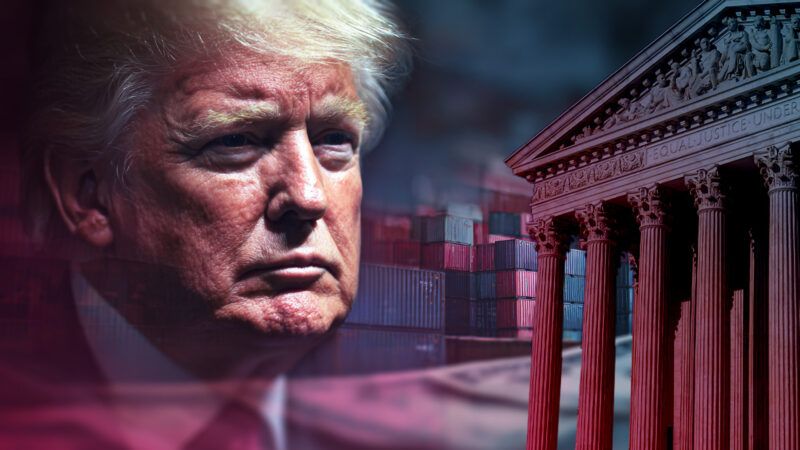
President Donald Trump's latest attempt to impose tariffs without congressional approval "is as lawless as" the previous tariffs struck down by the Supreme Court last month.
That's the argument made by the attorneys general and governors of 24 states, who filed a lawsuit Thursday in the federal Court of International Trade (CIT). The state attorneys allege that Trump's use of Section 122 of the Trade Act of 1974 to impose a 10 percent "global tariff" is an attempt to "sidestep" the Supreme Court's ruling.
"The President has made clear that he is going to impose worldwide tariffs by any means necessary," the lawsuit points out. Previously, Trump had been leaning on the International Emergency Economic Powers Act (IEEPA), a law that allows presidents to place sanctions and to regulate trade in some circumstances. Despite the new tariffs being invoked under a different legal justification, the states claim that "the policy is the same—an exercise of completely unrestrained executive power in an attempt to usurp the taxing power that the Constitution vests in Congress, not the President."
While all the attorneys general and governors who signed onto the new lawsuit are Democrats, observers from across the political spectrum have acknowledged the legal problems facing Trump's newest set of tariffs.
Last week, for example, conservative legal analyst Andrew McCarthy wrote in National Review that Trump's Section 122 tariffs are illegal because they do not meet the preconditions outlined in the law.
As McCarthy and others have noted, Section 122 allows presidents to impose tariffs of up to 15 percent for up to 150 days to "deal with large and serious United States balance-of-payments deficits." The United States does not currently have a balance-of-payments deficit with the rest of the world, and the Trump administration's attempt to invoke this law in response to trade deficits ignores the law's plain language.
Indeed, Trump's attorneys even admitted as much during the legal battles over the IEEPA tariffs. When that case was before the U.S. Court of Appeals for the Federal Circuit, the administration's lawyers pointedly noted that balance-of-payments deficits are "conceptually distinct" from the trade deficits and admitted that Section 122 would not apply.
In the lawsuit filed Thursday, the states' attorneys note the federal government's response in the previous lawsuit. When it comes to Section 122, they argue, Trump has not identified "any actual justification permitted" by the law.
"The President cannot meet the statutory requirements of Section 122, and his effort to impose tariffs under this statute is unlawful," the states argue.
Although it only comes up in passing in the new lawsuit, all of this likely bumps up against the "major questions" issue that helped sink Trump's IEEPA tariffs in front of the Supreme Court. When Congress delegates power to the executive branch, it must do so in narrow and specific ways. Section 122 is actually a good example of that. It outlines specific circumstances (the balance-of-payments deficit) under which a president can lawfully take limited action (tariffs of up to 15 percent).
Just like with the IEEPA tariffs, Trump's use of Section 122 stretches the text of the law to go well beyond what Congress authorized. It is another shocking expansion of executive power, and the CIT should waste no time in striking it down.