
Do Construction Workers Have Fourth Amendment Rights? A Federal Court Will Decide.
The Department of Homeland Security argues it doesn't need a warrant to enter a construction site.
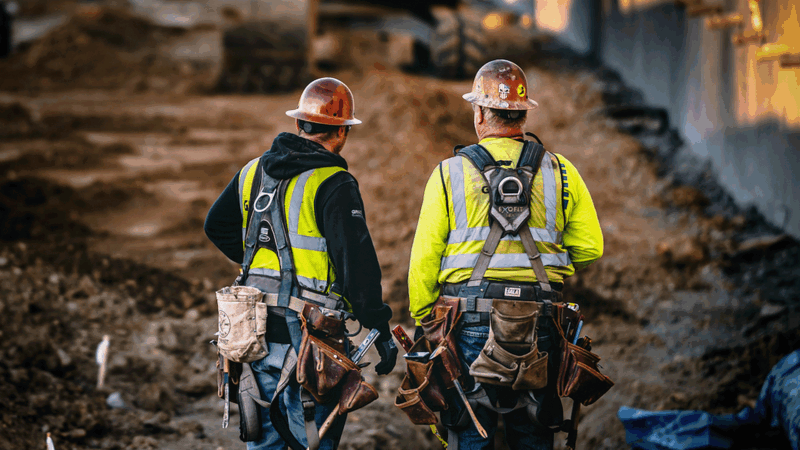
Immigration agents have intensified raids on construction sites across the country as the Trump administration pursues mass deportations. The raids often involve federal agents entering worksites without warrants, chasing workers, and detaining them (including U.S. citizens) for identity and immigration status checks. Now, the federal government is defending some of those tactics in court and asking a judge to throw out a lawsuit challenging them. In one such defense, the Trump administration basically argued that Fourth Amendment rights do not apply here: An attorney representing the Department of Homeland Security (DHS) argued that federal agents don't need warrants to enter construction sites, in a motion filed on January 29 in the Southern District of Alabama.
The case stems from two separate encounters between Leo Garcia Venegas—a U.S. citizen and construction worker—and immigration agents at Alabama construction sites in May and June 2025. Both times, Venegas was detained (once violently) while at work on private property. "I got arrested twice for being a Latino working in construction," Venegas said in a video about his case produced by the Institute for Justice, a public-interest law firm that is representing him. DHS Assistant Secretary for Public Affairs Tricia McLaughlin told Reason in October that "allegations that DHS law enforcement officers engage in 'racial profiling' are disgusting, reckless, and categorically FALSE."
In his complaint, Venegas argued that the federal government has a policy of entering worksites without judicial warrants. The government is contesting the existence of the policy and Venegas' ability to challenge warrantless entries. In the government's motion, Assistant U.S. Attorney Victoria Todd didn't deny that federal agents entered the construction sites without a warrant but claimed that Venegas had no "reasonable expectation of privacy" while working at sites owned by homebuilders D.R. Horton and Lennar. Therefore, Todd argued, Venegas has no standing to challenge the entries.
"Plaintiff does not have a recognized reasonable expectation of privacy while at work on multiple worksites—owned or controlled by [the homebuilders]—for relatively short times for the single express purpose of laying concrete," Todd wrote. Because Venegas worked temporarily on sites he didn't own, the motion argued, he had no constitutional protection against government entry and had no power to exclude anybody from the property, even at his own workplace. To have Fourth Amendment standing, Venegas would need an "unrestricted right of occupancy and control of the premises," per Todd.
The motion also invokes the open fields doctrine, a legal principle allowing law enforcement to enter some outdoor spaces without a warrant.
Josh Windham, a senior attorney at the Institute for Justice who is representing Venegas, says that the government's argument amounts to saying that nobody can claim Fourth Amendment rights in a construction site unless they are the owner—which he calls "laughably preposterous."
In construction sites, "there's going to be [no trespassing] signs up, there's going to be black tarp fencing, and there's going to be machinery. Any rational person understands not only that you shouldn't trespass, but that it's extremely dangerous for you to wander onto an active construction site," says Windham. "The notion that people think of these as open spaces, that government officials and private individuals should be able to go whenever they please, is silly." The second time Venegas was detained, Windham adds, he was putting the finishing touches on a house that was almost fully constructed, but agents wandered in anyway.
Windham claims that if the owner of the site gives a worker possession of the property, even temporarily, then it is under exclusive control of the worker for the duration of the job, and the worker can exclude others. Venegas, "while he's doing work on the sites with his crew, has not only the right but the responsibility to keep [extraneous] people off of these sites," explains Windham. He has "lawful control over these pieces of property while he's working on them, which we argue is sufficient to have Fourth Amendment rights in them."
The government's claim that there are no Fourth Amendment protections in construction sites means that federal agents could wander into any construction site without a warrant. In the context of the Trump administration's mass deportation agenda, Windham argues that the practical effect is that "Latino construction workers don't have any Fourth Amendment rights while at work." With over 8.3 million construction workers in America as of January, the implications could be sweeping.