
Louisville Is Making It Easier To Smoke Cigars Indoors
A Kentucky proposal to legalize cigar bars bucks the trend of prohibitionist tobacco policy.
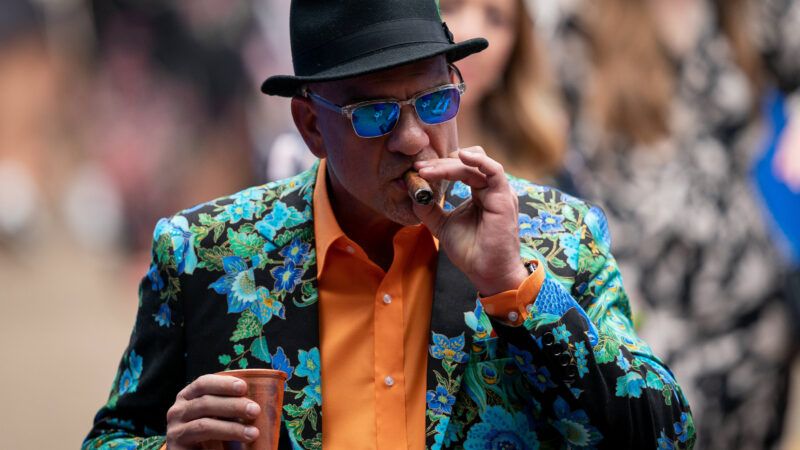
Bourbon and tobacco are two products practically synonymous with Kentucky. Pairing them indoors within the state's borders, however, is surprisingly difficult. Forty-four cities and counties throughout the state have implemented comprehensive indoor smoking bans. But a whiff of change is in the air: Last year, Louisville passed an exemption for cigar bars, and a new bill in the legislature could legalize them statewide.
Louisville's move is a rare example of government liberalizing smoking laws. Beginning in the 1970s and '80s with bans on smoking in workplaces and airplanes, such restrictions have tended to operate with a ratchet effect, tightening over time while almost never ceding ground back to smokers. In the 21st century, those bans expanded to include parks, sidewalks, beaches, golf courses, apartment balconies, public housing, and more, often without carve-outs for businesses catering to smokers.
Until last year, Louisville offered few legal options for indoor smoking. After the city's first smoking ban was overturned for illegally exempting the Churchill Downs racetrack, a broader one passed in 2008. Since then, cigar smokers have crossed into neighboring Indiana for a warmer reception. That loss of business helped motivate the city's decision to legalize cigar bars, requiring them to earn at least 15 percent of their revenue from tobacco products.
A nearly identical bill has now passed in the state House, though it raises the tobacco revenue requirement to 25 percent. Kentucky does not have a statewide smoking ban, but if passed, the bill would preempt local prohibitions on cigar bars.
Even in a state once heavily reliant on tobacco farming, the proposal may be a tough sell. A similar bill passed the House and died in the Senate last year, and comparable bills elsewhere are rare. North Dakota is the lone outlier, legalizing cigar bars in 2023. In Wisconsin, a bill allowing licenses for new cigar bars passed last year but was vetoed by Gov. Tony Evers.
Opposition to such reforms typically focuses on secondhand smoke and fears of normalizing tobacco use. The former is a valid concern, even if the risks of environmental tobacco smoke have often been overstated. Still, the presence of risk alone does not justify barring adults from consenting to spend time in smoking establishments, whether as patrons, owners, or employees. And while few would want to return to an era when public smoking was unavoidable, steering clear of niche businesses like cigar bars is an easy ask for those who prefer smoke-free environments.
Concerns about the normalization of cigar smoking are even less compelling. A letter from health organizations opposing the Kentucky bill claims the proposal "sends the wrong message to Kentucky's youth" and that "youth and young adults may perceive that it's socially acceptable to use cigars." But adults routinely engage in activities others would prefer young people not emulate—a point that should be obvious in a state famous for bourbon and horse betting.
If anything, limiting the exemption to cigar bars could be criticized for not going far enough. Allowing only cigars (and pipes in the case of the Kentucky laws) can be described as elitist, favoring premium products while banishing smokers of cigarettes from social spaces. As Barbara Ehrenriech observed in 2018, "As more affluent people gave up the habit, the war on smoking, which was always presented as an entirely benevolent effort, began to look like a war on the working class."
At the other extreme, the logic breaks down entirely. Legalizing cigar bars while prohibiting indoor vaping is incoherent. Given the lower risks associated with e-cigarette vapor compared to smoke from burning tobacco, there is no reason for restricting the former more tightly than the latter. The preference of cigars over vapes and cigarettes has much more to do with regulatory inconsistency than with any objective weighing of their secondhand dangers.
Imperfect as they may be, moderate rollbacks of smoking bans to legalize cigar bars are a rare counter to the broader trend toward harsher tobacco policies. From flavor bans to smoke-free generation laws, regulation is increasingly giving way to outright prohibition. The unintended consequences can be dire: discouraging smokers from transitioning to safer alternatives, criminalizing sellers of forbidden products, and handing illicit markets to violent cartels.
In that context, legalizing cigar bars is a small but welcome step toward policies that respect the liberties of consenting adults. Applied consistently, and contra the desires of public health advocates, liberalization would allow for more smoke-friendly spaces than exist today. By destigmatizing nicotine and tobacco use, it could also strengthen the case for harm reduction, recognizing the rights of adults to access safer products that can render combusted tobacco largely obsolete. A nonprohibitionist approach to nicotine and tobacco can accommodate both.
