
Will Zohran Mamdani Defund New York City Police?
The new mayor is keeping Police Commissioner Jessica Tisch on the job, but they might have a contentious relationship.
In the February/March 2026 issue of Reason, we explore Mayor-elect Zohran Mamdani's policy goals and what they mean for New York City. Click here to read the other entries.
Central to Zohran Mamdani's 2020 campaign for New York State Assembly was a pitch to radically constrain law enforcement. "Queer liberation means defund the police," he posted two days after securing his seat representing Astoria, an apt coda to that election season.
It was November 2020, just months after the George Floyd protests began—a time when calls to defund the police were more common. Such a plan was arguably always a tougher sell in a mayoral campaign where candidates have to court a more politically diverse electorate than the one in western Queens, a district that overlaps with that of the socialist Rep. Alexandria Ocasio-Cortez (D–N.Y.).
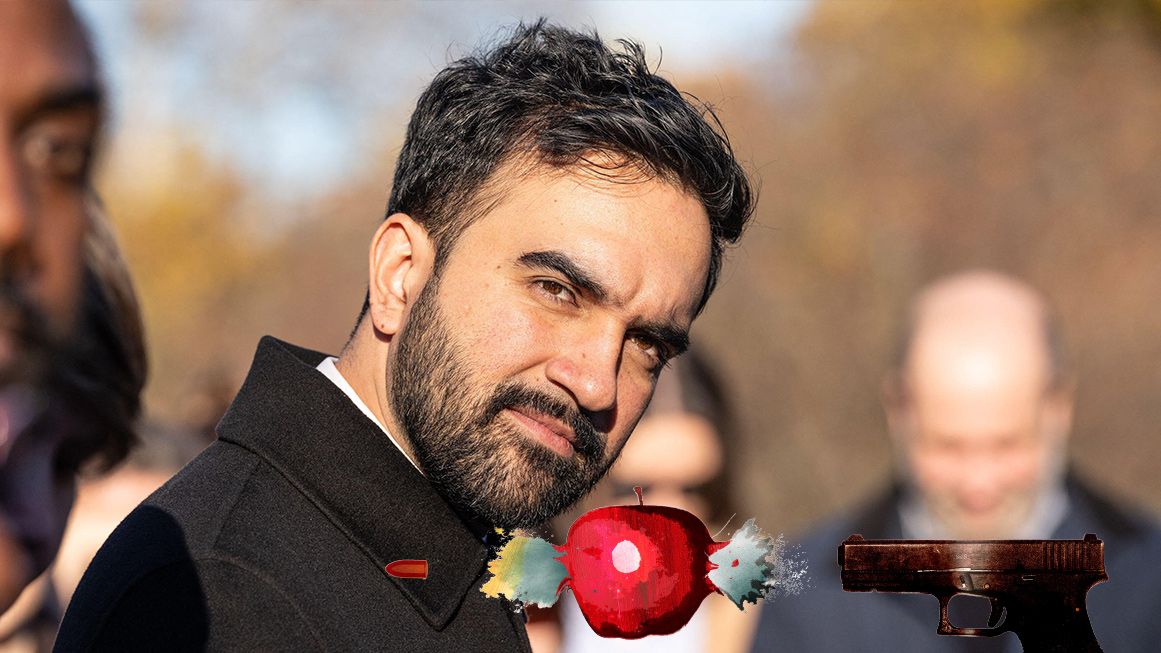
Which helps explain why Mamdani pivoted fairly dramatically on criminal justice in his run to be mayor of America's most populous city. "I am not defunding the police," he said on the campaign trail. "I am not running to defund the police." One way he has tried to show he is serious about that promise: asking Jessica Tisch, who was an ally of Mayor Eric Adams, to stay on as New York City police commissioner.
That type of law enforcement partnership would have been difficult to imagine with the Mamdani who made his political debut just over five years ago. What might their differences mean for New York City?
On one hand, not much. A great deal has been made, for example, of Mamdani and Tisch diverging considerably on New York's state bail law, which bars judges from contemplating a defendant's dangerousness when making decisions about bond. It is the only state with that ban. While Tisch's skepticism of that policy has merit—nearby New Jersey successfully eliminated cash bail in 2017 but did so in favor of a risk-based system—neither she nor Mamdani has the power to alter the legislation.
The same goes for their disagreements on New York's Raise the Age law, which diverted most 16- and 17-year-old alleged offenders out of adult court. Mamdani likes the law; Tisch is against it. That debate is important, but it ultimately rests with state legislators.
Other differences are more consequential, or at least have potential to be. Currently, the city's Civilian Complaint Review Board (CCRB) can recommend disciplinary action after investigating allegations of misconduct at the New York Police Department (NYPD). The final say, however, belongs to the commissioner—something Mamdani campaigned on revoking.
The dispute over where that power should reside reached a fever pitch this summer, right in the heat of the New York mayoral campaign, when Tisch rejected a CCRB finding that an officer should be fired in connection with a fatal 2019 shooting. In that case, Lt. Jonathan Rivera inserted himself into a vehicle as a suspect, Allan Feliz, attempted to drive away from a traffic stop. When the car sped forward, Rivera shot Feliz in the chest.
At trial, a judge did not buy Rivera's testimony that he feared Feliz was poised to run over his colleague, Officer Edward Barrett. Tisch instead cited a report from New York Attorney General Letitia James, who wrote that Rivera had "a reasonable perception—or at least not an obviously unreasonable one" that deadly force was justified. (James declined to prosecute Rivera in criminal court.)
Whatever you think of Tisch's decision, her record on law enforcement misconduct may surprise those whose impression was formed solely by the headlines about Rivera. "Not only has Tisch signaled a greater willingness to discipline officers more frequently" than her predecessors, reported Gothamist last year, but "she's also imposing tougher penalties." And despite Mamdani's campaign emphasis on depriving the commissioner of veto power over officer discipline, he praised Tisch's efforts to "root out corruption" as something that united the two.
They are decidedly not united on how many NYPD officers there should be and, in some sense, on what they should be doing. Tisch expressed support for Adams' plan to add 5,000 officers to the force, which has decreased in recent years, whereas Mamdani wants to keep the current head count.
Perhaps more notable are their differing enforcement priorities. A hallmark of Tisch's tenure has been her focus on low-level offenses—including open drug use, prostitution, and fare evasion—to crack down on public disorder. "When neighborhoods are plagued by issues such as aggressive panhandling, unruly street vending, public urination, abandoned vehicles, it gives the impression of an unsafe community," she said in January 2025. The NYPD has credited that strategy, often referred to as broken windows policing, with the city's recent crime decline.
Mamdani also prefers a prevention-oriented approach, but it bears no resemblance to Tisch's. He has said that police officers should be free to target major crimes. To accomplish that, he campaigned on creating a Department of Community Safety, with a budget over $1 billion, that would seek to address poverty and inequality; it would also divert lower-level calls to mental health specialists and social workers. While focusing police resources on serious offenses is an appealing idea, it's worth noting that New York City already has a hefty social safety net.
Which ideological vision for the NYPD will win out will become clearer with time. Shortly after announcing Tisch would stay on, Mamdani unveiled his public safety transition team. Among others, it includes Alex Vitale, a sociologist who has argued we should abolish police.
This article originally appeared in print under the headline "Will Mamdani Defund the Police?."
