

Poland's Beer and Food Tell the Story of the Country's Extraordinary Rise From Communism
Not even 35 years after escaping Soviet-style central planning, Poland has become a capitalist success story.
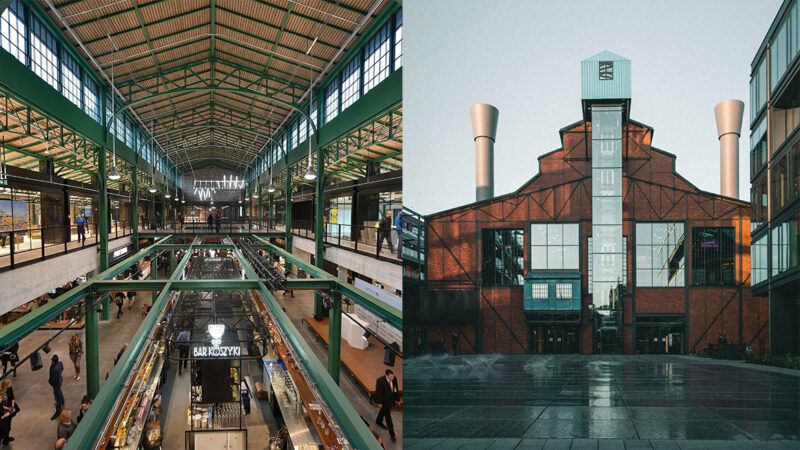
Warsaw, Poland, is a living museum of economic systems. It's a city where concrete reliefs of stoic factory workers decorate a building that now houses a Kentucky Fried Chicken, where a Soviet-era apartment block stands beside a glass tower filled with coworking spaces.
Not even 35 years after escaping Soviet-style central planning, Poland has become a capitalist success story—the world's 20th-largest economy and among the most prosperous of the former Eastern Bloc nations. The country's transformation isn't just visible in gross domestic product figures; it's on every street corner and in every bite.
At lunchtime, you can step into a bar mleczny, where beet soup and pierogi still cost a few zloty. A few blocks away, in a converted power plant, bartenders pour small-batch IPAs. Those two scenes tell the story of Poland's journey from collectivism to choice.
The first bar mleczny (literally "milk bar") opened in 1896 as a cafeteria serving cheap dairy-based meals to urban workers. Under communism, the model was nationalized and multiplied, feeding the masses when stores and wallets ran empty. After the fall of communism in 1989, most closed as subsidies dried up and people rushed to embrace the global fast-food brands that symbolized freedom. Milk bars were forgotten, but they made an unlikely comeback in the 2010s.
Most have gone fully private, expanding menus and embracing the market; others still receive modest government reimbursements for meat-free dishes. Either way, milk bars have gone from symbols of scarcity to icons of nostalgic comfort—Poland's version of the American diner.
If milk bars represent survival despite totalitarian economics, Poland's craft beer movement embodies experimentation. Beer has been brewed in Poland for a millennium, surviving Nazi confiscation and communist quotas that once forbade brewers from selling outside their regions.
Freedom transformed that constraint into a creative explosion. In 2011, the release of Atak Chmielu—a hoppy IPA from PINTA—kicked off the modern craft movement. By 2019, Poland had over 400 breweries, up from just 70 in 2010. Today, it ranks third in the European Union for beer production. From family-run taprooms to chic brewpubs, the scene reflects a bottom-up capitalism built on competition, flavor, and risk taking.
And then there are capitalism's culinary cathedrals—food halls.
Hala Koszyki, first built in 1909 and reopened in 2016, set the model: a prewar market reborn as a playground of global cuisine. Elektrownia Powiśle, a 1900s power station that was turned into a food hall in 2020, still flaunts its old industrial panels and switches while serving cocktails and bao buns. Fabryka Norblina followed in 2021, a factory complex now filled with wine bars, vegan counters, and live music. For vendors, food halls like these offer lower barriers to entry; for consumers, they offer an abundance of choice.
Warsaw's food culture captures what no central planner could ever manufacture: spontaneity, competition, and taste shaped by demand.
This article originally appeared in print under the headline "A Taste of Capitalism in Warsaw."




