

Beware the Press's Self-Serving Calls to Regulate Social Media
Demands for government oversight hide opportunism amid rhetoric about safety.
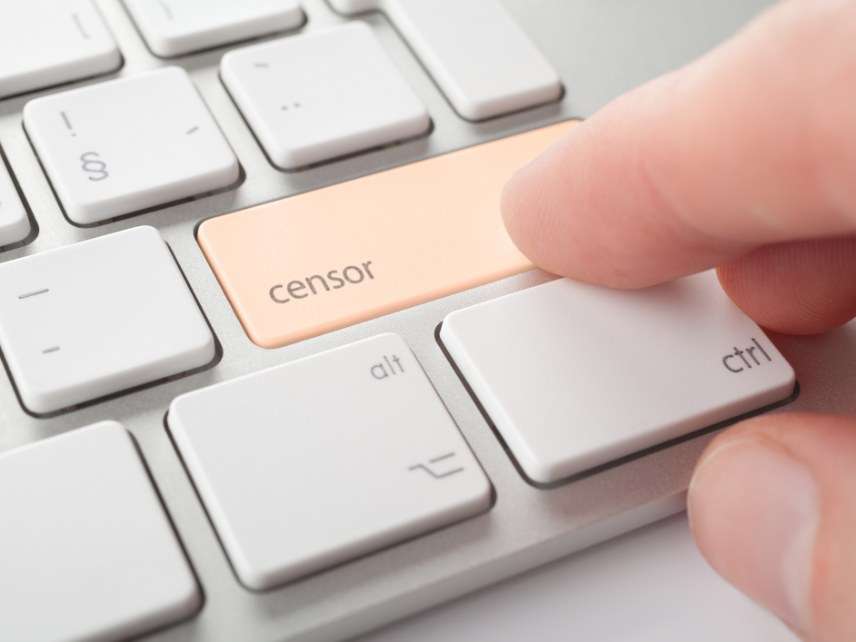
In the states and abroad, policymakers and commentators are salivating over the opportunity to regulate social media content. It is easy to understand why governments might want to have more influence on social media platforms. But the legacy media's consistent push for more controls on platforms like Facebook and Twitter has been less scrutinized. There is a reason for this consilience: these policies can ultimately serve as a government-granted privilege that favored media firms use to get an edge over their competition.
It may sound a little roundabout. It doesn't take a short-sighted partisan to have serious problems with a lot of social media practices. For instance, tech platforms have collaborated, willingly or not, with governments in surveillance and social conditioning campaigns. Then there's the spectral but speculated upon creation of "shadow profiles" that are only discernable through their algorithmic residue.
But don't be fooled: Some parties who trot out these more reasonable pretexts for enhanced tech scrutiny do so for opportunistic reasons.
Consider the recent campaign by media outfits in the United Kingdom to crack down on social media platforms.
In early September, the leaders of some of the top media conglomerates across the pond—including the BBC, Sky, ITV, and Channel 4—wrote a strong letter to The Sunday Telegraph urging the government to intervene to counteract "all potential online harms, many of which are exacerbated by social media."
There are a variety of proposals on the table, and these media leaders specifically suggested that a government oversight board could be created to monitor and manage social media platforms. But whatever the final form, it is clear to them that Something Must Be Done. After all, they "do not think it is realistic or appropriate to expect internet and social media companies to make all the judgment calls about what content is and is not acceptable, without any independent oversight."
Sound ironic? The same media companies who would rightly howl at the suggestion that a government oversee their "judgement calls about what content is and is not acceptable"—A.K.A. delivering news—self-righteously call to impose these rules on a competing industry without a second thought. They may cloak their self-interested campaign in the rhetoric of "safety," but so do opponents of the free press.
It is no secret that the rise of social media has caught many in the traditional media industry flatfooted. The unfortunate demise of many austere news houses is cliché to the point of being a frequent presidential punching bag, and the digitization of information has absolutely driven that trend. Adding insult to injury, the advertising infrastructure that used to prop up traditional journalism has likewise become "optimized," prompting journalists' futures to be driven by the algorithmic whims of a perhaps too easily bamboozled public. I'd be mad about this state of affairs, too.
But this does not justify privilege-seeking. It is easy to see how enhanced government control of the means of information distribution could have the happy effect of shoring up the positions of traditional media outlets. Any kind of controls that slow down the rate of information distribution could do this. Even better—the oversight board could be staffed by current or former members of the established press. After all, who better than they to determine what content is in the public interest? And perhaps it just so happens that their current or former institutions happen to be the most trustworthy, and therefore the most often allowed on social media platforms… .
Society is always made worse off overall when specific industries are protected by the government. But this state of affairs is all the more frightening when the relevant industry concerns a factor so vital to governance as delivering the truth.
The situation is similar in the United States, as last week's spectacle on Capitol Hill suggests. Here, as in the United Kingdom, many media outlets harbor grudges against social media platforms for their effects on the news industry and public opinion.
But there are key institutional differences that change the calculus.
The freedom of speech is a constitutionally protected right in America, but not in the U.K. Even though social media platforms are private companies, the cultural respect of free speech is jealously guarded here, and that influences people's opinions on proper policy responses. Perhaps the cultural antibodies against violations of free speech are simply weaker in the U.K. Alternatively, perhaps Americans will misdirect our love of free speech into supporting public utility regulations on social media platforms that also violate the speech rights of social media platforms.
At the end of the day, media companies—vaunted though their profession may be in some circles—are still companies. And many of them are very big and very powerful. Some who call for social media oversight may truly have earnest motives. But surely all of them do not, and we should not allow the halo of "the press" to cloud our scrutiny of what may be simply an ugly business move.




