This is an action for damages arising from Defendants' coordinated efforts of fraud, defamation, and anti-competitive conduct designed to destroy Plaintiff's academic reputation, eliminate him as a competitor in the market for World War I military history and scholarship, and interfere with his political campaigns for public office.
In the SAC [Second Amended Complaint], Plaintiff alleges he is a retired United States Army colonel, a recipient in 2013 of a Ph.D. in United States military history from the University of New Brunswick (UNB), a former Army War College professor, a published author of books on Sergeant Alvin York (Sgt. York) and World War I as fought in France, and a public speaker on military history. Plaintiff also alleges he is a current state senator for the Commonwealth of Pennsylvania's 33rd District, was the 2022 Republican nominee for Pennsylvania governor, and according to Plaintiff, "was considered the frontrunner for the 2024 U.S. Senate seat." …
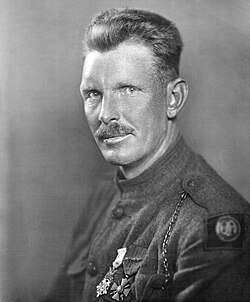
Gregory was a graduate student and Ph.D. candidate at the University of Oklahoma. Gregory is one of several historians who assert that Sgt. York's role in the capture of German soldiers was exaggerated, in direct contrast to Plaintiff's position regarding Sgt. York's role. Gregory has written a book, Unraveling the Myth of Sgt. Alvin York: The Other Sixteen, describing the soldiers who fought alongside Sgt. York but whose contributions are largely absent from the historical account Plaintiff and others popularized.
While conducting his research, Gregory identified what he believed were numerous errors in Plaintiff's scholarship and reported 213 alleged inaccuracies to Plaintiff's publisher and UNB in 2021 and 2022. When Plaintiff ran for governor of Pennsylvania in 2022, the media covered Gregory's reports of inaccuracies and his opinion that the large number of inaccuracies suggest academic fraud….
The court rejected Plaintiff's RICO claim:
… Plaintiff alleges RICO violations based upon Gregory's complaints regarding errors in Plaintiff's PhD dissertation, UNB's release and investigation of Plaintiff's embargoed dissertation during the time Plaintiff was running for election for governor of Pennsylvania, Defendants' discussions and criticism of Plaintiff's dissertation to the press, and Gregory's contact with the publisher of Plaintiff's books questioning Plaintiff's research and thesis. "To state a RICO claim, a plaintiff must allege that the defendant violated the substantive RICO statute, 18 U.S.C. § 1962, by setting forth four elements: (1) conduct (2) of an enterprise (3) through a pattern (4) of racketeering activity." The Supreme Court has defined an enterprise as "a group of persons associated together for a common purpose of engaging in a course of conduct." "Under this test, a group must have [1] a purpose, [2] relationships among those associated with the enterprise, and [3] longevity sufficient to permit these associates to pursue the enterprise's purpose."
Having carefully reviewed the SAC, the Court concludes Plaintiff has not alleged sufficient facts showing the existence of an enterprise among Gregory and his co-defendants. Specifically, the Court finds Plaintiff has failed to allege sufficient facts showing the existence of a common purpose among Gregory and the UNB Defendants. In fact, based upon the facts set forth in the SAC, the interests of Gregory and the UNB Defendants regarding Plaintiff's dissertation and PhD actually conflict. As alleged in the SAC, Gregory has criticized Plaintiff's research in support of his dissertation for years; this is the same research UNB accepted in granting Plaintiff his PhD. Gregory's criticism of Plaintiff's scholarship, thus, also impugns UNB's doctoral policies and procedures.
The court rejected plaintiff's antitrust claims:
Plaintiff alleges that Defendants "conspired to restrain trade and commerce internationally and interstate by joining with James Gregory III to accept his complaints against Col. Mastriano's PhD and thesis, and books, all in exchange for Mr. Gregory's similar-topic book and speaking engagements would benefit and that UNB's economic opportunities would advance in the face of smears of one of its students, Col. Mastriano." {The Court is perplexed how criticisms levied against the PhD Plaintiff obtained at UNB would advance UNB's economic opportunities.}
In order to state a claim under Section 1 of the Sherman Act, a plaintiff must plead the following three elements: "(1) a contract, combination, or conspiracy among two or more independent actors; (2) that unreasonably restrains trade; and (3) is in, or substantially affects, interstate commerce." "To carry its initial burden, a plaintiff cannot simply show that the challenged action adversely affected [its] business. Instead, because the antitrust laws are concerned with effects on consumers rather than competitors, the plaintiff must show an adverse effect on competition in general." Having carefully reviewed the SAC, the Court concludes that Plaintiff has not alleged sufficient facts showing an adverse effect on competition in general. Plaintiff's allegations solely focus on the harm to his own business interests….
Plaintiff [also] alleges:
Defendants have illegally tied Gregory's conflicted and compromised complaints against Col. Mastriano's PhD to a widespread attack on his intangible voting rights and property interests including his elections and campaigns to public office and the publication of his books on Sgt. Alvin York and the WWI conflict in France….
Defendants have further tied these complaints to a widespread effort to prevent fair market opportunities with his earned PhD by making maliciously false accusations against Col. Mastriano regarding academic dishonesty, political viewpoints falsely imputed to him, and even malicious lies of violence.
The purpose and effect of this conspiracy to violate the Sherman Anti-Trust Act is to prevent Col. Mastriano from offering different story accounts and history regarding the heroism of Sgt. Alvin York and his miraculous victories on the battlefields of France….
The Tenth Circuit has defined a "tying arrangement" for purposes of the Sherman Act as "an agreement by a party to sell one product but only on the condition that the buyer also purchases a different (tied) product, or at least agrees that he will not purchase that product from another supplier." A tying arrangement is generally illegal under § 1 of the Sherman Act if a party can show the following: "(1) two separate products or services are involved; (2) the sale or agreement to sell one product or service is conditioned on the purchase of another; (3) the seller has sufficient economic power in the tying product market to enable it to restrain trade in the tied product market; and (4) a not insubstantial amount of interstate commerce in the tied product is affected." …
Plaintiff has not alleged any facts showing the existence of a tying arrangement…. Plaintiff has failed to allege any facts showing the sale or agreement to purchase one product is conditioned on the purchase of another product.
The court also rejected plaintiff's defamation claim, on statute of limitations grounds; but it held that plaintiff's false light claim against Gregory can go forward (since the Oklahoma statute of limitations allows two years to file a false light claim rather than the one year allowed for defamation):
To state a claim for false light invasion of privacy, a plaintiff must allege:
(1) the defendant gave publicity to a matter concerning the plaintiff that placed the plaintiff before the public in a false light, (2) the false light in which the plaintiff was placed would be highly offensive to a reasonable person, and (3) the defendant had knowledge of or acted in reckless disregard as to the falsity of the publicized matter and the false light in which the other would be placed.
Presuming all of Plaintiff's factual allegations are true and construing them in the light most favorable to Plaintiff, the Court concludes that Plaintiff has set forth sufficient allegations to state a false light claim. The Court further finds Plaintiff's claims are not premised entirely on Gregory's academic opinions. Finally, the Court finds Plaintiff has sufficiently pled actual malice in relation to his false light claim. Accordingly, Plaintiff's false light claim will not be dismissed….
The SAC alleges that Gregory said Mastriano 'lied about documents,' 'fabricated sources,' and committed 'fraud.' Those are plainly verifiable accusations of dishonest conduct, not mere taste or interpretation. This is further demonstrated by Gregory's own averments that he repeatedly made complaints against Col. Mastriano's work with both his publisher and against his UNB PhD, and on the public airways during his political campaigns, all alleging dishonest conduct and a direct attack on Col. Mastriano's character. These outrageous actions of Gregory are not mere matters of opinion as he now claims….
Gregory's reliance on Greenbelt Coop. Publ'g Ass'n v. Bresler (1970) is misplaced. There, the term 'blackmail' was held to be 'no more than rhetorical hyperbole, a vigorous epithet' in the rough-and-tumble of a local zoning dispute. Here, by contrast, Gregory is alleged to have presented himself as a historian with identified documentary findings, to have spoken to journalists and radio audiences in that capacity, and to have accused Mastriano of intentional academic deceit. In that setting, a reasonable listener would understand Gregory to be asserting verifiable facts, not indulging in loose metaphor….
Nor do ONY, Dilworth, or Turkish Coalition compel dismissal. ONY (2d Cir. 2013) involved peer-reviewed scientific conclusions accompanied by disclosed data and methodological limitations. Dilworth (7th Cir. 1996) involved a book criticizing 'mathematical cranks'—the Seventh Circuit stressed that the dispute was about ideas and methods, not accusations of concrete dishonest acts. And Turkish Coalition recognized that differing views of source credibility in history may be opinion, but it did not hold that a scholar may publicly accuse a named rival of fabrication and lying without consequence. Gregory's alleged statements cross the line those cases preserve….
The SAC adequately pleads [actual malice, defined] … as publication with knowledge of falsity or reckless disregard for truth. Reckless disregard exists when the speaker in fact 'entertained serious doubts as to the truth of his publication.' And 'purposeful avoidance of the truth' is probative of actual malice.
The SAC … alleges Gregory had long familiarity with the same body of historical materials; that he persisted in accusing Mastriano of fraud and fabrication despite prior institutional handling of the matter; that he sought release and use of the embargoed dissertation to fuel the campaign; and that he republished the accusations during politically salient moments to maximize damage. Those facts permit the reasonable inference that Gregory was not merely mistaken but acted with knowledge of falsity or reckless disregard….
Of course, at the later summary judgment stage, the plaintiff will have to offer evidence and not just plausible allegations.
Greg Harold Greubel (FIRE) and Robert D. Nelon (Hall Estill-OKC) represent Gregory. Disclosure: I had earlier successfully moved to intervene in the case to unseal certain allegedly libelous material that formed the basis of part of Mastriano's lawsuit.