
The Volokh Conspiracy
Mostly law professors | Sometimes contrarian | Often libertarian | Always independent
Viktor Orban's Hungary Exemplifies the Perils of Nationalism
As a new analysis by Johan Norberg shows, the regime many MAGA Republicans see as a model to emulate has repressed civil liberties, undermined the free market, destroyed the rule of law, and made Hungary the poorest nation in the European Union.
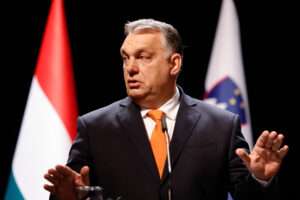
Many MAGA Republicans view Viktor Orban's Hungary as a model for their own policies, and Vice President J.D. Vance has gone to Hungary to help the increasingly unpopular Orban stave off electoral defeat, which might well happen despite Orban's rigging of the election system. But, as my Cato colleague and prominent Swedish libertarian economic policy expert Johan Norberg explains in a new Cato policy analysis, Orban's rule is a cautionary tale, not an example to emulate:
Some US conservatives see Prime Minister Viktor Orbán's Hungary as a model for America's future. In reality, Orbán's crude majoritarianism has undermined the rule of law and media freedom in Hungary to take control of the economy and funnel resources to loyal oligarchs. The dismantling of institutional constraints on state power has gone further than in other modern democracies, and the results have consistently disappointed, even in areas where the government claims achievements such as strengthening the economy or increasing fertility rates. Far from being a model, Orbán's Hungary is a cautionary tale of what results from an unrestrained executive with strongly centralized power, crony capitalism, and the systematic dismantling of the rule of law.
Norberg documents each of these points in detail. Whether the standard is civil liberties, economic freedom, prosperity, or even such social-conservative goals as increasing the birthrate, Orban's rule has been awful. After initial success in transitioning from communism and raising standards of living under previous post-communist governments, Orban's regime has made Hungary the poorest and least free nation in the European Union. See also Norberg's shorter summary of his analysis in a recent Washington Post op ed.
I would add that the authoritarian tendencies, repression, and harmful economic statism we see in Hungary under Orban are far from entirely unique to this particular government. To a large extent, they exemplify broader pathologies of nationalism, which Alex Nowrasteh and I surveyed in our 2024 article, "The Case Against Nationalism." Just as Venezuela illustrates the perils of "democratic socialism," Hungary illustrates those of nationalism. Indeed, as Alex and I discuss in our articles, these two types of awful political systems have much in common, despite being based significantly different ideologies.
We should learn from the evils of Orban and other similar nationalists, not imitate them.
