

The Volokh Conspiracy
Mostly law professors | Sometimes contrarian | Often libertarian | Always independent
Today in Supreme Court History: January 25, 1819
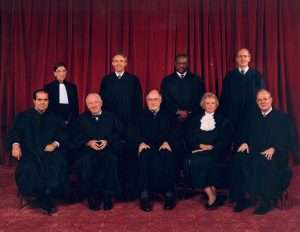
1/25/1819: Thomas Jefferson charters the University of Virginia. 176 years later, the Supreme Court would decide Rosenberger v. Rector and Visitors of the University of Virginia (1995).

Editor's Note: We invite comments and request that they be civil and on-topic. We do not moderate or assume any responsibility for comments, which are owned by the readers who post them. Comments do not represent the views of Reason.com or Reason Foundation. We reserve the right to delete any comment for any reason at any time. Comments may only be edited within 5 minutes of posting. Report abuses.
Please to post comments
It is safer to have the whole people respectably enlightened than a few in a high state of science and the many in ignorance.
Thomas Jefferson believed that education was an essential aspect of the development of a citizen and the pursuit of happiness generally. State sponsored education would play an important part.
The Encyclopedia of Virginia notes:
Jefferson’s religious beliefs also took a central role in the formation of the University of Virginia in 1819. In spite of substantial pressure, he refused to hire a minister to teach religion at the new university, arguing that the school was state-owned and therefore could not constitutionally promote or endorse any particular religion. Jefferson argued that religion should instead be taught as part of philosophy and ethics. Under pressure he accepted the notion that religious services might occur in a public building on the university’s grounds, but insisted that such services be unofficial and access to buildings be pursuant to “impartial regulation,” or open to all religious services and other public speakers.
https://encyclopediavirginia.org/entries/jefferson-thomas-and-religion/
The specific dispute in the SCOTUS case involves use of government funds to promote religion. Was it merely a religious message that was protected as part of a general collection of messages or (to quote the dissent) illicit "direct funding of core religious activities by an arm of the State"?
The ultimate line depended on the application of the Fourteenth Amendment [James Madison, who shared Jefferson's general beliefs on the separation of church and states, supported an amendment that would have protected "the equal right of conscience" against state action] long after Jefferson died.
Jefferson to some fashion guides our decision-making but as that as God supposedly said when he tried to interfere in a dispute about the Torah, the proper response comes from the rabbis: it's our call now. Jefferson would likely FWIW approve.


