The Volokh Conspiracy
Mostly law professors | Sometimes contrarian | Often libertarian | Always independent

Today in Supreme Court History: January 14, 1780
Editor's Note: We invite comments and request that they be civil and on-topic. We do not moderate or assume any responsibility for comments, which are owned by the readers who post them. Comments do not represent the views of Reason.com or Reason Foundation. We reserve the right to delete any comment for any reason at any time. Comments may only be edited within 5 minutes of posting. Report abuses.
Please to post comments

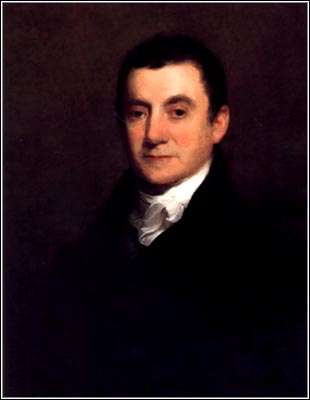
He joined the Supreme Court a few days after his fiftieth birthday so we can have another entry about him in a few days.
He studied law with Alexander Dallas, known as the first reporter of U.S. Supreme Court decisions.
Baldwin had health problems (his colleague Joseph Story felt he was "partially deranged at all times") during his tenure. Baldwin, like Story, wrote a treatise on the Constitution. It is less famous.
Baldwin is one of the largely forgotten justices regularly featured in this entry. They add some flavor to the Court.
Meanwhile, with little dissent (though five justices didn't join a short passage on legislative history), three opinions were handed down today. There was a split in one on the reasoning and multiple separate writings overall. No tariff opinion.
Baldwin, as circuit justice, presided over a trial that captivated the nation, that of Alexander William Holmes. United States v. Holmes, 26 F. Cas. 360 (C.C.E.D. Pa. 1842) (No. 15,383).
Holmes was a crewmember aboard the American ship William Brown that sailed from Liverpool bound for Philadelphia on March 13, 1841, with 17 crew and 65 passengers. At about 10 PM on April 19, some 250 miles from Newfoundland, the ship struck an iceberg and began to sink rapidly. Passengers scrambled madly for the lifeboats, of which there were two, a small cutter and a larger longboat. The cutter was occupied by Captain George L. Harris, eight crew, and one passenger. The longboat, built to accommodate 18, was occupied by 41: 32 passengers and the nine remaining members of the crew, including First Mate Rhodes and Seaman Holmes. 31 passengers went down with the ship.
The next morning, Capt. Harris, assessing the situation, decided the boats should separate, increasing the chances of rescue of at least one of them. Harris and Rhodes exchanged words in hushed tones, Rhodes impressing upon him the dire condition of the foundering, overloaded longboat. Harris told him, “You know what you will have to do. But let it be a last resort. Harris placed Rhodes in command of the longboat, and, with that, the boats separated.
That night, a wave filled the boat, and Rhodes realized the “last resort” was upon them. Rhodes was bailing water frantically. “This won’t do! Help me, God! We must lighten the boat, or we will all be lost!” He then barked at the crew to “Get to work!” As if knowing what he was ordering them to do, no one responded. Again came the order, and Holmes took charge. The first to go was a passenger named Riley, whom Holmes ordered to “Stand up!” Riley was seized by the crew and pitched over the side. Rhodes gave the crew two provisos: don’t separate man and wife and don’t throw any women overboard. Next to go was passenger Charles Conlin. One man asked for five minutes to pray, which he was granted before being cast into the sea. Passenger Frank Askin offered Holmes five gold sovereigns to spare him until morning, when, if God had not sent help, they would cast lots, and if the lot fell on him, he “would go over like a man”. Holmes only responded, “I don’t want your money, Frank.” Askin put up a struggle, but eventually went over the side. In all, 14 men and two women went into the water. (The two women, sisters, most probably weren’t thrown overboard, but cast themselves into the sea after the crew had thrown in their brother.) Finally, Rhodes called a halt, declaring that if any more were to die, they would all die together.
The next morning, Holmes was the first to spot a vessel. He warned the passengers to get down and be quiet, lest the ship, seeing so many would pretend it didn’t see them. He attached a woman’s shawl to a boathook and waved it frantically to signal the ship. They were rescued, and the ship put in in Canada, where the entire crew was arrested, but quickly released at the behest of the American and British consulates who insisted the crew had done nothing wrong. (The cutter had been rescued separately by a French vessel).
Eventually, some surviving passengers made it to Philadelphia, their original destination, and swore out complaints against the crew. Holmes was the only one authorities were able to apprehend. A grand jury refused to indict him for murder, returning an indictment for manslaughter instead, the maximum sentence for which was three years in prison and a $1000 fine.
At trial, the prosecution argued that Holmes and the crew had no right to sacrifice the passengers to save themselves, and, in fact, had a greater duty to take the hazards of the sea upon themselves than the passengers. The defense argued that in such a situation as they found themselves, the conventional law must give way to the law of nature. “You sit here, the sworn twelve, . . . reposing amidst the comfort and delights of sacred homes . . . to decide upon the impulses and motives of the prisoner at bar, launched upon the bosom of the perilous ocean surrounded by a thousand deaths in their most hideous forms, with but one plank between him and destruction.”
The jury returned a verdict of guilty with a recommendation for mercy. Baldwin sentenced Holmes to six months and a $20 fine. Holmes would serve his six months, but a pardon from President Tyler would spare him the $20 fine. Holmes would return to the sea with his old crew and remain the only man tried in the matter.
The Holmes decision would be cited by the court in the notorious British case of R v. Dudley and Stephens, (1884) 14 Q.B.D. 273. That case involved four mariners who were adrift at sea for three weeks in a lifeboat after their yacht sank. At that point, two of the crew, Dudley and Stephens, decided that to survive they had to kill and eat 17-year-old cabin boy Richard Parker, who had fallen violently ill from drinking seawater. At trial, they were convicted and sentenced to death with a recommendation for mercy. The Court of Queen’s Bench, per Lord Chief Justice Coleridge, upheld the verdict, holding that necessity is no defense to murder, and the case is still frequently cited in common law jurisdictions for that proposition.
(Dudley and Stephen's death sentences were later commuted to six months imprisonment.)
I remember learning about the cannibalism case, but I hadn't heard about the human-ballast case. Anglophilia, I guess.
Today Gorsuch was frustrated with the modern notion that you can't commit just one felony. He observes that traditionally "an indictment should not include more
than one felony". He adds
Barrett v. United States