

The Volokh Conspiracy
Mostly law professors | Sometimes contrarian | Often libertarian | Always independent
Yale Journal on Regulation Symposium on the 20th Anniversary of Kelo v. City of New London
I co-edited the symposium along with Eric Claeys and David Schleicher, and am also one of the contributors.
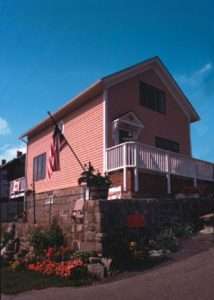
This year saw the twentieth anniversary of Kelo v. City of New London, one of the most controversial property rights decisions in the history of the Supreme Court. Although the Fifth Amendment only permits the taking of private property for "public use," the Court ruled that the transfer of condemned land to private parties for "economic development" is permitted by the Constitution. Building on earlier decisions such as Berman v. Parker (1954), a closely divided 5-4 majority ruled that virtually any potential benefit to the public qualifies as a "public use."
The Yale Journal on Regulation sponsored a symposium to mark the occasion, which I organized and co-edited along with legal scholars Eric Claeys (George Mason University) and David Schleicher (Yale). The articles in the symposium are now published and are available online at the journal's website. Contributors include attorneys on both sides of the Kelo case, and leading takings and property law scholars such as Richard Epstein, Tom Merrill, Maureen Brady, Vicki Been and Yun-Chien Chang, Gerald Dickinson, and more. Eric Claeys and I also contributed articles, in addition to our role as editors.
The other editors and I have written an Introduction for the symposium, which summarizes the significance of Kelo, and provides a brief overview of the symposium articles.
My contribution to the symposium (also available on SSRN), is "Public Use, Exclusionary Zoning, and Democracy." Here is the abstract:
The twentieth anniversary of Kelo v. City of New London is a good opportunity to consider the broader significance of public use for constitutional theory, and to explore parallels between the "public use" issue at stake in Kelo and another major issue in constitutional property rights under the Takings Clause: exclusionary zoning. This Article takes up that challenge. Part I highlights the strikingly similar history of the two issues. In both cases, there is a strong originalist argument that the policy in question—private-to-private condemnations in one case, exclusionary zoning in the other—violates the property-rights provisions of the Fifth Amendment. But, on both issues, the Supreme Court and federal courts generally have taken a highly deferential approach since the rise of Progressive and New Deal Era skepticism of property rights. Part II outlines reasons why that conventional wisdom is wrong. Judicial deference on both public use and exclusionary zoning has greatly harmed the poor and disadvantaged, particularly racial minorities. Moreover, stronger judicial review can actually further "representation-reinforcement" in two ways: by giving voice to groups excluded from the political process, and by empowering them to "vote with their feet." Finally, Part III highlights synergies between judicial enforcement of public-use limitations on eminent domain and enforcement of restrictions on exclusionary zoning.
I have also written a second article to mark the 20th anniversary of Kelo. This one was published at the Brennan Center State Court Report, and focuses on the massive state legislative and judicial reaction to Kelo, and the lessons which can be learned from it.

Editor's Note: We invite comments and request that they be civil and on-topic. We do not moderate or assume any responsibility for comments, which are owned by the readers who post them. Comments do not represent the views of Reason.com or Reason Foundation. We reserve the right to delete any comment for any reason at any time. Comments may only be edited within 5 minutes of posting. Report abuses.
Please to post comments
So under Somin's view, the state cannot force me to sell my land for economic development, but it can force me to give up my deeded right to live in single family zoned neighborhood, and surround my house with crime-ridden low-rent dense apartment buildings.
You have the right to the quiet enjoyment of your home. That right does not rigorously extend to your neighbourhood.
You are saying that the government can take away the zoning rights that I purchased with the land.
Did you purchase zoning rights? From whom? Or are you claiming that if you buy a house in an area with a type of zoning you've acquired some kind of right not to have the zoning lifted?
"one of the most controversial property rights decisions in the history of the Supreme Court"
By allowing something that was previously found to be constitutional in various lower courts, including one or more in libertarian leaning states.
The "respondent New London Development Corporation (NLDC), a private nonprofit entity established some years earlier to assist the City in planning economic development," is cited in the opinion.
The government oversaw the taking to promote public use, for "creating jobs, generating tax revenue, and helping to build momentum for the revitalization of downtown New London." (cleaned up)
This might have been a really stupid move.
Nonetheless, the public's representatives, with compensation, took property for public use. Private parties controlling the property did not remove this ultimate end. Kennedy concurred to note various other procedural protections available.
This appalls some people. They want the federal courts to have the power to step in to override it. Some speak of slippery slopes. The "Congress might invade Canada" problem.
I don't see the "no economic development" rule in the Constitution, but others do. As to the negative effects on the poor, various things burden the poor. If people want to formulate a rule against wealth discrimination, that might be useful as a general principle.
Of course, states could provide more restraints than those found in the U.S. Constitution. As can policymakers. Cases like Kelo can highlight needs in that area.
Trivia: Justice O'Connor presided over the oral argument. Rehnquist was ill. Stevens couldn't make it.
"By allowing something that was previously found to be constitutional in various lower courts, including one or more in libertarian leaning states."
Right, because people were expecting the Court to correct the lower courts' mistakes, not justify them.
"Nonetheless, the public's representatives, with compensation, took property for public use. Private parties controlling the property did not remove this ultimate end."
Yes, that's the complaint: They lied about it being a public use, and the Court endorsed the lie. If the expectation of eventually paying taxes qualifies as "public use", there's no longer any barrier at all to the government just arbitrarily taking private property to give to other private owners.
To the contrary: they took it for private use, as proven by the fact that private parties were controlling the property.
Those might be ways the public benefitted — or not — but they are not public use.
That was in fact the Court's switcheroo in Kelo: The amendment says "Public use", the Court swapped in "Public purpose".
The thing that always annoys me in these eminent domain cases is the practice of equating "just compensation" with fair market value.
This is just silly. Owners value their property for any number of reasons - friends and family living nearby, easy commutes, familiarity with neighborhood businesses, children attending schools they are familiar with, improvements with idiosyncratic uses, etc. None of this is reflected in FMV, but it may be quite important to the owners.
Just compensation should include an allowance for this sort of thing, but, as I understand it, it does not.
You have to remember that, while the purpose of eminent domain was originally to allow the government to secure properties that were non-fungible and necessary to some government aim like building a fort or a road, this was at a time when that was about the only reason government would use it.
Today the purpose of eminent domain is to allow the government to get an unreasonable bargain by cheating the owners even when any random parcel would do the job.
So actually paying enough that the person forced to sell isn't worse off would kind of defeat the whole purpose of using eminent domain today.
Of course, local governments have other ways of cheating property owners. There's a main road nearby that is in desperate need of added lanes, on account of massive population growth. Problem is, it was lined with homes that would all have to be purchased to do the job.
So they changed the zoning from mixed to commercial, and one by one, as the property unavoidably changes owners, houses the new owners can't LIVE IN fall vacant, and then into ruin, because nobody wants to use these small single family homes for business purposes, and there's still enough empty commercial property around that it's not sensible to buy the property and tear the houses down to build.
By the time the local government gets around to that planned road widening, most of the land they'll be buying will be a real bargain, because they'd deprived it of it's only economic use.
Also making the law more straight forward rather than allowing the exact same thing but through more convoluted means.
Kelo was only possible, Professor Somin, because of the worthless immigrants and their equally worthless progeny that you've tirelessly advocated for. A 99% white population would never allow such a travesty.
You have to wonder how much the taxpayers forked out for this exercise in futility and still end up with corrupt courts and judges. Academic legal faculty has greatly harmed the American taxpayer.
"In both cases, there is a strong originalist argument that the policy in question—private-to-private condemnations in one case, exclusionary zoning in the other—violates the property-rights provisions of the Fifth Amendment. But, on both issues, the Supreme Court and federal courts generally have taken a highly deferential approach since the rise of Progressive and New Deal Era skepticism of property rights. Part II outlines reasons why that conventional wisdom is wrong. Judicial deference on both public use and exclusionary zoning has greatly harmed the poor and disadvantaged, particularly racial minorities."
I'm more than a little disturbed that, "This is what the text actually means, damn it!" is such a futile argument in the courts that you have to resort to this sort of "interpreting it that way harms the poor and minorities" argument in order to get any traction.
It just underscores how disconnected constitutional jurisprudence is from the Constitution at this point.


