The Volokh Conspiracy
Mostly law professors | Sometimes contrarian | Often libertarian | Always independent

Today in Supreme Court History: December 29, 1971
Editor's Note: We invite comments and request that they be civil and on-topic. We do not moderate or assume any responsibility for comments, which are owned by the readers who post them. Comments do not represent the views of Reason.com or Reason Foundation. We reserve the right to delete any comment for any reason at any time. Comments may only be edited within 5 minutes of posting. Report abuses.
Please to post comments

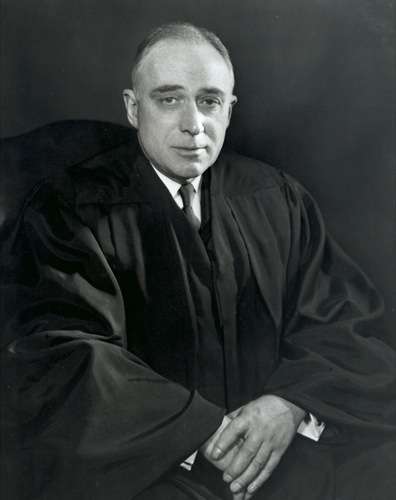
Many justices from the time he was on the Supreme Court and later saw Justice Harlan II as a model justice. People like Powell or Souter particularly saw him as a role model.
Someone who carefully used judicial restraint while also sometimes strongly protecting constitutional rights when he felt the facts and law required it. His dissent in Poe v. Ullman is often quoted, both Harlan's view of "liberty" and how it developed over time. His concurrence in Griswold v. Connecticut also expressed his view on judicial restraint:
It will be achieved in this area, as in other constitutional areas, only by continual insistence upon respect for the teachings of history, solid recognition of the basic values that underlie our society, and wise appreciation of the great roles that the doctrines of federalism and separation of powers have played in establishing and preserving American freedoms. See Adamson v. California, 332 U. S. 46, 332 U. S. 59 (Mr. Justice Frankfurter, concurring). Adherence to these principles will not, of course, obviate all constitutional differences of opinion among judges, nor should it. Their continued recognition will, however, go farther toward keeping most judges from roaming at large in the constitutional field than will the interpolation into the Constitution of an artificial and largely illusory restriction on the content of the Due Process Clause.
The restraint here significantly relies on personnel as was always the case. Judges can quote lots of things. Realistically, they will have a lot of discretion. Judges like Harlan provide a model.
==
Note: John Harlan II was the grandson of Justice John Harlan. The two were different in various ways.
The second Harlan was more of a conservative establishment type lawyerly figure while the first Harlan rose from a political background and had a less restrained style.
The first Harlan supported the incorporation of the Bill of Rights. The second thought that was a misguided invasion of federalism.