Biden Pardoned Maduro's Fixer. He Just Pleaded Guilty to New Charges and Agreed To Forfeit $195 Million.
Alex Saab admitted to profiting from food and medicine contracts and agreed to cooperate with prosecutors.
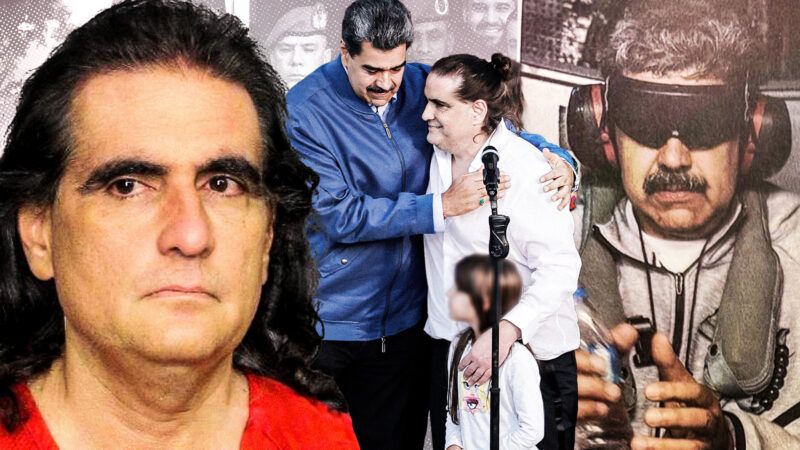
A former Venezuelan minister and longtime ally of Nicolás Maduro, Alex Saab, pleaded guilty Tuesday in Miami to conspiring to launder money. Saab admitted to profiting from at least six food and medicine contracts by approximately $195 million in an eight-page factual proffer.
It is the latest turn in a story that reads like a mob movie. U.S. officials called Saab, a Colombian-born businessman, Maduro's "bag man." In 2023, after being captured and extradited to the U.S., Saab received a full pardon from then-President Joe Biden amid a prisoner swap with Venezuela. Maduro welcomed him home as a hero and made him acting industry minister. Now Saab has agreed to cooperate with investigators and may even serve as a state witness against his old boss.
Under the plea agreement, Saab accepted a $195 million forfeiture judgment and agreed to disclose and help locate assets. He faces up to 20 years in prison. Prosecutors agreed to recommend a sentence at the low end of the applicable range and may seek a further reduction if they determine that Saab provided substantial assistance.
Saab returned to U.S. custody after acting dictator Delcy Rodríguez's regime deported him to the U.S. in May. While the Venezuelan Constitution prohibits extraditing Venezuelan citizens, the regime's interior minister, Diosdado Cabello, claimed Saab's Venezuelan identity record was fraudulent or nonexistent—even though Maduro's regime had issued him a passport, calling him a diplomat.
Before he became indispensable to Maduro, Saab was a little-known textile businessman in his native Barranquilla, a coastal city in Colombia. Former Colombian Sen. Piedad Córdoba, an ally of Hugo Chávez, helped Saab gain access to Venezuela while Maduro was foreign minister, according to investigative journalist Roberto Deniz. Córdoba has denied introducing him to Chávez or Maduro.
In 2011, a Saab company entered a large public housing deal between Colombia and Venezuela despite, according to Deniz, having no construction experience. Saab and his business partner, Álvaro Pulido, received three to four times the homes' actual construction costs, the U.S. Department of the Treasury later said. As Maduro consolidated power, Saab's business also expanded from housing into food contracts, and by 2019, a payment system involving Venezuelan oil, gold, and other natural resources.
(PBS documentary A Dangerous Assignment traces Saab's fortune to a mansion in Barranquilla, private jets, a property on Rome's Via Condotti, and a Beverly Hills rental for his son Shadi while he pursued acting.)
Saab's most consequential role involved CLAP, the state food program that Maduro created in 2016 amid shortages and inflation. The regime distributed boxes with groceries at subsidized prices. Most of the time, the boxes arrived late and contained poor-quality or even expired products, as Reason has previously reported. Regime officials also used access to the CLAP program to reward supporters and punish critics.
The journalists at Armando.info, a Venezuelan investigative outlet, were the first to expose Saab's role in the food contracts. Saab sued Deniz and three editors for defamation in 2017. Facing harassment and possible jail time, they fled Venezuela. Authorities later raided the house of Deniz's parents.
In 2019, the Treasury alleged that Saab and his associates won overpriced, no-bid CLAP contracts through bribes and kickbacks, then moved the proceeds through shell companies. Saab has now admitted that the conspirators used fake companies, false invoices, and false shipping records. They moved illegal payments through bank accounts in at least nine foreign jurisdictions. Senior Venezuelan authorities approved, participated in, and protected the operation, according to the factual proffer. Saab also admitted arranging millions of dollars in transfers toward $17 million in bribes and kickbacks promised to José Gregorio Vielma Mora, a former Chavista governor. The payments were tied to a 2016 contract for 10 million food boxes.
Authorities in Cabo Verde, an island nation off West Africa, detained Saab at the United States' request during a fuel stop in June 2020 while he was traveling to Iran. After a 16-month legal fight, Cabo Verde extradited him to Miami in 2021. That prosecution concerned an earlier housing and currency-exchange scheme in which Saab and Pulido were accused of laundering up to $350 million.
Court records later showed that Saab had signed a cooperation agreement with the Drug Enforcement Administration in 2018, met with agents, provided information about Venezuelan corruption, and transferred $12.5 million to an account controlled by the agency. However, he missed a deadline to surrender. After the cooperation became public, Saab's lawyer David Rivkin said the Venezuelan regime knew about the contacts and that Saab met with U.S. officials to maintain that neither he nor his companies had done anything wrong.
In December 2023, Biden granted Saab the full, conditional pardon. It accompanied Venezuela's release of 10 Americans, six of whom the State Department considered wrongfully detained, and 20 Venezuelan political prisoners, as well as fugitive defense contractor Leonard Francis.
Maduro received Saab at the presidential palace in Caracas, interviewed him and his wife on his podcast, and made him president of Venezuela's foreign-investment center in January 2024. Nine months later, he appointed Saab as acting industry minister. After returning to Venezuela, Saab accepted money from earlier CLAP contracts and continued to assist and take directions from Venezuelan officials through February 2026, according to the factual proffer. That political rehabilitation ended with Maduro's fall.
Court documents describe one participant as "Government Official 1A," one of Venezuela's highest-ranking officials. Saab admitted that the official approved and protected the scheme and used a surrogate to receive illegal payments. The document does not identify that person, but with Maduro awaiting trial in New York, prosecutors may ask Saab to testify against his former patron. Saab may also be able to tell them who Government Official 1A was.