

'Alligator Alcatraz' Held Detainees in Small Metal Cages, Inspector General Report Finds
An inspection of the now-closed detention camp found overcrowding, unsanitary conditions, and an "unprecedented" use of small metal cells to confine detainees.
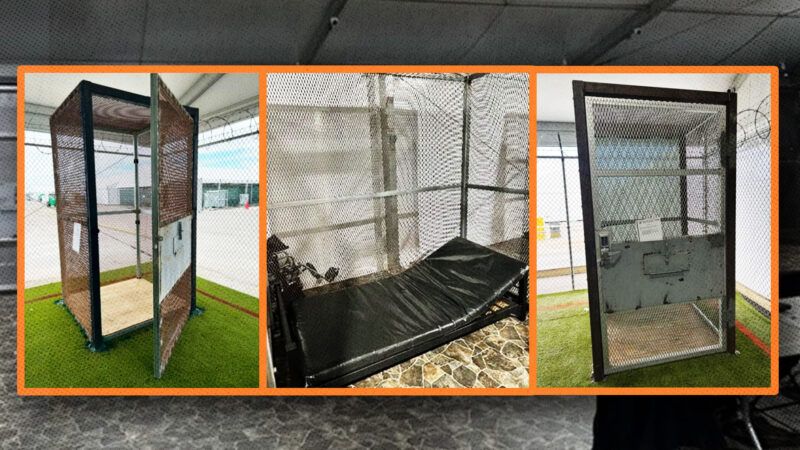
Detainees at Florida's now-closed "Alligator Alcatraz" immigration detention camp were held in phone booth–sized cages as punishment, a Department of Homeland Security Office of Inspector General (DHS OIG) report released Monday found.
In addition to finding numerous other violations of humane detention standards, the DHS OIG audit offers a rare account of conditions inside the secretive facility, and it partially confirms accounts by former detainees, published last year by Amnesty International and several media outlets, that they were punished by being put in "the box," a small metal cage.
OIG inspectors who performed an unannounced inspection in January of the Florida Soft-Sided Facility (FSSF), the official name for the facility, found that the detention camp used metal cages measuring 4 feet by 7 feet for what officials described as "calming areas."
Detainees previously described being shackled in the cage for hours in the sun without water. The OIG couldn't confirm or refute those allegations. Neither could it independently verify FSSF officials' claims that detainees were kept in the cages under a shaded awning for no longer than two hours and given water on request.
In any case, the cages alarmed the OIG. The report said their use is "highly unconventional and does not align with standards for humane treatment."
"Use of these small metal enclosures for any reason is unprecedented among ICE facilities inspected by OIG," the audit stated. "Confining individuals in small metal enclosures for any reason presents significant risks to detainee health and well-being."
A policy posted on the small holding cells stated that the goal was to "provide a safe and secure place in general population for detainees to reflect on their behavior choices, manage their emotions, reduce stress, and practice self-directed behavior."
According to records provided to the OIG, the FSSF confined 79 detainees in two such holding cells between July 2025 and January 2026. None were reportedly held longer than two hours.
Florida Republican Gov. Ron DeSantis' administration opened the FSSF last year under an unusual agreement with the Trump administration to hold federal immigration detainees in a state-operated facility. However, the camp abruptly closed this June, less than a year later, plagued by massive operating costs and persistent allegations of inhumane conditions. Sens. Jon Ossoff (D–Ga.) and Dick Durbin (D–Ill.) sent a letter in March to DHS Secretary Markwayne Mullin demanding more information about the use of "the box" specifically.
A spokesperson for DeSantis defended the camp in a statement to The New York Times, saying that the "left-wing media wants to focus on a confinement area for violent criminal aliens who have proven they cannot remain peaceful while awaiting deportation."
"While it adheres to all federal standards for criminal confinement, we'd make it even smaller if we could," the spokesperson added.
DHS OIG inspectors identified numerous other violations of detention standards at the FSSF, including overcrowding, insufficient medical care, food safety violations, lack of hygiene, and lack of access to legal counsel.
For example, the report found that the housing units at the FSSF—large metal cages underneath canvas tents—only offered 28 square feet of living space per detainee, less than half of the minimum 75 required, "creating cramped conditions for detainees who spent most of their time in their housing units."
The report found that detainees could only shower three times a week, and the showers were infested with bugs.
The murky legal status over whether Florida or the federal government has jurisdiction over the FSSF has created significant confusion for detainees and immigration lawyers, and it's allowed both parties to deny responsibility when it suits them.
For example, facility leaders couldn't identify whether they followed the Florida Model Jail Standards or the National Detention Standards.
In a written response to the OIG report, DHS claimed that it had delegated its authority to Florida, which "maintains authority of the day-to-day operations of that facility."
The OIG report noted, however, that new arrivals at the FSSF were given ICE detainee handbooks stating that the camp was a "detention facility of the United States Immigration and Customs Enforcement (ICE)," and that ICE personnel were frequently there to supervise and assist staff.
In a statement to Reason, a DHS spokesperson said conditions at the FSSF were consistent with federal detention standards.
"All detainee facilities are clean, and any allegations of inhumane conditions or excessive use of force are FALSE," the spokesperson said.
DHS referred further questions to Florida, "as this facility was managed by the State of Florida through the Division of Emergency Management."
Even though the Trump administration promised to reimburse Florida for the costs of the FSSF through Federal Emergency Management Agency grants, the administration has so far been able to dodge lawsuits challenging the detention camp. A federal appeals court ruled in April against environmental groups arguing that the hasty construction of the camp illegally bypassed federal environmental laws. The court found that the FSSF was state-run and state-operated.
That lawsuit is still ongoing, though, and environmental groups say the OIG report shows significant federal involvement, contrary to the Trump administration's claims in court.
"This report paints a chilling picture of the conditions at 'Alligator Alcatraz' and the state-federal partnership that enabled them," Eve Samples, executive director of Friends of the Everglades, one of the organizations pursuing that lawsuit, said in a statement. "Building a mass detention center in the middle of Big Cypress National Preserve was a reckless stunt that cost taxpayers more than $1 billion and left scars on a beloved landscape."




