

Trump Is Back To Seeking Regime Change in Iran
With the conflict over Hormuz dragging on, the administration is betting on a strategy that failed at the beginning of the war.
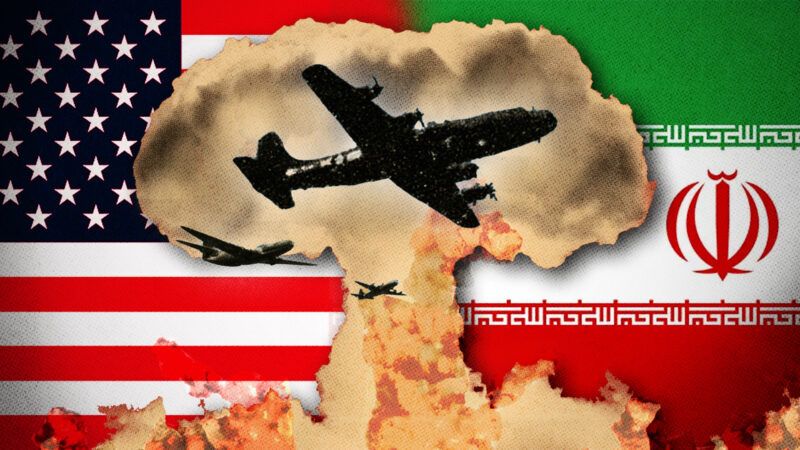
President Donald Trump's attack on Iran was clearly designed as a regime-change war. In his opening speech of the war, on February 28, he told "the great proud people of Iran" that "the hour of your freedom is at hand" and that everyone associated with the Iranian government was marked for "certain death," from generals to traffic cops. Trump told other leaders (and later admitted publicly) that he expected the Islamic Republic to collapse in a few days.
A little over a month into the war, with no signs of Iranian collapse, Trump changed his goals to securing a favorable deal with Iran, and eventually signed a U.S.-Iranian peace memorandum in June 2026. But after a few more months of inconclusive conflict—including a round of U.S.-Iranian fighting this week and the U.S. bombing of an Iranian wedding on Tuesday night—Trump is back to calling for regime change.
"I'm not trying to force Iran to the bargaining table, as ABC Fake News reported. I couldn't care less if they sign a worthless, to them, agreement. I like our position now much better, with almost total control of the Hormuz Strait, and their economy totally collapsing. They are just playing out the inevitable. When are the Iranian people going to rise up and fight?" the President posted to Truth Social on Tuesday night.
The answer is that they already did. In the first weekend of January 2026, buoyed by Trump's promises that "help is on its way," Iranians launched the largest uprising and suffered the most violent crackdown in the history of the Islamic Republic. (The Human Rights Activists News Agency in Virginia, one of the few groups gathering precise information from inside Iran, has documented 6,800 protesters and bystanders killed.) Despite U.S.-Israeli attempts to re-ignite the uprising a few weeks later, the demoralized Iranian opposition mostly sat out the war.
"We try to convey that our move cannot lead to a massacre of our own people," Kurdish rebel commander Ehwen Chiako, who had been asked by the U.S. to lead an uprising, later told New Lines Magazine.
The U.S.-Israeli war has led to plenty of massacres of the Iranian people who were supposed to rise up. In the first few hours of the war, the U.S. military bombed an elementary school in Minab and a high school girls' volleyball practice in Lamerd, two towns on the Iranian coast, killing over 150 children. On Tuesday night, the Iranian Red Crescent reported that "shrapnel" from a U.S. airstrike hit a wedding party in Kuhestak, an hour's drive from Minab, killing a child and at least three other civilians.
Navy spokesman Capt. Tim Hawkins told reporters that he was "aware" of the reports and that the "U.S. military never targets civilians." But footage from the scene shows pieces of a SLAM-ER, a U.S.-made missile, the Australian consultancy Armament Research Services told the BBC. The U.S. government also initially denied attacking Minab and Lamerd before hard evidence of U.S. involvement emerged.
The wedding massacre was part of a broader U.S.-Iranian clash over the Strait of Hormuz, the entrance to the oil-rich Persian Gulf. After a month lull in fighting, the U.S. military bombed Iranian forces on the island preparing to mine the strait on Sunday, killing two people. The next day, the Iranian military bombed two Saudi tankers transiting the strait, killing two sailors. The day after that, on Tuesday, both sides were firing heavily at each other's bases. The U.S. military also began a new "tanker for tanker" policy, blowing up two Iranian tankers in retaliation for the two Saudi tankers, U.S. officials told Axios.
As of Wednesday afternoon, calm has returned to the region, at least for now. But the Iranian escalation seems to have accomplished its goals of putting direct pressure on Americans. The price of crude oil futures rose back up to wartime levels—Brent crude was over $96 per barrel and West Texas Intermediate was $92 per barrel on Tuesday night—translating to a national average of $4.12 per gallon of gasoline.
Despite its chest beating, the administration seems pretty keen to end this situation as quickly as possible. (So is the American public; polling from the summer clearly showed that Americans prefer an unfavorable peace deal to more war.) Trump's call for regime change was provoked by an ABC News report that he wanted to tighten the U.S. blockade on Iran. The report included a quote from Secretary of the Treasury Scott Bessent about trying to "economically asphyxiate Iran and force them to the bargaining table."
Bessent himself hinted to reporters that the threat of another uprising—and all the bloodshed it entailed—was really another bargaining chip with Iran. "Either the [Islamic Revolutionary Guard Corps] are going to turn on each other, the people are going to turn on them, or they are going to come to the table and want to do a deal that they can stick with," Bessent told reporters on Tuesday.




