
A Burrito Costs How Much?
Plus: The economy lost 23,000 jobs in July, inflation is outpacing wage growth, Trump is still mad about birthright citizenship, and more...
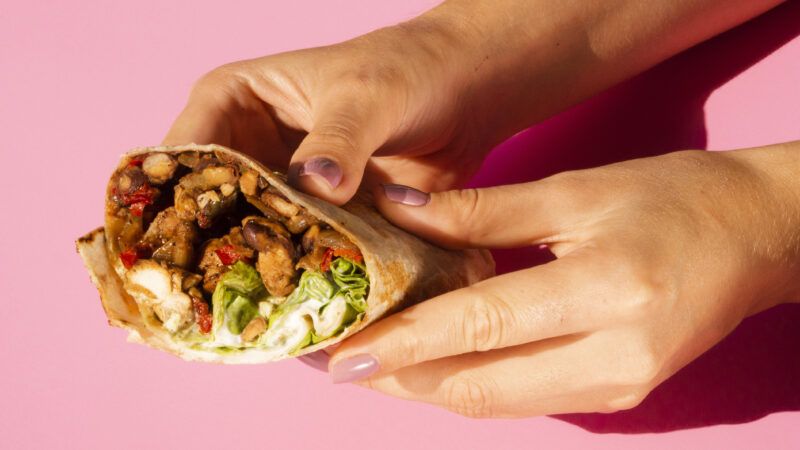
It's one burrito, Michael. What could it cost? We are deep in the summer news doldrums, as evidenced by the fact that the dominant story on Politics Twitter this week was a debate over how much burritos cost.
I'm not too interested in the specifics of the burrito controversy, but before we can get to what it all means, you need to know the basics. It started with a viral tweet from Andrew Kolvet, a spokesman for Turning Points USA, who claimed that a college student recently complained to him about paying $20 for a burrito. In the days since, seemingly every single faction and figure in the broader universe of right-of-center politics has some theory about why burritos are expensive or how to handle your household burrito budget. And Vice President J.D. Vance called political commentator Marc Thiessen fat, for some reason.
(If you're not terminally online and therefore still very confused, Reason's Reem Ibrahim has a nice rundown of the whole thing and the economic considerations at play.)
As I said, the specifics aren't that interesting because, on its face, this is all pretty silly. Burritos don't actually cost $20. If you're paying that much, it's probably because you are also getting the burrito delivered and/or being up-charged on a bunch of other things. It's a bit like sitting in business class and complaining about the price of airfare.
The Reason Roundup Newsletter by Liz Wolfe Liz and Reason help you make sense of the day's news every morning.
I'm more amused by the fact that this has blown up on the political right. As Peter Suderman noted in this space yesterday, this is "really an argument between the right's domestic populists and more internationally focused conservative hawks."
But here's the thing: Most, if not all, of the prominent figures in this food fight have spent the past decade embracing President Donald Trump, if not openly campaigning for him. And, sure, Trump has paid lip service to affordability concerns, but his two administrations have consistently and explicitly pushed for higher prices. There have been tariffs, immigration restrictions, an expansion of the money supply, COVID-era emergency spending, and massive budget deficits even in non-emergency situations. All of that puts upward pressure on prices. (And, yes, Joe Biden contributed to this effort too.)
Occasionally, Trump and his allies are quite open about this goal. During Trump's first term, his top trade adviser said, "the best way to fix consumerism is to raise prices." Trump isn't always the most engaged on the details of policy, but on one rare occasion when he was confronted with the reality of his tariffs, he advised American families to simply buy fewer toys for their kids.
Now that they are getting what they wanted, populist Republicans are trying to distance themselves from the consequences of their actions. In an interview with Fox News this week, Vance was asked about high prices—though not specifically about the price of burritos—and decided to pin the blame on "the past 40 years of bipartisan economic policy."
JD Vance on concerns about the cost of living:
"I think what it shows is that the past 40 years of bipartisan economic policy have failed. A lot of people look at El-Sayed or other radicals and say 'socialism is evil.' It is. But we have to ask why is socialism so appealing?" pic.twitter.com/RBe7bWu9yx
— The American Conservative (@amconmag) August 6, 2026
Sorry, but that's ridiculous. You don't get to run for office with a series of promises that will make things more expensive, then implement those policies, and then pass the buck when things get more expensive.
This is no different than a lefty Democrat campaigning for higher minimum wages and then blaming corporations when the mandatory increase in the cost of labor gets factored into everything else.
Conservatives who are upset about the high cost of living should stop supporting a political faction that is hellbent on making everyday life more expensive. Tax increases (that is to say, tariffs) and inflationary policies are choices. Don't like the results, pick new leaders with better policies.
Vote for socialists, get higher prices.
Vote for liberals, get higher prices.
Vote for right-populists, get higher prices.
Why not try free markets instead?— Dan McLaughlin (@baseballcrank) August 6, 2026
July jobs report: The U.S. economy shed 23,000 jobs in July, but the unemployment rate fell to 4.1 percent from 4.2 percent in June, the federal Department of Labor reported on Friday morning. The unemployment rate declined because 260,000 people left the workforce, which is not great.
Meanwhile, the jobs report also includes some data that's relevant to the debate over inflation. Average hourly wages have increased by 3.2 percent over the past 12 months. Inflation, however, has increased by 3.5 percent through the end of June. In other words, prices are rising faster than pay.
This is a bleak July jobs report:
-23,000 jobs lost in July. (Losses occurred in retail, finance, hospitality, local gov't education)
-264,000 people leave the labor force
-Wage growth falls to 3.2% = lowest in 5 years (and totally wiped out by inflation right now)
***Lowest… pic.twitter.com/F4LTwjH8yJ— Heather Long (@byHeatherLong) August 7, 2026
Trump targets birthright citizenship again. Despite being told by the Supreme Court just weeks ago that executive orders cannot undo birthright citizenship—which is enshrined in the 14th Amendment—Trump is again trying to undermine birthright citizenship via executive orders.
Executive orders signed Thursday would limit birthright citizenship in a few circumstances, like when at least one of its parents has been designated an "alien enemy" or when the parents engage in "birth tourism" transactions.
But logistical and legal hurdles abound. "It was not immediately clear how the twin orders could realistically be enforced," explains The New York Times. An administration official told the Times that there is "nothing new" in the various orders that simply restate existing law. Maybe this is just a show for the hardcore immigration haters.
As for the children of "alien enemies," Ilya Somin makes a good point at The Volokh Conspiracy: "Members of these groups may be bad people. Some have committed horrendous crimes. But that is no reason to visit the sins of the parents upon the children. If a murderer or a rapist has a child born on US soil, the child is entitled to birthright citizenship, notwithstanding the reprehensible behavior of the parents. The same logic applies here."
QUICK HITS
- The Trump administration has refunded more than $100 billion in illegally collected tariff revenue, including $2.2 billion for Apple, $1.3 billion for Ford, and $600 million for Amazon. The average consumer spent about $1,000 on tariff-related costs last year, will pay an estimated $900 more this year, and is unlikely to see any refunds.
- Cops in Wisconsin, where weed is illegal, used Flock cameras to track a car that makes frequent trips to Michigan, where marijuana is legal. Then they used that information to create a pretext for searching the vehicle during a return trip to Wisconsin. They found what they were looking for and arrested the driver for marijuana possession.
- After a series of new acquisitions this week, the federal government now owns parts of more than 30 companies. The Trump administration is "acquiring the means of production one letter of intent at a time" while pretending that "socialism is something only the other side can do," writes economist Veronique de Rugy.
- Scientists have used artificial intelligence to build new viruses that aren't found in nature, but they promise to be "extra careful" not to let them infect humans.
- Rep. Andy Ogles (R–Tenn.), a controversial congressman who drafted a proposed constitutional amendment that would allow Trump to seek a third term and had the president's endorsement, lost his primary election to an establishment-backed challenger.