
Even Without the 'Emergency' Powers SCOTUS Rejected, Trump Has a Bunch of Tariff Options
There are many laws that explicitly authorize the president to impose taxes on imports, but they include limits that Trump was keen to avoid.
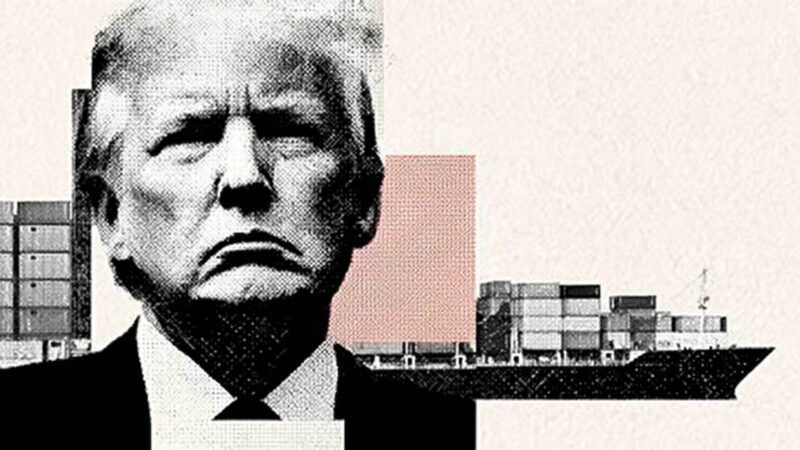
President Donald Trump suffered a major setback today at the Supreme Court, which rejected his claim of sweeping tariff authority under the International Emergency Economic Powers Act (IEEPA). Trump could have avoided that embarrassing defeat if he was not so keen on asserting broad, unbridled powers based on a dubious legal interpretation, which is part of a pattern with him.
"When Congress grants the power to impose tariffs, it does so clearly and with careful constraints," Chief Justice John Roberts notes in Learning Resources v. Trump, the decision rejecting Trump's interpretation of IEEPA. As that observation suggests, there is no shortage of statutes that empower the president to impose tariffs. Trump himself already has used some of them and can be expected to do so again now that the Supreme Court has closed off this particular route. But all of those laws restrict presidential action by specifying acceptable rationales, requiring agency investigations, or limiting the size, scope, or duration of tariff hikes.
Because Trump wanted to avoid those restrictions, he instead latched onto IEEPA, a 1977 law that does not even mention tariffs and had never before been used to impose them. The government's lawyers cited an IEEPA provision that authorizes the president to "regulate" imports in certain circumstances. That provision, they claimed, included a hitherto unnoticed power to completely rewrite the tariff schedule approved by Congress. Trump maintained that IEEPA authorizes the president to impose any taxes he wants on any imports he chooses from any country he decides to target for any length of time he considers appropriate whenever he deems it necessary to "deal with" an "unusual and extraordinary threat" from abroad that constitutes a "national emergency."
That reading of the law was implausible for several reasons, not least because it rendered superfluous the many statutes that explicitly allow the president to impose tariffs. Section 232 of the Trade Expansion Act of 1962, for example, authorizes taxes on imports that "threaten to impair the U.S. national security." During his first term, Trump used that law to impose tariffs on steel and aluminum, which he expanded last year, raising the rate and applying the taxes to home appliances made from those materials. He also invoked Section 232 to justify tariffs on cars and car parts.
Unlike the power that Trump unsuccessfully claimed under IEEPA, his Section 232 authority is limited. It requires a Commerce Department investigation that must be completed within 270 days after it is initiated, focused on specific goods that supposedly implicate national security. While such determinations are frequently dubious, the resulting tariffs are much more narrowly targeted than the steep, indiscriminate "Liberation Day" tariffs that Trump announced last April, which applied to myriad categories of goods from scores of countries.
According to Trump, those tariffs were aimed (if that is the right word) at addressing the "unusual and extraordinary threat" posed by the overall gap between exported and imported goods. Leaving aside the question of whether that long-standing deficit qualifies as an emergency or even a problem, you might wonder why Trump invoked IEEPA to deal with it rather than a law that is much more obviously relevant.
Section 122 of the Trade Act of 1974 authorizes tariffs to address "large and serious United States balance-of-payments deficits" that present "fundamental international payments problems." That law was inapposite, the Trump administration's lawyers argued, because balance-of-payments deficits are different from trade deficits. But as trade policy experts Marc L. Busch and Daniel Trefler noted in response to that argument, "goods trade is the dominant component of the current account, which is at the heart of the balance of payments." The upshot is that "more than 90 percent of the balance of payments is the trade deficit."
Why would the government obscure that reality? Possibly because, as the U.S. Court on International Trade (CIT) noted when it rejected Trump's interpretation of IEEPA last May, "Congress's enactment of Section 122 indicates that even 'large and serious United States balance-of-payments deficits' do not necessitate the use of emergency powers and justify only the President's imposition of limited remedies subject to enumerated procedural constraints."
Those constraints include a 15 percent rate cap and a maximum duration of 150 days, which can be extended only with congressional approval. The CIT concluded that "Section 122 removes the President's power to impose remedies in response to balance-of-payments deficits, and specifically trade deficits, from the broader powers granted to a president during a national emergency under IEEPA by establishing an explicit non-emergency statute with greater limitations."
Another seemingly germane law is Section 201 of the Trade Act, which authorizes tariffs when a good "is being imported into the United States in such increased quantities as to be a substantial cause of serious injury" to U.S. manufacturers. Such tariffs are supposed to "facilitate positive adjustment to import competition." Trump is clearly aware of that provision, which he invoked in 2018 to impose tariffs on solar cells and modules. He also targeted imports of residential washing machines under Section 201. But like Section 232 and Section 122, Section 201 includes limits that evidently irked Trump.
Section 201 tariffs require an investigation by the U.S. International Trade Commission (ITC), which must be completed within 180 days after the ITC receives a petition from aggrieved domestic manufacturers. That process includes public hearings and solicitation of public comments, and any resulting tariffs, which can be no higher than 50 percent, are supposed to target a specific industry, as opposed to all goods from a given country or set of countries. The tariffs initially can be imposed for four years, which can be extended to eight years, but they must be gradually reduced if they last longer than a year.
Section 301 of the same law authorizes tariffs when the Office of the U.S. Trade Representative (USTR) determines, in response to a petition, that "an act, policy, or practice of a foreign country" either violates a trade agreement or "is unjustifiable and burdens or restricts United States commerce." We know Trump is familiar with Section 301 because he used it to impose tariffs on imports from China in 2018. But the pesky process it requires is a bit more complicated than simply issuing an executive order.
A Section 301 committee considers petitions, conducts hearings, and makes recommendations to the USTR, which has to consult with the relevant foreign government to investigate the possibility of a voluntary resolution. Any resulting tariffs automatically end after four years unless the USTR receives a request to extend them.
During the first Trump administration, the USTR looked into digital services taxes imposed by France and other countries. Last July, it launched an investigation of Brazil's "acts, policies, and practices" related to "unfair, preferential tariffs," "anti-corruption enforcement," "illegal deforestation," "ethanol market access," "intellectual property protection," "digital trade," and "electronic payment services." But instead of waiting for the outcome of that investigation, Trump suddenly, unilaterally, and sharply hiked tariffs on various Brazilian imports, including beef, based on his alleged authority under IEEPA.
Section 338 of the Smoot-Hawley Tariff Act of 1930 likewise targets "discrimination by foreign countries," but it may be more appealing to Trump because it seems to give him broader discretion. It authorizes the president to impose tariffs "whenever he shall find as fact" that a foreign country "discriminates in fact against the commerce of the United States, directly or indirectly," or that it is imposing "any unreasonable charge, exaction, regulation, or limitation which is not equally enforced upon the like articles of every foreign country." Based on such a finding, the president "shall by proclamation specify and declare new or additional duties" up to 50 percent.
Although the president's authority under this provision "appears to overlap with that of USTR under Section 301 of the Trade Act," the Congressional Research Service notes, "Section 338 does not appear to require any agency investigation or determination as a prerequisite to imposing tariffs." But it does charge the ITC with identifying practices that discriminate against U.S. commerce and informing the president about them, which "may raise a question as to whether the ITC must find that discrimination has occurred before the President may impose tariffs."
U.S. officials, including President Franklin D. Roosevelt, threatened tariffs under Section 338 on various occasions from 1935 to 1949, but none were actually imposed. "There appears to be no activity under Section 338 provisions since 1949," the Institute of Geoeconomics reports. It notes that "Section 338 measures would seem to run counter to the frameworks provided under the World Trade Organization and other trade agreements, allowing for the possibility that members may be permitted to impose retaliatory measures against the United States if Section 338 was used to impose tariffs."
Since Trump was unfazed by the fact that no president had ever used IEEPA to impose tariffs in the 48 years since that law was enacted, he is unlikely to be deterred by the fact that Section 338 has been dormant even longer. And even without Section 338, there are plenty of ways he can pursue his protectionist agenda, which is driven by a long-standing hostility to free trade rooted in fundamental economic misconceptions. Although opponents of that worldview scored a big victory today, they will have to continue their fight against the painful policies that Trump is determined to impose on American businesses and consumers.