

Judge Lets Blade Runner 2049 Copyright Suit Against Elon Musk and Tesla Move Forward
The ruling makes it less likely for copyright suits involving generative AI to be dismissed, discouraging use of the technology with the specter of costly legal fees.
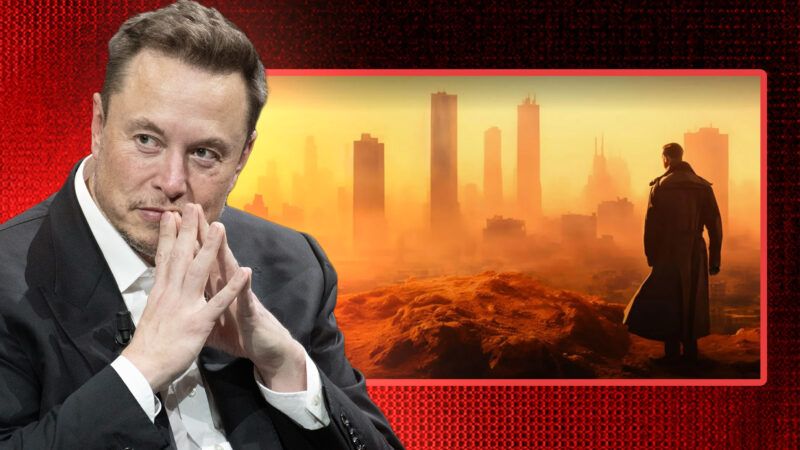
Elon Musk is a fan of the cyberpunk aesthetic. We know that much from his failed marriage with synth-pop singer Grimes and Grok's AI companion Ani. But his obsession with this style has landed him in a legal battle that has serious implications for copyright law in the age of artificial intelligence.
Judge George Wu of the U.S. District Court for the Central District of California ruled Thursday that Alcon Entertainment, the production company that owns the rights to Blade Runner 2049, may continue its copyright case against Elon Musk and Tesla. Alcon's lawsuit stems from Musk displaying an AI-generated image for 11 seconds at Tesla's October 2024 Cybercab showcase, during which he said, "I love Blade Runner, but I don't know if we want that future. I think we want that duster he's wearing, but not the bleak apocalypse."
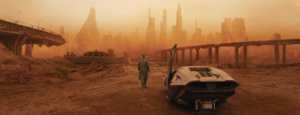
When Alcon filed its suit later that month, the company said it denied Musk permission to use the above image from Blade Runner 2049. After this denial, Alcon alleged that the Tesla CEO provided the still, and others like it, to an AI-driven image generator to create the following:
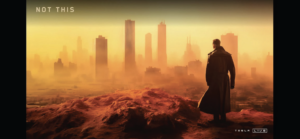
Accordingly, Alcon alleged that defendants "or the image generation tool that they used" violated their copyright in the sci-fi blockbuster under the Copyright Act and the Lanham Act, which prohibits the commercial use of any symbol that is likely to cause confusion "as to the origin, sponsorship, or approval of…goods, services, or commercial activities by another person." In its amended complaint, Alcon claims that Blade Runner 2049 is now "unfortunately and falsely…affiliated" with Tesla and Musk, diminishing its brand value by "at least…six figures."
Alcon alleges that Musk violated the company's exclusive reproduction rights by "copying image A…into an AI generator" and violated its derivative work rights through "substantial similarity copying" in Image C. In other words, Musk allegedly violated Alcon's copyright over Blade Runner 2049 in two ways: first, by copying stills from the movie without authorization; second, by producing a final product that invokes protected elements from the movie without permission.
Musk argues that the substantial similarity claim is meritless because the 12 elements identified by Alcon (including the post-apocalyptic setting and "society fac[ing] a critical decision whether humans and AI will build a joint society or not") are "described in exceedingly broad terms [and] are only general ideas or concepts." He also argues the allegation of literal copying is invalid because it only applies to "non-actionable 'intermediate copying.'"
Wu's ruling did not address whether the image Musk showed was substantially similar to the still from Blade Runner 2049, but rejected the second claim because, in "the age of AI…copyright infringement lawsuits involving what might be understood as 'intermediate copying' are proceeding," and that they do "not appear to require an assessment of 'substantial similarity'" between copyrighted material and final content." To support this conclusion, Wu cited Bartz v. Anthropic (2025), which found that AI developers, "may need to pay for getting their hands on a [copyrighted work] in the first instance," but that it is not a copyright violation to use legally acquired works to generate a novel product.
Wu's ruling will set a precedent for copyright holders to sue anyone whom they assume illegally copied their intellectual property to create something entirely unmistakable for it because the cases will be less likely to be dismissed. This means an increase in the expected cost of using generative AI—litigation is expensive—and a corresponding decrease in creative, productive uses of this revolutionary technology.




