
Katie Herzog on Alcohol, Sobriety, and Aging
"I am coming to terms with aging and not being cool and fun anymore. That's the price I'm willing to pay," the author of Drink Your Way Sober tells Reason's Nick Gillespie.
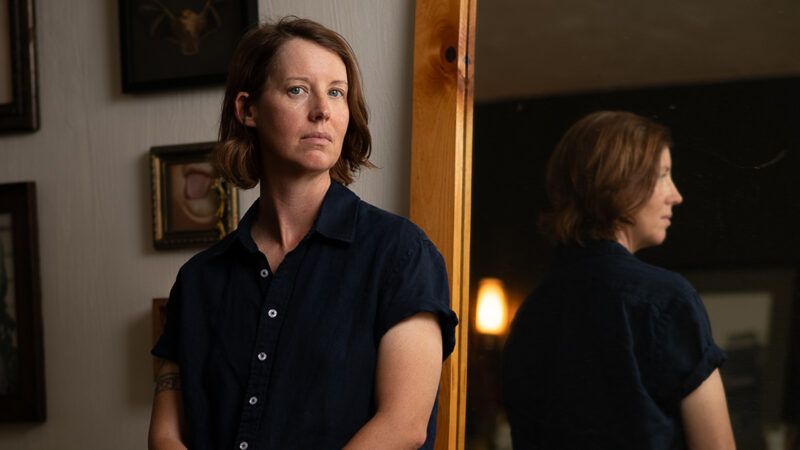
Katie Herzog is the co-host of the Blocked and Reported podcast and the author of Drink Your Way Sober, a book about her experiences with the Sinclair Method—a medication-assisted approach to alcohol abuse that employs one drug to counter problematic use of another. Herzog joined Reason's Nick Gillespie to discuss her path to sobriety, how she used one drug to kick another, and if life really got any better after giving up booze.
Q: What is the Sinclair Method?
A: It's based on this drug, naltrexone, which is an opioid blocker. If you take it in advance of drinking or doing opioids, you will not get the high associated with that particular substance.
When I drink alcohol, I get energized. I get a euphoric high, even before I start drinking. The anticipation of drinking gives me a shot of energy. Naltrexone tends to work really well for people like me, because it targets that high. It blocks the endorphin rush that some people get from alcohol. When you drink alcohol on naltrexone, it becomes very boring. You get the body buzz but you don't want to go sing karaoke. It's just much more sedate.
The Sinclair Method was developed by an American researcher named John David Sinclair. You only take naltrexone on the Sinclair Method in advance of drinking. You don't take it on days when you're not drinking. The theory is that, on alcohol-free days, this leaves your opioid receptors unblocked. You do things that create a natural endorphin rush: exercise, good conversation, food, sex. So the Sinclair Method is the targeted use of naltrexone.
Q: The book acknowledges that we all use drugs for different reasons, and America is becoming more comfortable with that fact. You also stress that we are individuals in the way that we fuck ourselves up as well as how we repair ourselves. What was drinking like for you?
A: At first, it was all fun. It heightened the good things about me and minimized the bad things. I was the person that you would call if you wanted to have a crazy night. I was your wingman, your go-to, very uninhibited. Alcohol really was the fuel for that. In the later years, my drinking became much more private, much more secretive.
Q: What do you think explains your love of alcohol?
A: There are several risk factors for developing alcohol use disorder. Some are: a genetic predisposition—I have that; early exposure—I got drunk for the first time when I was in middle school; and repeated exposure. I have those three risk factors. I don't have other risk factors like trauma. People with unstable childhoods may be more likely to develop problems later on. That wasn't my experience. I loved drinking from a very young age.
Q: When did you know you had a problem, and what was your experience with Alcoholics Anonymous [A.A.]?
A: I went to my first A.A. meeting at 24, shortly after my first serious breakup. Miserable experience, absolutely hated it, kept going a little bit, but really never committed to it.
I resented the people who were there. I didn't want to quit. And people who would talk about how much better their lives were sober—I thought they were lying. I could not imagine my life sober, and definitely not better sober.
The real issue was that A.A. didn't do anything for the desire. Had I committed to it, I think it would have given me the tools to handle those cravings. But I wanted the desire gone.
Q: You're sober now. What is it like?
A: It's so much better. If I were 25 looking at me at 42, I would be like, "That girl is so uncool."
I work. I hang out with my family. I'm involved with my local community. My life is so peaceful now and so calm. I'm really happy right now.
If you're still doing the shit that you were doing at 25, you're not growing up. I knew people who never grew up, and a lot of them are dead now. I am coming to terms with aging and not being cool and fun anymore. That's the price I'm willing to pay.
This interview has been condensed and edited for style and clarity.
