

I'm Dying of ALS. Knowing I Can Decide When To End My Life Brought Me Back From the Dead.
I didn’t really understand the power of Medical Aid in Dying until I received my terminal diagnosis.
One Friday morning in September 2023, my neurologist told me she suspected that I had ALS.
I was completely healthy—or so I thought—and in the prime of my life. I had two adult children, a great career, and a wonderful marriage. I was 56, and both of my parents were still alive. My diagnosis was confirmed two months later. I felt as if I had just been told not only that I would die, but that I would be tortured to death and that it would drag out over several years.
I was the chief clinical officer at Mount Sinai Health System in New York City, trained as an internist and geriatrician, and I'd cared for many dying patients. Of all the people in the universe, you'd think I would be the person most ready to hear the news that I had a terminal condition. Instead, I discovered that the intellectual awareness of death and the emotional reality of facing it yourself are completely unrelated.
I thought about all the patients I had cared for with ALS or similar neuromuscular diseases—mentally intact but imprisoned in their own bodies, unable to move, swallow, speak, or breathe. I remembered the look of desperation in their eyes when they could no longer communicate.
About a year after my diagnosis, joy returned to my life thanks to the support of my family and friends, therapy, antidepressants, and a daily meditation practice. But the most important factor in my emotional recovery was gaining the knowledge that I can make the decision to end my own life when my suffering becomes unbearable.
When I got my diagnosis, I had a vision of my own death: I would be choking on my own saliva, gasping for air, unable to communicate my needs, my eyes filling with panic, as my family and friends looked on helplessly.
Now I know that my death will happen on my own terms. The source of my suffering was that everything was being taken away from me, and that there was nothing I could do about it. Now I know that I get to determine when my life will end, and that knowledge gives me great peace.
The Day My Life Split in Two
When patients receive a life-changing diagnosis, small details of that moment—where they were standing, the blaring fluorescent lights, the glare of a screen—haunt them. For me, it was a 10-word sentence, delivered by my neurologist that fateful Friday morning, that will repeat in my head for the rest of my life: "I'd like you to be evaluated at an ALS center."
A month earlier, I had been on a work trip in Nepal when my leg started spasming. I figured I must have aggravated something in my spine on the long journey from New York City to Kathmandu. A couple of weeks later, I was back in New York, and my leg symptoms were worse. I went to see my primary care doctor, who calmly but urgently referred me to the neurologist. She saw me on a Thursday, sent me to get a bunch of MRIs that evening, and then I saw her again the following day. It was at that appointment that she uttered my death sentence.
I walked 40 blocks back to my apartment, trying to make sense of what I had just heard. My wife was home, and when I told her the news, we held each other and wept uncontrollably. That's all I remember doing for the next month. This wonderful, beautiful life we had built together would be coming to a premature end. I would need to tell my kids, who were 23 and 21 at the time. And I would need to tell my parents, who, in their 80s, would now have to face every parent's nightmare: losing a child.
Also known as Lou Gehrig's disease, ALS is universally fatal. Most people die within three to five years of diagnosis, after an inexorable march through total paralysis, the loss of the ability to speak, to eat, and ultimately to breathe. I've cared for all sorts of people with terminal illnesses, and I couldn't imagine a more horrific disease to die from than ALS.
Every waking moment, I veered between an overwhelming sense of dread and near-total panic. But I came to realize that I didn't fear death; I feared being imprisoned in a body that had died around me.
Reclaiming Control
One day in 2024, my thinking suddenly shifted. I realized that there are many jurisdictions in America where Medical Aid in Dying, or MAiD, is legal. I could establish residency in one of them if I needed to.
Oregon's Death with Dignity Act, the first in the nation, was signed into law in 1994 and took effect in 1997. Since then, similar laws have been passed in another 12 states and the District of Columbia. MAiD allows terminally ill adults, with less than six months to live, to request and receive a prescription for a lethal cocktail of medications. Once they ingest the medications, they typically fall fast asleep within minutes and die within an hour or two. People requesting this must be mentally competent and must be able to self-ingest the medications. In most states, there is a mandatory waiting period after the initial request, and two doctors must agree that the person requesting the medications meets all necessary criteria.
Opponents of MAiD worry that the current laws will turn into a slippery slope, ultimately including people who are not terminally ill but who are suffering from a mental illness or a disability. Thankfully, we have a nearly 30-year history of these laws in the U.S. and a wealth of data and experience. These concerns are unfounded. MAiD laws have proven durable and consistent, and there has been no slippery slope.
MAiD isn't used because people lack access to hospice and palliative care. It turns out that nearly 90 percent of people choosing to end their lives on their own terms are already in hospice when they do so. MAiD, hospice, and palliative care are not mutually exclusive.
I have an excellent palliative care physician. When I qualify for hospice care, I will gratefully receive it. But I know that, even with the very best of these services, there is no therapeutic path to free me from becoming completely locked in.
Knowing that I can avail myself of MAiD when I decide that enough is enough has freed me of immeasurable degrees of fear and dread. It has allowed me to get back to living and to make the most of the time I have left.
Embracing Life in a Dying Body
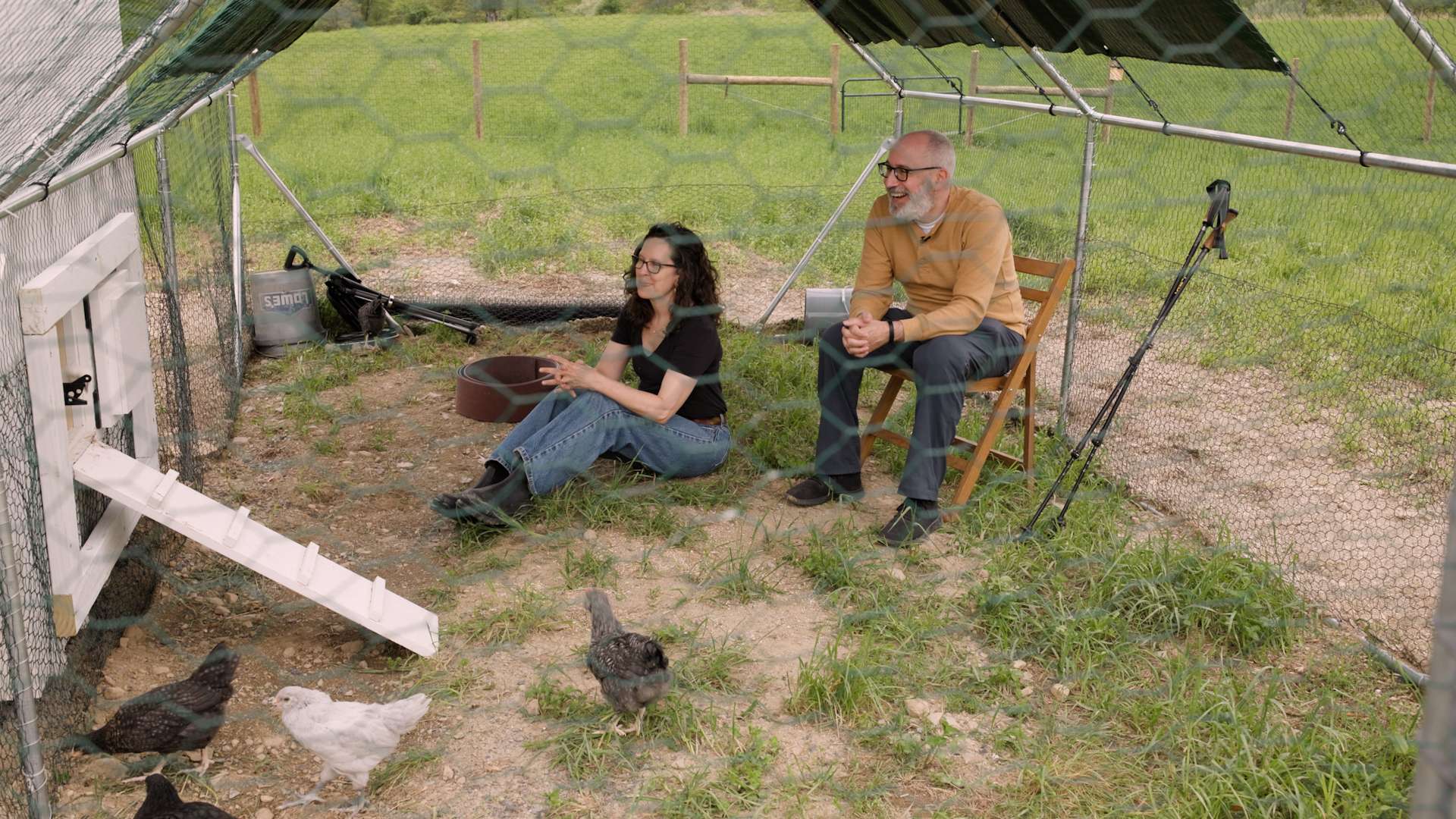
I had lived and worked in New York City and the surrounding suburbs for my entire career, but I dreamed of having a house in the country because I love growing vegetables and caring for animals. A year before my diagnosis, my wife and I bought a piece of land in Columbia County, a rural area in New York state. When I found out that I had ALS, the house wasn't complete, so we were still able to make all the necessary modifications to make it accessible as my condition progresses.
We moved in a year ago, and are raising chickens and goats. Once MAiD becomes legal in New York in 2026, I will have the privilege of creating the exact conditions I want for my own death. I want to be out in the field with our animals, watching tree swallows and bluebirds fly in and out of their boxes. I want my wife and my daughters by my side.
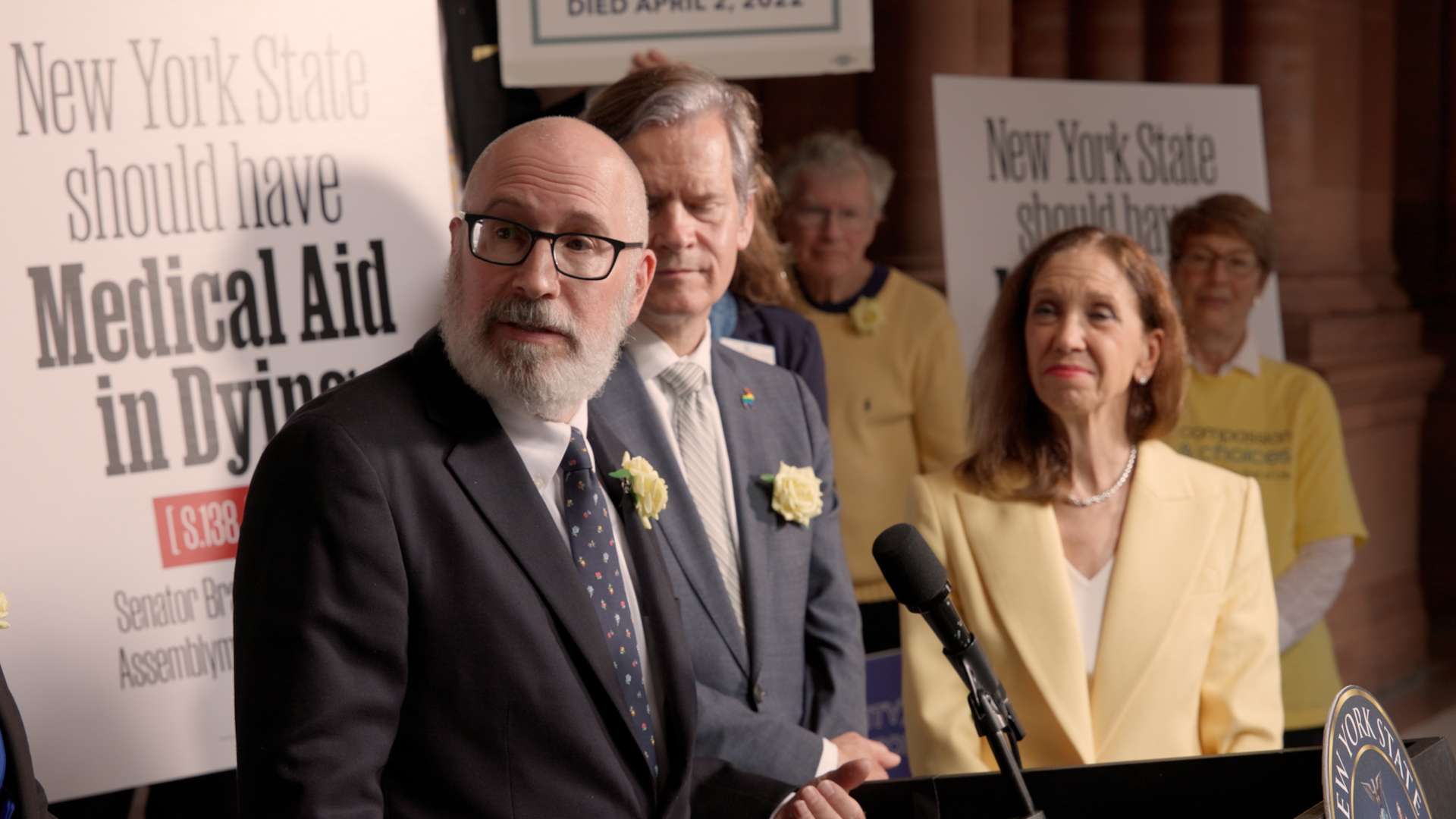
In December 2025, Democratic Gov. Kathy Hochul announced an agreement with the state's legislative leaders on a MAiD law. The State Assembly and Senate just need to pass the new version of the bill and send it to Hochul's desk, and it will take effect six months after it is signed.
If the law didn't pass, I was prepared to move to another state and establish residency. But most of the people in the 37 states without MAiD laws don't have the resources or ability to move elsewhere to die, which is why I've decided to become an advocate for MAiD in states where it isn't yet legal.
MAiD gave me the freedom to determine my own fate, and today I'm living more vibrantly than I could have imagined on that horrible Friday morning in my neurologist's office. I meditate. I exercise carefully. I spend time with my wife and daughters, extended family, and friends. I laugh. I advocate. I build fences. I rest in the sun. I savor good meals. I watch every bird that lands on this property as if it's the first one I've ever seen.
This article originally appeared online. The web version has been updated to reflect the print edition.
This article originally appeared in print under the headline "Assisted Suicide Brought Me Back From the Dead."




