
The MAHA Administration Bails Out Big Seed Oil
The Trump administration continues a long tradition of subsidizing the things it tells Americans to eat less of.
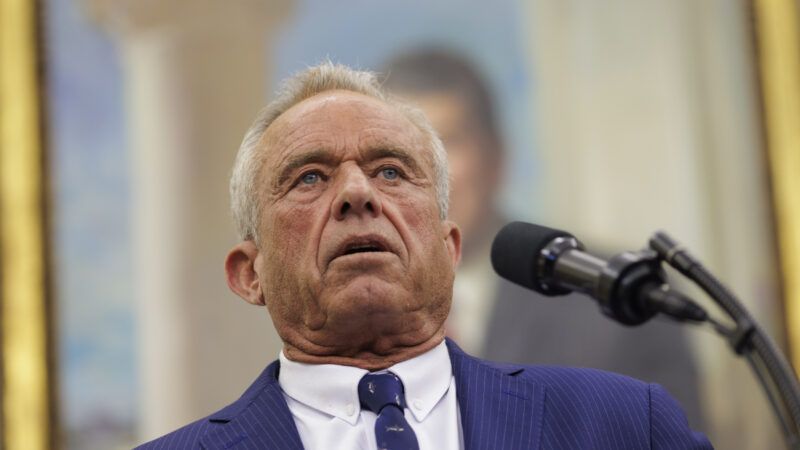
Robert F. Kennedy Jr. is no fan of seed oils, which he says contribute to a long list of chronic ailments. As Health and Human Services secretary, he's gone out of his way to promote the use of alternative fats and oils.
Less sunflower oil and beef tallow are a core part of his effort to Make America Healthy Again (MAHA).
Earlier this week, Kennedy attended a press conference at Reagan National Airport, where he endorsed efforts to bring more nutritional, presumably seed oil-free foods, to the nation's airports as well.
The same day that Kennedy was doing pull-ups at DCA, his cabinet colleague, Secretary of Agriculture Brooke Rollins, was announcing a $12 billion bailout of America's farmers to be paid for by new tariff revenues.
The tariffs funding a bailout of distressed farmers are causing farmers distress in the first place, as Reason's Eric Boehm noted this week. Import taxes on machinery and fertilizer are raising farmers' costs. Foreign countries' retaliatory tariffs are closing off export markets.
The contradictions of the Trump administration's agriculture bailout, however, go beyond using tariff revenue to ameliorate the costs of tariffs.
Among those eligible for the new bailout will be growers of corn, sunflower, canola, rapeseed, and safflower—that is to say, growers of the most common seeds used for seed oils.
So, on the one hand, the Trump administration is encouraging Americans to consume fewer seed oils through policy nudges and the government's bully pulpit. On the other hand, it's bailing out the producers of the products that it wants Americans to consume less of.
A more consistent policy would involve either welcoming the collapsing fortunes of seed growers or, alternatively, encouraging Americans to consume more seed oils to prop up the suffering industry.
Instead, the Trump administration has settled on a contradictory effort to encourage seed oil production while suppressing seed oil consumption.
Federal agriculture policy has long been a contradictory mix of hectoring nanny state restrictions on things you're not supposed to eat and subsidies for the producers of those same discouraged products.
The MAHA movement was supposed to be a more significant break with past federal nutrition policy. Instead, it's found itself in the same contradictory position.
The list of discouraged ingredients is a little heavier on seed oils and a little lighter on trans fats, but little else has changed about the government's crony relationship with the food industry.
Consumers should take note. The federal government will always be more invested in keeping agricultural subsidies flowing than in improving the diets of the average American.
Healthier consumption behaviors are ultimately going to come from better personal decisions, not policy nudges from Washington.
