

The Free Market Can Connect Rural America Faster Than the Government
Private innovation is connecting rural America faster than Washington’s $42 billion broadband program.
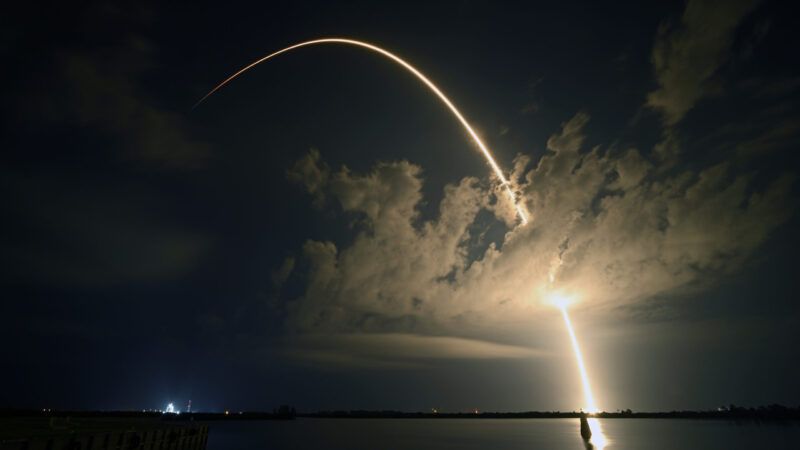
Elon Musk's satellite internet service, Starlink, announced a new milestone in November: 8 million users worldwide, up from its previous high-water mark of 7 million in August. Many of these users would otherwise have no connection at all. For decades, reliable internet service has been out of reach for too many, with traditional fiber-optic broadband rollout slow, challenging, and costly. Starlink and new innovators are changing that, revolutionizing how we connect rural America.
A service of SpaceX, Starlink delivers broadband through a constellation of low-Earth-orbit (LEO) satellites, a technology unconstrained by the traditional "last mile" problem of physically connecting homes to high-speed networks. Each terminal links directly to satellites, providing high-speed internet worldwide. Because Starlink's satellites orbit roughly 340 miles above Earth, versus about 22,000 miles for geostationary satellites, latency is dramatically lower, reducing signal delay and enabling high-quality, bandwidth-intensive uses like video calls and online gaming.
Starlink isn't the only player in this arena. Amazon Leo (formerly Project Kuiper) unveiled its new branding in November as it gears up to offer direct-to-consumer internet service. It is investing billions into LEO technology and already has more than 150 satellites in orbit.
Fiber broadband depends on laying long stretches of physical cable, something that is often expensive or unprofitable. For example, The Wall Street Journal reported in 2023 that the federal plan to expand broadband into Nebraska's Winnebago Tribe was expected to cost an average of $53,000 per household or workplace; in parts of Montana, some connections are estimated at a whopping $300,000 each. These costs frequently mean rural fiber expansion depends heavily on government subsidies.
The economics of satellite internet are fundamentally different. Starlink installs for about $600 in hardware. There's no cost per mile, deployment is immediate, and maintenance is minimal. It's a self-sustaining model with minimal subsidization necessary.
The federal government has poured billions of dollars into expanding rural broadband, primarily through fiber-optic buildouts. Most recently, the 2021 Infrastructure Investment and Jobs Act allocated over $42 billion for the Broadband, Equity, Access, and Deployment (BEAD) program.
Should the federal government involve itself so extensively in broadband expansion, and if so, who should benefit on the supply side?
Under the Biden administration, the National Telecommunications and Information Administration (NTIA), empowered to define what constitutes "priority" broadband service, was engaging in a policy of picking winners and losers. In a December 2024 notice, LEO satellite internet service is explicitly named as an "alternative technology," effectively sidelining it from BEAD funding in favor of legacy providers.
This was shortsighted. In a short time, Starlink has undergone rapid improvements, expanding its user base from roughly 140,000 in 2021 to 8 million today. Further, from the third quarter of 2022 to the first quarter of 2025, U.S. median download and upload speeds rose from 53.95 megabits per second (Mbps) and 7.50 Mbps to 104.71 Mbps and 14.84 Mbps, respectively. Since then, performance has accelerated even further: Globally, Starlink reported typical download and upload speeds exceeding 200 Mbps and 30 Mbps, with median latency averaging about 23 milliseconds (ms).
All of this easily outperforms the Federal Communications Commission's broadband benchmarks of 100 Mbps download speeds, 20 Mbps upload speeds, and latency below 100 ms. Starlink says it offers download speeds of 400 Mbps or higher where available. Meanwhile, Amazon Leo rolled out its plan to offer LEO internet service with download speeds of up to 100 Mbps, 400 Mbps, and 1 Gbps.
Achieved primarily as a privately financed, market-driven venture, Starlink already offers much of rural America high quality internet service. And with SpaceX continuing to launch not only more LEO satellites but higher-performing ones with its second generation, the company's service quality is poised to continue advancing.
We shouldn't let government subsidies distort the market. U.S. Commerce Secretary Howard Lutnick embraced this thinking with his June 2025 decision to drop the NTIA's "fiber preference," shifting the agency toward a technology-neutral, cost-driven framework. The policy emphasizes cost-effectiveness among technologies meeting speed and latency standards.
The Communication Workers of America (CWA) pushed back, accusing Lutnick of prioritizing the "interests of a few billionaires and satellite companies," and dismissing LEO technology as "expensive and unreliable." CWA represents tens of thousands of technicians employed by legacy telecom firms reliant on fiber models, along with unionized workers who install and maintain fiber-optic infrastructure.
Days before the announcement, other fiber-aligned groups issued statements pressuring the Trump administration to preserve the status quo. The Fiber Broadband Association (FBA) sent its own letter to Lutnick urging that BEAD remain centered on fiber deployment, while five other industry associations issued a joint letter to President Donald Trump, emphasizing BEAD as a "golden opportunity" to "drive as much fiber infrastructure as feasible into our country."
In many areas, fiber expansion will continue to make sense, but if LEO-based broadband can offer high-quality internet connectivity virtually instantaneously and on the cheap to many in the targeted regions, why should the federal government stand in the way? After all, as Starlink celebrates its 8 million and counting user base, something largely accomplished absent heavy subsidization, a congressional report notes that, as recently as August 2025, "no eligible broadband deployment projects" had received BEAD funding yet.
Just five years ago, direct-to-consumer LEO service was only an idea. Today—built and scaled overwhelmingly through private investment rather than being dependent on federal broadband deployment subsidies like BEAD—Starlink reliably connects millions, and with additional and higher-performing satellites coming, it is set to expand in quality and reach. New entrants also underscore that this industry is steadily advancing. While fiber-based, last-mile broadband infrastructure will remain part of the solution, the federal government should steer clear of tilting the playing field and let innovation lead. If the government steps aside, the free market can finally finish the job of connecting rural America.

Editor's Note: As of February 29, 2024, commenting privileges on reason.com posts are limited to Reason Plus subscribers. Past commenters are grandfathered in for a temporary period. Subscribe here to preserve your ability to comment. Your Reason Plus subscription also gives you an ad-free version of reason.com, along with full access to the digital edition and archives of Reason magazine. We request that comments be civil and on-topic. We do not moderate or assume any responsibility for comments, which are owned by the readers who post them. Comments do not represent the views of reason.com or Reason Foundation. We reserve the right to delete any comment and ban commenters for any reason at any time. Comments may only be edited within 5 minutes of posting. Report abuses.
Please to post comments
The profit motive makes things happen.
I made some money assisting the manufacture of machines. (5 different machines in total installed in LA) to help build that rocket.
One of my greatest achievements..
Like making Democrats scared and sad?
I am a Democrat and think profit motives are fine!
Indeed. Free$; As-in free from making anything useful for anyone else.
"Starlink installs for about $600 in hardware."
I paid about $350, including sales tax and shipping.
Reason: I recently moved to "the country."
The service is at least as good as (and so far more reliable than) my previous cable Internet connection, and costs $30 a month less (unlimited bandwidth). Other than some old-style satellite operators who didn't seem to offer similar value for price, my only alternative options were "lite" low-speed/low-bandwidth products from a couple of mobile Internet providers.
I'm in the country and have been on a terrestrial radio network for 8 years. It was fine up until a year or so ago, when they got bought out. I don't expect perfection, but I do expect reasonable attempts. It was originally fast enough to stream two movies at once and still surf the net; sometimes now it is so slow that YT can't even maintain 240 resolution. It goes out now once or twice a month even in good weather.
It's time to give Starlink a look.
We recently (this past summer) installed this at our rental property in rural Missouri, for about the same price. This is in an area of the Ozarks where I can't even get a cell phone signal (And our land-based telephone service was a 'party line' up until a couple decades ago).
The article makes a good point about the improved latency with the LEO satellites. Back in the day, satellite internet meant ping times of 2k+, now it's well under 100.
Love the Ozarks.
Also have Starlink and I’m quite happy with it. I’ve had two games streaming at once and my wife watching something else in the other room, and both of us can still use wifi, and the picture is still good.
I do recommend getting one of their mesh extenders if you have a house 2,000sq ft+ and the router isn’t centrally located.
Yeah, helped my parents and their Church set it up a year ago and more recently bought some personal equipment. $600 is either full install or top-tier hardware for roaming and/or event hosting. For home installs of the kind SGT suggests (a few live HD streams, a few browsers, a few emails and/or IoT devices), $350 should do the trick. Probably could get well under $300 if you hunted down some older hardware and set it up yourself.
I live in a rural area about 10 miles from the 3rd largest city in Illinois. We get Internet from Comcast on coax cable. Fibre not available. If the fibre ever gets here I'll hook up in a heartbeat mostly because Comcast has been ripping me off for decades and I would love to see them go the way of the phone booth. But I'm seriously looking at Starlink in the meantime. If it's equivalent it all comes down to price.
Fiber is awesome when / where it's available. I got a deal for being an 'early adopter' where they were still training their local techs to install it, but $40/mo, never goes up, unlimited speed. I have a better connection in terms of bandwidth & speed at home than at my office.
Government locks in their crony solution, always, until a new crony comes along.
Musk is crony of the day.
I've always wondered how safe those things were . You know, burning up in the atmosphere isn't complete; it leaves pollution that takes years to come down. Has anyone looked at the health concerns of letting Musk eff around until we "find out" ?
If the minor amount of pollution from burned up satellites scares you, best not look into how much extra pollution your precious EVs generate from shredding tires sooner.
Don’t you even rocket man bad, bro?
Well, at least the 'pollution' from the rocket launches is primarily water vapor. Might help with the whole new problem climate 'scientists' are warning about - apparently the drop in atmospheric pollution is causing cloud cover to be less, and therefore reflect less sunlight:
https://theconversation.com/reduced-air-pollution-is-making-clouds-reflect-less-sunlight-269805
Even worse is the mines for the batteries.
And orders of magnitude worse is the extraction of fossil fuels from the ground.
Cite?
World lithium production, 2024: 240,000 metric tons.
World crude oil production, 2024: 4 billion metric tons.
That acutally understates the magnitude of the difference, as one ton of tar sands or shale produces a lot less than one ton of crude oil.
The atmosphere is really, really big. I think there are better things to be worried about.
You scream about contrails dont you.
I think there was a study done to explain the launch risk to whales. Because the government FAA demanded it.
You should seal your house with plastic and duct tape (remember that?) and cover your body with 3 layers of aluminum foil (lead foil is better). Then drink only distilled water.
And definitely get off the web.
8 million users worldwide, up from its previous high-water mark of 7 million in August
Is this irony or poetic justice?
Dying a slow death.
Verizon Wireless alone has 20x that many customers in the US. It covers 99 percent of the US population. Starlink isn't a major player. The private sector success isn't Starlink it is the mobile phone companies.
False
As of late 2024/early 2025, Verizon had over 11.9 million total broadband connections, with FWA making up a significant portion of new additions.
Charliehall just makes shit up. The problem is he’s the dumbest motherfucker alive so when he makes shit up it isn’t believable.
Nope. 146 million as of last year. I got that number from Verizon. Most are mobile phones. But even the number of fixed point connections is more than Starlink. And the Verizon broadband network reaches most of the US today. And Verizon is not the only mobile network.
Not that it's any of your FUCKING business, but I use Starlink at my expansive rural estate. It's expensive but reliable.
That better not be an island. We know what happens on islands.
Private innovation is connecting rural America faster than Washington’s $42 billion broadband program.
For decades, reliable internet service has been out of reach for too many, with traditional fiber-optic broadband rollout slow, challenging, and costly.
So, private innovation has been failing to do anything for decades - literally since the dotcom busted since that was the last fiber broadband push - but after 25 years there's another private initiative to do something soon somewhere. As long as government limits itself to only providing subsidies that increase the profitability of whatever billionaires want to suck at the federal tit.
And Starlink has 2 million customers in the US - most of whom are not rural - and most of whom (83%) do not get a service comparable to broadband. Not that 'service comparable to broadband' is a real measure but obviously it ain't what private innovation will provide either.
On the bright side - transportation infrastructure also sucks in the US. As does the electric grid. So plenty of opportunities for the private sector to find ways to suck on a federal tit and for federal bureaucrats to find ways to enable that.
As I pointed out, high soeed internet is now a thing in most of the US thanks to mobile phone companies. Private sector.
Aah. A moron from NYC opines about 'most of the US '. Try driving across the West.
Joe Biden's $50 billion high speed cable never materialized. Not a single foot of cable laid. Not a single home connected. So where did all that money go?
When democrats are in charge expect massive fraud, theft and corruption.
Gov. Whitmer-$750 Millon for over 4000 phantom jobs.
Gov. Walz- $2 billion fraud by Somali scammers. (Walz knew)
The Gov. of Maine, Janet Mills knew all about the somali fraudsters who stole millions.
Never, ever elect another democrat.
Now talk about the $40 billion to buy an election in Argentina.
This argument has been going on at least since the early 2000's, which was when I started helping rural/small town folks cope with their crappy dial-up internet services (as a consultant for the state's employment rehab service). These folks were usually low-income and couldn't afford broadband service even where it was available.
The problem then, as always, was the ISPs' expectations that extending their cable lines into the hinterlands would yield very low ROI. Free Enterprise then, as always, was allergic to low ROI, and governments didn't know what to do about it.
The situation has improved a lot since then, typically in response to public/private partnerships. Interestingly, there seem to be some folks nowadays who would like to fall back to dial-up and DSL. I haven't taken the time to find out why. Perhaps they are 5G- dreaders and raw milk drinkers. I dunno.
Come on!
If private enterprise does it, then no democrat controlled NGOs will get planning contracts, or contracts to monitor DEI correctness, or contracts to review the other reviews.
(and none of those firms and people will donate to democrat politicians)
You trying to put all those people out of work?
The goal was never to connect rural areas to high speed Internet. The goal was to make sure the right people get paid. The goal has been achieved.
Well then, time to move the goalposts. According to DEI procedures, of course.
I had satellite internet over 20 years ago. It was great -- when there wasn't a thunderstorm. Have they fixed that problem?
I have a 12 foot C band satellite dish in the backyard. Been there for 30 years. Haven't figured out how to get rid of it.
A few months ago I saw what I assumed was a meteor. But it moved a lot slower than previous meteors I've seen, and was larger and redder too. I checked the Internet the next morning. Turns out it was a Starlink satellite falling to Earth and burning up in the atmosphere. Apparently one or two such satellites fall to Earth every day. It is thought that this number will only increase as Starlink scales up its operations.
~nature is not to be outdone.
17 meteorites per day: This is the average number of objects large enough to reach the ground, though most are small and go unnoticed.
Millions of smaller particles: Earth receives about 100 tons of space dust and sand-sized particles each day, most of which are not large enough to be considered meteorites.
Millions of meteors: An estimated 25 million meteoroids enter the atmosphere daily, but the vast majority burn up as meteors (shooting stars) and never hit the ground.
Shit, is this another one of those "we will all be dead in 10 years unless we give Democrats and socialists a trillion dollars and most of our personal liberty) catastrophes?
No, it’s to show that a couple of satellites burning up means nothing in the grand scheme of things.
It means something in the context of comparing fiber vs. satellite - you know, the prosaic scheme of things.
There was a great W. Herzog documentary on meteors and meteorites. Take a broom up to a flat roofed mall or factory, and sweep up the dust. A good portion of it will be extraterrestrial in origin.
The Starlink satellite I saw burning up was considerably larger than a grain of sand. Maybe 3 times the diameter of Venus.
One of the advantages of fiber optic cables is that they do not fall from the sky. They stay underground and continue to carry data. If for some reason a cable is broken, it can be repaired, but it's a finicky operation. Other advantages of fiber optic: up to 10 Gbps speed (Starlink 10 Mbps. A new record set this summer in Japan, 1.02 Pbps), half of better than Starlink's latency, very reliable and cheaper. The disadvantage is that it requires expensive infrastructure installed by trained professionals, possibly Mexicans.
Most of the satellites that fall are made to de-orbit as they are outdated and have been replaced with new ones.
The satellite you saw was not 3 times the diameter of Venus.
It just appeared that way.
It all comes down to whether or not Mike Masnick determines if we have a market failure or not, and/or if whatever government intervention that is happening is 'well within the bounds of any normal liberal democracy'.
There is a really big assumption here - that 'rural America' wants to be connected.
SpaceX and Starlink are subsidized by the government. So not free market at all.
Starlink $661M (1.6%) ... fiber BEAD program $42,000M.
Only 98.4% more free-market than BEAD.
To provide coverage to 478,000 locations.
https://www.pcmag.com/news/starlink-on-track-to-receive-661-million-from-federal-broadband-program
+7 walz
What do you mean the 'Guns' (Gov-Guns) didn't make infrastructure. /s
The very 'Gun' THEFT bill is named infrastructure.... /s
Maybe. Just Maybe. A 'Gun' isn't the right tool to create infrastructure. Maybe it's just a tool for THEFT.
Or to prevent THEFT when used justly (wishful thinking).
Almost every street and highway in the US was built by putting a gun to your head.
Ditto most railroads and improved waterways.
And you would not have electricity delivered to your home without guns forcing sales of right of ways for transmission lines.
Or inexpensive natural gas at yoir house, or gasoline at service stations, without the same, for pipelines.
You might enjoy Somalia. No government. Guns entirely in the private sector.


