

Reason.com - Free Minds and Free Markets
Reason logo Reason logo
  • Latest
  • Magazine
    • Current Issue
    • Archives
    • Subscribe
    • Crossword
  • Video
    • Reason TV
    • The Reason Roundtable
    • Just Asking Questions
    • Free Media
    • The Reason Interview
  • Podcasts
    • All Shows
    • The Reason Roundtable
    • The Reason Interview With Nick Gillespie
    • The Soho Forum Debates
    • Just Asking Questions
  • Volokh
  • Newsletters
  • Donate
    • Donate Online
    • Donate Crypto
    • Ways To Give To Reason Foundation
    • Torchbearer Society
    • Planned Giving
  • Subscribe
    • Reason Plus Subscription
    • Gift Subscriptions
    • Print Subscription
    • Subscriber Support

Login Form

Create new account
Forgot password

Government Spending

How the Federal Budget Deficit Doubled in a Single Year

It's not the first time that has happened, but there are key differences about what happened this year.
Eric Boehm | 9.20.2023 3:10 PM

Share on FacebookShare on XShare on RedditShare by emailPrint friendly versionCopy page URL Add Reason to Google
Media Contact & Reprint Requests
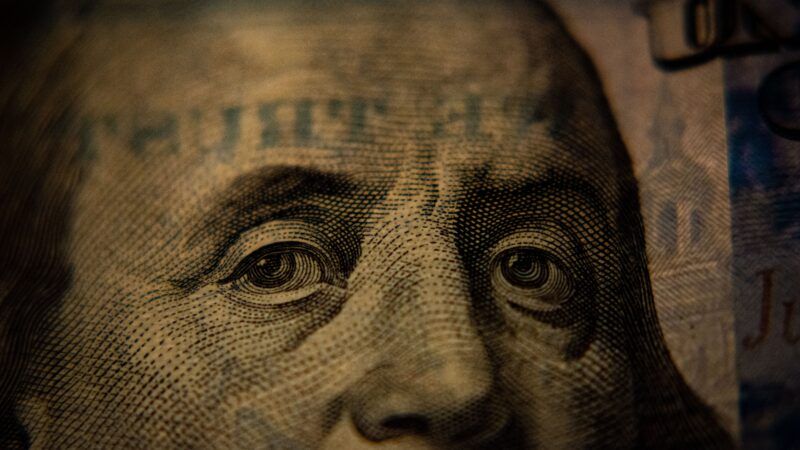
A zoomed up and enhanced image of Ben Franklin on the 0 bill | Photo by Nathan Dumlao on Unsplash
(Photo by Nathan Dumlao on Unsplash)

It's not totally unprecedented to see the federal budget deficit double from one year to the next, as it seems to have done this year.

But those occasions, at least in the past 50 years, have always corresponded with bad stuff happening to the national economy. Deficits surged in the late 1970s and early 1980s thanks to high inflation and a series of recessions. The budget deficit doubled between 2002 and 2003 thanks to a recession and as the War on Terror kicked off. And it skyrocketed again during the crises that bookended the 2010s: the mortgage crisis and the COVID-19 pandemic.

This year will likely be added to that list. The Congressional Budget Office last week projected that the federal government will post a deficit of $2 trillion when the current fiscal year ends on September 30.

At first blush, that might not appear to double last year's budget deficit of about $1.4 trillion, but keep in mind that last year's total included roughly $400 billion for President Joe Biden's student loan forgiveness plan—funds that were never spent because the Supreme Court struck down the proposal, as the CBO notes.

Compared to those other historical examples, however, this year seems like an outlier. Unemployment is low, the economy has been growing steadily, and inflation has significantly abated. America does not seem to be in a crisis at the moment, but the government's balance sheet certainly is.

And it is that way, in large part, because of the government's own programs—as opposed to, say, an external event like a pandemic or a mortgage crisis. The drivers of this year's rising deficit are four-fold, and three of them are the result of decades of poor policymaking: rising interest costs on the $33 trillion national debt, higher Social Security outlays, and more Medicare spending. As Axios points out, those three categories added more than $390 billion to the deficit relative to last year—a tremendous jump in a single year.

The fourth category is falling federal income tax revenue, which is responsible for about $171 billion of the added deficit this year versus last. That's likely a blip and not a long-term problem—federal tax revenue was unexpectedly high a year ago, and bigger swings in annual revenue tallies seem to be becoming more common, as The Wall Street Journal explained in May.

That's not the case for the other three categories driving this year's deficit, all of which are going to keep getting worse for the foreseeable future.

The two big federal entitlement programs are both on a trajectory toward insolvency. Lawmakers have known that for a long time, and have chosen to do nothing about it. They've also known that as the country ages and, in particular, as the Baby Boomer generation grows old, those programs would be strained. Again, they've done nothing about that looming problem.

The rising cost to service the national debt, meanwhile, is a feedback loop created by the other poor decisions and compounded by higher interest rates. Over the next decade, the federal government will spend $10.6 trillion just to pay the interest on borrowing that's already occurred or is planned—and that total could go up if the federal government has to respond to an unexpected crisis or if lawmakers vote for higher levels of borrowing in future budgets.

The current pace of borrowing is staggering. The federal government has borrowed $1 trillion since June 15.

"We are becoming numb to these huge numbers, but it doesn't make them any less dangerous," said Maya MacGuineas, president of the Committee for a Responsible Federal Budget, in a statement last week.

The big difference, then, between this year and 2002 (or 1977 or any of the few other times in recent history when the deficit has doubled) is that the drivers of this year's shocking deficit growth are not temporary problems. They are structural problems—either as so-called "mandatory spending" or as a function of the borrowing the government has already done—that will continue to mount until they are meaningfully addressed.

Start your day with Reason. Get a daily brief of the most important stories and trends every weekday morning when you subscribe to Reason Roundup.

This field is for validation purposes and should be left unchanged.

NEXT: The E.U. Doesn't Want People To Sell Their Plasma, and It Doesn't Care How Many Patients That Hurts

Eric Boehm is a reporter at Reason.

Government SpendingBudget DeficitDebtNational DebtSocial SecurityMedicareEntitlementsFederal government
Share on FacebookShare on XShare on RedditShare by emailPrint friendly versionCopy page URL Add Reason to Google
Media Contact & Reprint Requests

Show Comments (27)

Latest

Federal Reserve Defers to Donald Trump by Cutting Interest Rates by 25 Points

Jack Nicastro | 12.10.2025 5:21 PM

The MAHA Administration Bails Out Big Seed Oil

Christian Britschgi | 12.10.2025 4:25 PM

The DOJ Says It Will Challenge Unconstitutional Gun Policies. Maybe It Should Stop Defending Them.

Jacob Sullum | 12.10.2025 3:35 PM

Trump Says China Didn't Buy Soybeans While Biden Was President. Here's What the Data Show.

Eric Boehm | 12.10.2025 2:20 PM

Trump Will Let Nvidia Sell Chips to China—but the Feds Will Get 25 Percent of the Profits

Tosin Akintola | 12.10.2025 11:44 AM

Recommended

  • About
  • Browse Topics
  • Events
  • Staff
  • Jobs
  • Donate
  • Advertise
  • Subscribe
  • Contact
  • Media
  • Shop
  • Amazon
Reason Facebook@reason on XReason InstagramReason TikTokReason YoutubeApple PodcastsReason on FlipboardReason RSS Add Reason to Google

© 2025 Reason Foundation | Accessibility | Privacy Policy | Terms Of Use

This site is protected by reCAPTCHA and the Google Privacy Policy and Terms of Service apply.

r

I WANT FREE MINDS AND FREE MARKETS!

Help Reason push back with more of the fact-based reporting we do best. Your support means more reporters, more investigations, and more coverage.

Make a donation today! No thanks
r

I WANT TO FUND FREE MINDS AND FREE MARKETS

Every dollar I give helps to fund more journalists, more videos, and more amazing stories that celebrate liberty.

Yes! I want to put my money where your mouth is! Not interested
r

SUPPORT HONEST JOURNALISM

So much of the media tries telling you what to think. Support journalism that helps you to think for yourself.

I’ll donate to Reason right now! No thanks
r

PUSH BACK

Push back against misleading media lies and bad ideas. Support Reason’s journalism today.

My donation today will help Reason push back! Not today
r

HELP KEEP MEDIA FREE & FEARLESS

Back journalism committed to transparency, independence, and intellectual honesty.

Yes, I’ll donate to Reason today! No thanks
r

STAND FOR FREE MINDS

Support journalism that challenges central planning, big government overreach, and creeping socialism.

Yes, I’ll support Reason today! No thanks
r

PUSH BACK AGAINST SOCIALIST IDEAS

Support journalism that exposes bad economics, failed policies, and threats to open markets.

Yes, I’ll donate to Reason today! No thanks
r

FIGHT BAD IDEAS WITH FACTS

Back independent media that examines the real-world consequences of socialist policies.

Yes, I’ll donate to Reason today! No thanks
r

BAD ECONOMIC IDEAS ARE EVERYWHERE. LET’S FIGHT BACK.

Support journalism that challenges government overreach with rational analysis and clear reasoning.

Yes, I’ll donate to Reason today! No thanks
r

JOIN THE FIGHT FOR FREEDOM

Support journalism that challenges centralized power and defends individual liberty.

Yes, I’ll donate to Reason today! No thanks
r

BACK JOURNALISM THAT PUSHES BACK AGAINST SOCIALISM

Your support helps expose the real-world costs of socialist policy proposals—and highlight better alternatives.

Yes, I’ll donate to Reason today! No thanks
r

FIGHT BACK AGAINST BAD ECONOMICS.

Donate today to fuel reporting that exposes the real costs of heavy-handed government.

Yes, I’ll donate to Reason today! No thanks


