

Jesse Walker | January 16, 2008
Some interesting observations from Franklin Harris, down in the comment threads:
That [Ron] Paul placed higher in Michigan and Iowa(!) than in New Hampshire may be the best indication that the Ron Paul Revolution is a different demographic than the traditional libertarian demographic. And since I don't think these are people who are backing Paul because of a few old newsletters, this is probably a good thing. The question becomes then, can traditional libertarianism (cosmo, paleo, or otherwise) offer these folks anything that keeps them around? And, for what it's worth, judging by the grassroots Revolution's online presence, I'd say most of these people are socially cosmo-libertarian and economically paleo-libertarian.
"Socially cosmo-libertarian and economically paleo-libertarian"? Sounds a bit like this:
Incidentally, Harris' comment may be the first time I've seen
someone use the term "cosmo-libertarian" (or "cosmotarian") as
anything other than an insult. Not that its meaning has had much
time to stabilize -- a couple months ago, as far as I can tell, the
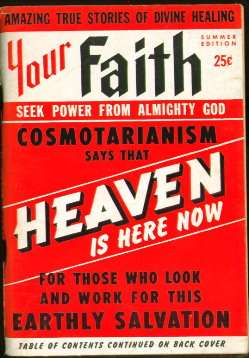
word didn't exist at all. Unless you count
this early usage:
Help Reason celebrate its next 40 years. Donate Now!
Try Reason's award-winning print edition today! Your first issue is FREE if you are not completely satisfied.
And, for what it's worth, judging by the grassroots
Revolution's online presence, I'd say most of these people are
socially cosmo-libertarian and economically
paleo-libertarian.
Yes, pander to ME!
What's my label, anyway?
I don't think you can say conclusively that Ron Paul did better
in Iowa. More citizens voted for Ron Paul in New Hampshire. Less
voters turned out in Iowa giving Paul a larger percentage of the
Iowan vote.
http://www.freestateproject.org/community/essays/2008_nh_primary_impact
Is Ted Nugent a Paul supporter?
I doubt it, given Nugent's foreign policy views. But I seem to
remember him endorsing an LP candidate back when I lived in
Michigan. If not an endorsement, then definitely some favorable
attention.
Interesting on the social vs economic bit. The cosmos tend to be
more libertine socially (end the drug war, end the police state).
On the economic front the Ron Paul revolution is driven by goldbugs
and people that have read up on Austrian economics, which are
definitely representative of the paleo side of
libertarianism.
Maybe Ron Paul is popular because he does appeal to both of these
groups. Too bad about the newsletters trying to grab the
paleo-lib's social side!
Since I am an economic AND social libertarian can I just be called a libertarian without any stupid prefix?
Nugent seems to be an excellent candidate for the Paul movement, but I don't know enough detail about him. Are you saying you think he's pro-war?
Why do people have to put prefixes on everything? I don't care about cosmoneopaleosuperduperlibertarianism. I don't think you could get 5 people to give you the same definition of cosmo or paleo or neo or whatever libertarianism.
P Brooks: Last I heard, Nugent was very pro-war. Of course, a
lot of people have changed their minds about the war over the last
couple years.
Dan: Franklin is using it to mean "socially tolerant." For a lot of
people it's just a broad smear-term.
Why do people have to put prefixes on everything?
'Cause thinkin' is hard, Adamness.
Gold is the people's money! Paper is the banker's and the
government's.
FWIW: I'm socially conservative/economically libertarian.
Lots of things tie into economics, like the Drug War. I'm anti drug
war for the simple fact that it doesn't work economically, not
because I think people should do drugs.
A cosmo-libertarian is a libertarian who reads Cosmo, such as Kerry or Nick. Matt reads Maxim, which just makes him a horny poser. Weigel doesn't read magazines because "print is dead", and Bailey, Sullum, and Doherty are too old to read any more because their eyes are so bad. Jesse doesn't know how to read.
Well, besides being a very long-term (forty years and counting)
libertarian, I'm also one of the few linguists around this blog.
And now I'm going to do some actual linguistics, by trying to nail
down the origins and noting the spread of the word
'cosmotarian'.
I did find a good 'definition' in an earlier H&R posting:
Bingo | January 10, 2008, 10:59pm | #
cosmotarians are the coke-snorting limpwristers of the libertarian
movement that are afraid of adversity and controversy. Spend most
of their time attached to their macbooks typing up policy papers in
their hip urban flat and riding their scooter to the local Whole
Foods store. Would rather moan about the state of liberty in
America than actively work to improve it.
It seems to have been used on Lew Rockwell's site, which is a place
I don't visit very often. This is because I find his arguments
scary, and since I am, probably, by his lights, a raving statist,
since I am Jewish and like to cook. I'm also anti-war, but
Rockwell's worldview doesn't allow for that combination.
If anyone can find a citation of 'cosmotarian' from before 2008 I'd
appreciate it (not counting the one in the cute ad above).
I recall catching a cover of "Long-haired Country Boy" a while
back by a couple of faux country boys (I think Travis Tritt and
some other; they're all kinda interchangeable now).
The line "But I will take another toke" had been changed to "But I
will tell another joke."
Totally disgusting, and an insult to Charlie Daniels. There is no
one more fun to hang out with than a redneck, shit-kicking,
beer-drinking toker. Dipping snuff and toking at the same time is a
rush. One of them also showed me how to grind up all those pesky
seeds and stems and add them to my dip. A nice contact buzz
ensued.
I tell my teens all time, because of the War on Drugs, "they" are
trying to pretend that the 70s never happened.
Jesse doesn't know how to read.
I have a weird feeling that there's some meaning lurking behind
those funny scribbles, something I should reply to.
Interesting on the social vs economic bit. The cosmos tend
to be more libertine socially (end the drug war, end the police
state). On the economic front the Ron Paul revolution is driven by
goldbugs and people that have read up on Austrian economics, which
are definitely representative of the paleo side of
libertarianism.
Uh, no. Real live practicing Austrian economist here. Anti-war.
Also self-identified "cosmopolitan."
If you think Austrian economics belongs on the "paleo" side, you
haven't read your Mises and Hayek. Mises was far more
"cosmopolitan" than those who claim his name today. Read
"Liberalism" to see why, as a start.
Interesting on the social vs economic bit. The cosmos tend
to be more libertine socially (end the drug war, end the police
state).
I think all libertarians favor those things. Where I see the
distinction is one of world-view. The cosmos seem to favor a
one-world multi-culti world-view similar to neo-liberals, and tend
tend to view libertarianism less as an end in itself than as a
means to that end. We're all going to be one, big happy family.
Kind of like a big free-market based commune.
The distinction between the cosmos and the more typical
left-liberal seems to one of means, rather than end. They seem to
accept the legitimacy of the leftist world vision, they just differ
on how to achieve it.
David Allan Coe is also more appropriate since he's been accused of racism.
Wekjjdsl, irn jusgt looiioo "fggfkj" hu miuun,
Jesse?
THEM'S FIGHTIN' WORDS!
Libertarianism needs to embrace American exceptionalism. One of
the biggest problems with Lew Rockwell and his ilk is that they
hate the policies of this country so much, they come accross as
hating the country. The message needs to be positive. It needs to
be "we are the greatest country with the greatest people in
history, we just need to get the government out of people's way and
let them do what they do best; which is making a great
country."
The Reason staff has the same problem although not to near the same
degree. Outright patriotism is just not cool. What is the old
saying "you attract more flys with honey than viniger"? There is a
real bad habbit in the libertarian movement to view the rest of the
country with distain. The Lew Rockwells of the world look at the
country as a bunch of dupes taken in by big Jewish bankers and the
like. The Reasonoids of the world have a bad habbit of looking at
the country as filled with beer guzzling fundie morons who want to
bomb every brown person as revenge for 9-11. Gee, is it a surprise
that not many of the general population that libertarians so openly
and often dispise don't seem to support libertarians?
David Allan Coe is also more appropriate since he's been
accused of racism.
I noticed that the version of "If That Ain't Country" that you
linked to left out a certain controversial line from the original
version...
I think it's a brilliant song either way, and not racist at all --
though I wouldn't say that about everything Coe has recorded.
Steve: I'll check it out! I'm a self-identified cosmo, but I'm afraid my knowledge about economics isn't that deep. Got any specific titles to recommend?
I think it's a brilliant song either way, and not racist at
all -- though I wouldn't say that about everything Coe has
recorded.
I used to be in a band with a guy who wound up as Coe's fiddle
player (don't know if he's still with him). You should hear the
stuff that hasn't made it to record. Believe me, Coe doesn't leave
any doubts about his views on race.
Come on Jesse,
Didn't DAC do a whole record about prison life including a song
lauding the virtues of homosexuals who can clean your cell and take
care of you and the like? Coe is a real phychotic, I don't think I
would equate him with any movement.
Jesse,
I just grabbed the first Coe video I found. If you want one where
he looks almost identical to Charlie Daniels, check out this 1983 cut of The
Ride.
I think it's a brilliant song either way, and not racist at all
-- though I wouldn't say that about everything Coe has
recorded.
Coe has actually cut some racist tracks on "underground" albums in
the 80s. He refuses to play those songs anymore, and has personally
denied charges of racism, but he has the Ron Paul problem of
continuing to attract racist fans.
BTW, you should catch him in concert if you get a chance. He's
still touring and he's still very talented.
Oh, I understand now. The "C" word is anything you want it to
be!
In other words, bullshit.
What the fuck is a 'cosmo-libertarian'?
One who knows 15 different ways to please her man.
With all apologies to VP, I reject the cosmo-libertarian distinction as meaningless.
Coe is a real phychotic, I don't think I would equate him
with any movement.
Ain't no movement that can hold ol' Coe!
Coe has actually cut some racist tracks on "underground" albums
in the 80s. He refuses to play those songs anymore
That's the stuff I was referring to. I've heard, by the way, that
on at least one occasion he broke his vow not to play them.
Bingo:
I'd start with Mises book Liberalism from the 1920s. Don
Lavoie's National Economic Planning: What is Left? from
1985 is hard to find, but another book along those lines, though
less directly. Chris Sciabarra's Total Freedom from 2001
is a reinterpretation of libertarianism that makes great use of
Austrian economics in service of a more "cosmo" perspective.
You might also read the work of some of the younger generation of
Austrians who are writing on economic development issues
(www.peterleeson.com for one). Chris Coyne's excellent new book
After War makes use of Austrian ideas (and others) to
argue against US imperialism.
I think it's a brilliant song either way, and not racist at
all -- though I wouldn't say that about everything Coe has
recorded.
You have heard all of Underground Album, right? I don't
think that leaves much doubt as to his intent. If it's satire, it's
Andy Kaufman-level.
* I do not expect you to be able to read this; it's really for
everyone else.
David Allan Coe wrote the greatest country song ever. And if you
don't already know which one it is, too bad for you.
------
Libertarianism needs to embrace American
exceptionalism.
This, unsurprisingly, is exactly backwards.
"Libertarianism needs to embrace American exceptionalism.
This, unsurprisingly, is exactly backwards."
Give people the finger and tell them how stupid they are for not
agreeing with you. That will get them to vote for you.
You have heard all of Underground Album, right?
Like I said: That stuff is racist, and "If That Ain't Country" is
not. (Learn to read, dude!)
I would have thought that Gov. Arnold Schwarzenegger would be the most plausible cosmotarian politician.
Like I said: That stuff is racist, and "If That Ain't
Country" is not. (Learn to read, dude!)
"I'm an obtuse man, so I'll try to be oblique. Your illiteracy has
made me the whipping boy of this school district. I attended the
school board meeting this morning, and they all had their little
laugh. It was a feeding frenzy of cackling hyenas, and I was the
wildebeest carcass."
Drat! I think I lied; Coe didn't write it, he just recorded
it.
That's what happens when you're too lazy to take ten seconds to
check your facts.
Steve Goodman wrote it. According to legend, Prine co-wrote it, thought it was junk, and told Goodman he could have it.
"Steve Goodman wrote it. According to legend, Prine co-wrote it,
thought it was junk, and told Goodman he could have it."
Prine was right. It is junk. I will take Ray Wiley Hubbard's "Up
Against The Wall Redneck Mother" over "You Don't Have to Call Me
Darlin" for cheap country parody anytime.
The Reasonoids of the world have a bad habbit of looking at
the country as filled with beer guzzling fundie morons who want to
bomb every brown person as revenge for 9-11.
Well, if the shoe fits...no, but seriously, I think more folks
around here rightly distain people for acting as if they
were, how did you put it...beer guzzling fundie morons...every
time something bad happens that interrupts their regularly
scheduled programs. "Beer-guzzling" and "fundie" both imply a level
of commitment to something substantial that is apparently
unachievable to most.
Moron, on the other hand, is spot on. Is it wrong to have contempt
for people who act contemptibly?
Give people the finger and tell them how stupid they are for
not agreeing with you. That will get them to vote for
you.
The unfortunate thing is that a large majority of the American
electorate is stupid. The GPO and the Dems know it too.
They hide it so much better than Libertarians do.
Make that GOP, vice GPO. I have no idea what the printers think about American's intelligence.
"Moron, on the other hand, is spot on. Is it wrong to have
contempt for people who act contemptibly?"
Not necessarily, just don't expect them to ever vote for you and
have fun on the political fringes. Read your post and realize how
you sound just like the moralizing scolds on the left and religous
right. You are so fucking smug you assume everyone who disagrees
with you is a moron rather than a reasonable person who reasonably
diagrees with you. As long as libertarians continue to represent
themselves as the guy you used to beat up in gym class, they will
continue to be on the finges. It may be great for your sense of
self rigousness, but it is damn lousy for a political movement.
Also, for the record, I would say most people in this country are pretty damn smart. It is just that they spend their energies doing things like flying planes, treating sick people, fixing cars, cleaning the sewers and the like instead of ranting against the gold standard and US bases in Europe.
My original complaint about embracing American Exceptionalism,
John, stems from our "exceptionalism" creating situations
like
100,000 -plus dead Iraqis
some unknown multiple of that number maimed
four million or more displaced (ethnically cleansed) persons
internally and externally......
P Brooks,
Our exceptionalism also created things like a free Europe and a
free South Korea. It is one thing to object to Iraq, something that
I think history will show you are wrong on but time will tell. It
is quite another to take your objection to Iraq and translate that
to a complete denial of American exceptionalism and interventionism
in general. The fact is that the US trades with and is dependent
upon the rest of the world being reasonably stable and hopefully
free. We have no choice but to try to do our best to ensure those
things. How we do that is of course a hard question, but saying I
don't like Iraq therefore we should just go home everywhere is not
an answer, it is a tantrum.
"John: how do you explain Mike Huckabee's numbers?"
The evangelicals think he is their guy and don't really pay a lot
of attention to what he says. I think Huckabe is pure identity
politics.
I believe Charlie Daniels himself is the one who first turned
the "toke" into joke, and changed the getting drunk and stoned part
into people saying he's crazy as a loon because he prays every
day.
And he really changed the lyrics to "Uneasy Rider."
"Not to mention a lot of virulent, moronic, ranting about
Islamofascism..."
Lets have a couple of fundies blow themselves up at the next
burning man and kill a few hundred people and then see how much
"virulent, moronic ranting" about fundementalist Christians goes
on. People get pretty damned emotional when they are attacked. If
they didn't, they wouldn't be human.
I didn't expect to find any threads around here discussing the beginning of Iraqi reconciliation. I vaguely remember a thread on the surge working, but reconciliation was deemed a hopeless non-starter. Iraq could become the garden of eden causing Iranian youth to peacefully remake Iran, and oil could drop back to $50 a barrel and the fools around here will still maintain it was a mistake.
You are so fucking smug you assume everyone who disagrees
with you is a moron rather than a reasonable person who reasonably
disagrees with you.
Way to misread what I wrote. I guarantee you that if I thought
everyone who disagreed with me was a moron, I would not hold the
opinions I do today (which, odd as it must be for you, were
different from the ones I've held in the past, primarily from
paying attention to those I disagreed with).
What I was saying in my post that unlike the "fundies" (and the
beer-drinkers!) who have a commitment to an idea or an activity
(and whom I have more respect for than most atheists like myself
will generally admit), my contempt is reserved for the masses of
people who discard their
liberal/conservative/libertarian/fascist/jesus juice/whatever
beliefs at the first sign of trouble, rally round the flag, and
write off a generation of people to war and financial ruin because
the president says it's a good idea.
I'm sorry I was trying to be oblique and not spell it out in such
painful terms. I wasn't making fun of people for their opinions
that differ from mine...I was making fun of their inability to have
more than a surface-felling commitment to those beliefs.
When you can convince a guy that killing others/dying/spending
money on a war in a foreign country that poses no threat to him is
a really good plan...especially when that same guy was against the
very same argument when the guy making it was named "Clinton"...do
you call that "stupid", or not? Cause I do, and I'm sorry that that
hurts some people's feelings.
"What I was saying in my post that unlike the "fundies" (and the
beer-drinkers!) who have a commitment to an idea or an activity
(and whom I have more respect for than most atheists like myself
will generally admit), my contempt is reserved for the masses of
people who discard their
liberal/conservative/libertarian/fascist/jesus juice/whatever
beliefs at the first sign of trouble, rally round the flag, and
write off a generation of people to war and financial ruin because
the president says it's a good idea."
People disagree with you about whether Saddam was a threat.
Essentially you are saying that no one could have supported the war
for right reasons. That is bullshit. People supported the war
because they say Bin Ladin saying he was going to kill Americans
and then doing it and they figured that since Saddam was and had
been saying the same thing for 10 years that perhaps they should
take him at his word to. You may not agree with that sentiment but
people are not as stupid as you think they are.
Further, I would rather have a practical public that is willing to
change its ideology for what it considers good reason and be wrong
once in a while than a fanatically principled public that will
never change its principles regardless of reality. The last thing I
want is a public that won't discard its beliefs when reality
dictates. No principle is right in every situation.
There are at least 54,343 smart people in Michigan. That is how
many people voted for Ron Paul. While chances are very good they
did not agree with every position he holds, they were smart enough
to realize he was the best candidate on the ballot. That means
something.
Are most people from Michigan stupid for voting for the other
candidates? Well, frankly, yes. Either they are stupid because they
believe the other candidates or they are stupid because they didn't
research enough about issues and voted for whose name they
recognized. They are stupid either way. That doesn't mean they
can't become smart and John is right that we should not just yell
at them for being stupid, but we should try to educate them so they
are no longer stupid. We were all stupid ourselves once.
Replace "stupid" with a nicer word like "uninformed" or "mistaken"
and we'll get a lot farther a lot faster.
War is pretty serious, though, John. People die and it costs a fortune. So a public that is easily fear-mongered into submission is not better than a principled minority that happens to be right. While it's true that all principles are not right all the time, cooler heads must prevail, especially when the discussion is about war. There are people who still think the Iraq War is a good idea despite everything we know TODAY. These people ought to have their heads examined.
Dan: Franklin is using it to mean "socially tolerant." For a lot of people it's just a broad smear-term.
Personally, I think "cosmopolitan libertarian," along with its
various contractions, is better than somewhat awkward, less
descriptive, and more loaded terms that have been used over the
years: Beltway libertarians, left libertarians, lifestyle
libertarians, neo-libertarians, etc.
If you think Austrian economics belongs on the "paleo" side, you haven't read your Mises and Hayek. Mises was far more "cosmopolitan" than those who claim his name today. Read "Liberalism" to see why, as a start.
But in practice, you need only look at the heat Ron Paul has taken
from some libertarians for his support of the gold standard. The
gold standard (or at least free banking, which would probably tend
toward gold) is good ol' Mises-style Austrianism. But it was the
cosmopolitans giving Ron Paul flack for supporting even a
watered-down version of it.
Re: Ted Nugent Endorses??
There is a bit of confusion regarding whom Ted Nugent has endorsed
and I can't seem to find a definitive source for endorsement.
Apparently he has endorsed either
Fred Thompson or
Mike Huckabee.
If anyone can find a citation of 'cosmotarian' from before
2008 I'd appreciate it (not counting the one in the cute ad
above).
Not looking far beyond H&R, the earliest mention I could find
was from crimethink commenting on this
thread on December 7, 2007...
Jesse Walker,
Good point. I like how they imply that Reason, operating in DC and thus presumably run by the cosmotarian faction, is just warming up to Ron Paul now.
IIRC, from the day he was rumored to be entering the race, you all were very friendly to Paul, however skeptical you were about his chances.
It follows a discussion articulated by John C Jackson of why
libertarians suddenly have to be either populist or cosmopolitan
and not, you know, individualist.
Franklin,
Consider me one cosmo-libertarian and Austrian economist who has
praised Paul's stand to get the state out of the money business and
done so precisely because it also helps de-fund the war machine.
See my blog post here:
http://hnn.us/blogs/comments/44523.html
A revised and extended version will appear in the Jan-Feb issue of
The Freeman.
The cosmos seem to favor a one-world multi-culti world-view
similar to neo-liberals, and tend tend to view libertarianism less
as an end in itself than as a means to that end.
I think this may be the most succinct summary of the emerging
cultural split in libertarianism than anything else I have
seen.
Steve Horwitz | January 16, 2008, 10:51am | #
Bingo:
I'd start with Mises book Liberalism from the 1920s. Don Lavoie's National Economic Planning: What is Left? from 1985 is hard to find, but another book along those lines, though less directly. Chris Sciabarra's Total Freedom from 2001 is a reinterpretation of libertarianism that makes great use of Austrian economics in service of a more "cosmo" perspective.
You might also read the work of some of the younger generation of Austrians who are writing on economic development issues (www.peterleeson.com for one). Chris Coyne's excellent new book After War makes use of Austrian ideas (and others) to argue against US imperialism.
Oh, for crying out loud, what ridiculous advice.
Bingo, just go here:
Ludwig von Mises Institute
Prof Horwitz -
SLU was one of the most fun places we traveled to for swim meets
(srsly! we have a camp near Malone) - I went to Hamilton...
anyways, Jason Briggeman at GMU (should be ABD by now) had some
really interesting thoughts on Austrian ideas with formal methods,
especially game theory... there's some neat stuff like that out
there, too! (as you know)
cheers,
VM (health and I/O, "micro")
"Cosmotarian" was coined in response to Virginia Postrel's ridiculous definition of libertarianism: tolerant cosmopolitan. She specifically excluded Ron Paul from that elitist definition.
"War is pretty serious, though, John. People die and it costs a
fortune. So a public that is easily fear-mongered into submission
is not better than a principled minority that happens to be
right."
What if the principled minority is wrong? The old isolationists
were acting on principle in arguing that we had no business
fighting communism in the cold war, but they were dead wrong and we
are a hell of a lot better off for doing it. The problem with
principled minority groups is not when they are right it is when
they are wrong and their principles prevent them from seeing it.
The answer is that invervention is a bad thing except when it
isn't. You can't have one overarching principle like "isolation" it
doesn't work. You just end up doing stupid things to preserve your
principle.
Consider me one cosmo-libertarian and Austrian economist who has praised Paul's stand to get the state out of the money business and done so precisely because it also helps de-fund the war machine.
Steve,
Obviously, the cosmo/paleo distinction breaks down (at least in
some areas) if you take it too far, and a good example of that is
the cosmos who are Austrians as opposed to neo-classical
economists. But I think the distinction can still tell us
interesting things.
Take the Iraq war: All paleos are anti-war. All pro-war
libertarians are cosmos. But most cosmos are anti-war. So,
being a pro-war libertarian seems to be a mutation that affects
only libertarians with the cosmo gene, if you will. That may, or
may not, be instructive.
For my part, I don't identify as either cosmo or paleo. I hold lots
of cosmo positions (pro-choice, pro-immigration, generally
skeptical of religion) and lots of paleo ones (e.g., Lincoln was a
terrible president, school vouchers will ruin private schools,
cosmo libertarians waste time talking to Washington's political
class).
What if the principled minority is wrong? The old
isolationists were acting on principle in arguing that we had no
business fighting communism in the cold war, but they were dead
wrong and we are a hell of a lot better off for doing
it.
Quite so, John, and that's the ever fucking point. In both cases,
the side that was wrong (which has no correlation to whose in the
minority or what ideology they espouse) were wrong because they
took leave of their senses and ignored facts on the ground that
would have blunted the stab of their pre-formed biases.
Look, during the Cold War, it was clear fairly early (late 1940's)
that the Soviets were going to be a nuclear power, and had already
demonstrated themselves to be a military and production machine in
spitting distance of American might and production capacity. They
were a pretty obvious threat.
On the other hand, Saddam's Iraq at no point was credibly a threat
to the US. End of story. Israel could have bombed them into the
stone age with both hands tied behind their backs. We, in point of
fact, did it with both hands tied and hopping on one leg.
Neither the most extreme isolationist nor the most ravenous
war-monger can change the plainly obvious facts that the USSR was a
serious, perhaps existential, threat and Iraq never was either.
Facts are supposed to guide a reasonable policy-making process, are
they not?
For my part, I don't identify as either cosmo or paleo. I
hold lots of cosmo positions (pro-choice, pro-immigration,
generally skeptical of religion) and lots of paleo ones (e.g.,
Lincoln was a terrible president, school vouchers will ruin private
schools, cosmo libertarians waste time talking to Washington's
political class).
I've read Cosmo and I
can verify that their
positions are best.
"Neither the most extreme isolationist nor the most ravenous
war-monger can change the plainly obvious facts that the USSR was a
serious, perhaps existential, threat and Iraq never was either.
Facts are supposed to guide a reasonable policy-making process, are
they not?"
Of course you have to know the "facts" as they are. A lot of people
disagreed with your assessment of the Soviets at the time. They
were wrong but they were not, not counting the ones on the Soviet
payroll, crazy. It only seems obvious in hindsight. It wasn't so
obvious in 1949. As far as Saddam goes, the CIA certainly claimed
he was a threat. So did Bill Clinton and Al Gore in 1998. Go back
and read what they said in 1998 in justification for Operation
Dessert Fox, it is just as strong as anything Bush said. Further,
Saddam had violated the 1991 ceasefire agreement and UN Resolution
1442 with impunity. We know now that oil for food was breaking down
and giving Saddam and his European quizlings billions while killing
the Iraqi people. Containment was also costing us billions. It
couldn't go on forever. We either had to pack up and go home and
welcome Saddam back into the world community or invade. You may not
agree with the decision but it wasn't without justification. People
did not take leave of their senses. They just didn't agree with
you. Further, we will never know what would have happened had we
not invaded. You state with complete confidence that Saddam would
never have been a threat. We will never know that. I doubt that
Ayman al-Zawahiri and Abbu Abbas who were living under Saddam's
protection would have found something to do.
A lot of people disagreed with your assessment of the Soviets at the time. They were wrong but they were not, not counting the ones on the Soviet payroll, crazy. It only seems obvious in hindsight.
This the same Soviet Union that collapsed of its own internal
contradictions? The one whose military might the CIA continually
overestimated?
Not quite so obvious, actually.
Replace "stupid" with a nicer word like "uninformed" or
"mistaken" and we'll get a lot farther a lot faster.
As they say in the multiple choice tests, pick the most correct
answer.
The typical voter is ________.
A) Uninformed
B) Mistaken
C) STUPID
D) Deceived
Not politic, but accurate.
John, how do you know the old isolationists were dead wrong? I'm
not arguing that they weren't but how do you know? It's very
possible that a rapidly expanding Soviet Union, unopposed, could
have collapsed very quickly for the same reasons they eventually
collapsed slowly. The quicker they expanded, the quicker they would
have over-extended themselves.
I think the isolationists were wrong, but that doesn't make the
prevailing position that was implemented the best position either
just because it eventually (45 years later) won. Part of the Cold
War involved us fighting in Vietnam which was wrong to do. The
parts of the Cold War that meant propping up dictators in other
countries was more harmful than if we had simply used capitalism
and freedom as prevailing ideologies world-wide. The part of the
Cold War that increased our nuclear strength and military might was
a positive. The fearing majority has failed to recognize what
worked and what did not and what has the best opportunity to
prevail going forward.
E) all of the above
but for the written portion, explain the flaws of C, D, and E when
advertising your message.
Franklin writes:
Take the Iraq war: All paleos are anti-war. All pro-war
libertarians are cosmos. But most cosmos are anti-war. So, being a
pro-war libertarian seems to be a mutation that affects only
libertarians with the cosmo gene, if you will. That may, or may
not, be instructive.
Well put. I think the point that "all pro-war libertarians are
cosmos, but most cosmos are anti-war" is an extremely important one
and overlooked by the critics of the cosmos. The implication is
that there's NO reason to believe that someone who expresses cosmo
views is pro-war, as most, I would agree, are not.
"Cosmotarian" here.
I think cosmo and paleo are relatively squishy terms and I probably
wouldn't use them in discussions that weren't about political
demographics, but here's why if pressed I'll call myself a
cosmopolitan:
I have no contempt for traditionally "paleo" emphases such as
"life, liberty and property," but to me, at a gut level, the most
important thing is cultural liberty; that is, that individuals
should be free to order their lifestyle choices however they
please, based on their own inherited moral systems, or even in
absence of any tradition, as a form of experimentation and
invention. I do see libertarianism as a vehicle toward this end -
you can call it fruity-tooty multi-culti wishy-washy namby-pamby if
that's how it strikes you, but to me all of this feels more like
just another way of expressing the notion of radical
individualism.
Now, it strikes a chord with me personally because I have long been
of the suspicion that social infrastructure is changing too quickly
for cultural mores to adapt at their usual rate and remain
effective. In this context, it seems frankly insane that
the state should be allowed to go to bat for centralized standards
(which are, after all, what regulatory bureaucracies of every
stripe are ultimately being charged with doing). The only way to
keep up with the pace at which civilization is reconfiguring
itself, I think, is to throw it to the "free market of ideas" and
let people experiment freely, see if someone devises a model for
living together that people want to adopt of their own
volition.
The worst of all options (and the most banal, tedious and
dismaying) would be to continue fighting a "culture war" in which
at the inception of any issue, two sides with ludicrous,
caricatured views of one another are automatically engaged in their
own petty, points-scoring moral crusades before there is any
opportunity to get the lay of the actual choices at stake. I really
fear that a few more decades of this and America might be
hopelessly maladapted.
Now, all that being said, these represent merely an
emphasis rather than a substantive ideological
disagreement with textbook libertarianism. Does that make a whole
separate faction or not?
There's a good argument that if the U.S. had not intervened in
World War I, there would've been a negotiated settlement between
the Entente and the Great Powers. And maybe no Soviet Union and no
Nazi Germany.
And no Oprah.
but for the written portion, explain the flaws of C, D, and
E when advertising your message.
And that's where the GOP and the Dems are better than us. I
shouldn't write for the Libertarian movement. Nor should many of
the posters here. Honesty may be a virtue, but it doesn't win
elections.
Well put. I think the point that "all pro-war libertarians are cosmos, but most cosmos are anti-war" is an extremely important one and overlooked by the critics of the cosmos. The implication is that there's NO reason to believe that someone who expresses cosmo views is pro-war, as most, I would agree, are not.
Of course, the other, less optimistic implication is that there may
be something in the cosmo mindset that makes it more susceptible to
the pro-war meme. What that is, if anything, I don't know.
I have no contempt for traditionally "paleo" emphases such
as "life, liberty and property," but to me, at a gut level, the
most important thing is cultural liberty; that is, that individuals
should be free to order their lifestyle choices however they
please, based on their own inherited moral systems, or even in
absence of any tradition, as a form of experimentation and
invention.
Here's where I have a problem with that - the people who argue that
culture is dynamic seem to assume that political institutions
aren't. Obviously, cultural conventions are prior to political
institutions. Do your cultural values prize self-reliance, or a
sense of entitlement? Do they give priority to the rights of
individuals, or the prerogatives of the collective? And if your
culture emphasizes entitlement and the prerogatives of the
collective, how do you maintain political institutions that
champion the individual?
If you want to maintain political institutions that put priority on
the rights of individuals, is it illegitimate to put some effort
into maintaining the cultural conventions that support the
political institutions?
I think it's pretty clear political institutions reflect the
cultures that create them. If you allow your culture to become
indifferent to individual liberty, your political institutions will
surely follow...
Pig Mannix,
I disagree with the flow of causality you posit there. I'd argue
that political institutions, more often than not, follow from the
economics of the society - here taken to mean the material
conditions and the technological infrastructure; literally what
people are doing to survive, thrive and profit in a society.
Cultural mores develop over a long period of time in response to
the economic and political realities of society, and while more
established mores have the effect of inertia on political
institutions (and political institutions have the power of coercion
over economic behavior), I tend to take a dim view of this sort of
inertia.
To come at this from another angle -- the idea that culture has to
be husbanded just so in order for freedom to flourish politically
strikes me as an application of the precautionary principle, and
one that begs the question at that.
How about just traditional Conservative.
I don't even fully understand or care what a liba-whatever is. I
just want my party back.
Pig Mannix,
Before I forgot, another issue that I ought to raise is that it's
absolutely by all means appropriate to promote your particular
cultural values. I simply think it of more utility for individuals
to do so non-coercively, by persuasion and example rather than
through legislation.
And to clarify my earlier remarks: I would contend that much of
what plagues our society right now are the artifacts of assumptions
about modern, American economic life left by poor legislative
decisions in previous eras, and coercive regulation that Americans
simply take for granted. It is this that I want to see
Americans liberated to think outside the confines of.
"but to me, at a gut level, the most important thing is cultural
liberty; that is, that individuals should be free to order their
lifestyle choices however they please, based on their own inherited
moral systems, or even in absence of any tradition, as a form of
experimentation and invention. I do see libertarianism as a vehicle
toward this end"
WELL SPAKE, hale! QFT!
thank you!!!
Since I am an economic AND social libertarian can I just be
called a libertarian without any stupid prefix?
No, you have to have the prefix. It's the new rules. And don't
blame me, I just work here.
I'd argue that political institutions, more often than not,
follow from the economics of the society - here taken to mean the
material conditions and the technological infrastructure; literally
what people are doing to survive, thrive and profit in a
society.
I'd like to see an example of that. I'd point out slavery wasn't
abolished due to complaints about it's economics. There were other
values at play. Likewise, smoking bans - actually they're generally
detrimental to the interests of business owners, but the cultural
attitudes toward it have changed.
When my grandparents were young (pre-depression), most people found
it humiliating to accept charity. Now most people regard some sort
of government handout as a birth-right.
Those attitudes and practices didn't change because of the
economics - sometimes they changed in a manner that would have been
counter to economic logic. They changed because of cultural
attitudes.
Yes, economics are an influence on those things, but it's rarely a
primary factor. Congress can generally pass another tax, without
much regard for it's effect economically, with nary a peep from the
public. If they tried to legalize child prostitution, I guarantee
you, the public would react way out of proportion to it's
economic effects.
Daniels is pro-war. Not a paleo.
Daniels' views have evolved over the
years. But I was referring more to the character in his song than
to the singer himself.
Pig Mannix,
I intend to reply to that at length tomorrow afternoon. Tonight,
I'm a bit busy, but check back if you would, I'd like to continue
this discussion.
I'm pretty sure that the "cosmotarians" are those libertarians
who ran the real-life Kramer for mayor of New York a few years
ago.
Not that there's anything wrong with that.
Not looking far beyond H&R...
James Kirchick's "Angry White Man" article on January 8th, 2008
refers to the Cato Institute folks as "urbane" and the
reason staff as "libertines":
http://reason.com/blog/show/124281.html
The "urbane" image may be influenced by an article by Christopher
Hayes' "Ron Paul's Roots" article in The Nation on
December 6, 2007, which refers to "cosmopolitan libertarians,
centered around Cato". It's not clear from the article if the
phrase is based on a quote from Justin Raimondo of
antiwar.com.
http://www.thenation.com/doc/20071224/hayes
And the "libertines" image goes back to an article in the
Washington Post on 12/23/2007:
http://www.reason.com/blog/show/124071.html
This is also the article Virginia Postrel was alluding to when she
said that Matt and Nick are cooler than she is.
I'd like to see an example of that. I'd point out slavery
wasn't abolished due to
complaints about it's economics.
In some ways, though, it was. One of the arguments employed by
northern abolitionists was
that slavery was a grave threat to the white worker, since
"everybody knows that slaves work
cheaply." However, an even better illustration is the Civil War
itself, which was most
emphatically started over economic differences between North and
South. Even more
importantly, however, the reason the Union won was
economic. Had the Civil War taken
place forty, fifty years before, the South might have fought the
North to a stalemate using
the same methods that the American revolutionaries did. The reason
for the difference is
economic. Not only had the gap widened between the kinds of arms
available to an industrial
army and the kind available to rural conscripts, in that time the
railroad had also
significantly changed the calculus of troop movement. In this way,
the course of "states'
rights" - a notion whose wax and wane has had enormous cultural
consequences - was determined
by the outcome of economics and technology.
Other conspicuous examples: the effect of television upon
presidential elections; the
relationship between public acceptance for the idea of womens'
political rights to the
presence of women in the industrial workforce; the failure of
Soviet authorities to create a
"communist man" despite possessing an immense amount of influence
over Russian culture and an
insistence on a cultural theory ("false consciousness") to explain
that entire region of
human behavior; observe, also, the curious relationship between
fascistic impulses and
economic recession in industrialized countries, which is a
worrisome example of the
relationship between material and culture.
Probably, you've already noticed how the claim I'm actually making
differs from the one it
sounds as though I am making. I most emphatically don't mean that
people invariably follow
their immediate dollars-and-cents interests. When I say "economic,"
I mean what Marvin Harris
meant by the term "infrastructure"; essentially, I mean technology
and the ways it's used,
and the way that the material requirements of populations determine
those uses. Centralized authority, for example, has its origins in
the early days of agriculture, when large-scale public works were
occurring for the first time (i.e. complex irrigation systems) and
food surpluses being created that could sustain professional
fighting classes. Of course, everybody's heard this story and it
doesn't explain how the theory applies to the modern era, which is
flush with free-floating culture and often seems in thrall to
it.
Actually, that's part of the problem I'm citing. While I maintain
that economics and technology are determining conditions (and
culture, for the most part, only the means by which we cope with
and rationalize changing conditions), I am not optimistic about the
speed at which we adapt to them. For example, I am not entirely
convinced that culture is fully adapted to the ubiquity of cars,
and they've been around ninety odd years? Ninety years is, in
historical terms, if not the blink of an eye then certainly no more
than a fitful catnap. And cars may not even be the most significant
change to the infrastructure of Western society in the last hundred
years - I'm betting that the most significant changes are
all more recent than that.
Culture has immense power on a short time-frame - well,
historically short. Long in terms of an individual human
experience, but short in terms of a couple of consecutive ones. It
took twenty years for whatever conditions do so to transform a
proud, welfare-dodging populace into one hungry for entitlements.
That's twenty New Years eves, twenty-six or so human gestational
periods, twenty years of technological process at our breakneck
twentieth century pace, and five presidential terms for rhetoric to
re-pretzel itself in. So don't think that I'm dismissing culture. I
just think that the roots of freedom in America - for better and
likely for worse - aren't ultimately the product of what we think
of as our norms and mores, but of the specific conditions under
which we carried out our revolution two hundred years ago. Our
actual norms and mores, being inertial forces, are a hodgepodge of
artifacts from different eras of civilization (for only two
examples, our societal notion about childhood as a time marked out
for innocence descends from Victorian parenting, whereas the
liberal moral crusade against nuclear power still bears the
markings of the wealthy, postwar period from which it originates),
but - and this is what I consider significant - few were dreamt of
by people who knew anything of the possibilities afforded to us by
the technology of the present.
Finally, I would argue that these new conditions are potentially
friendlier to libertarian, decentralist and anarchist impulses than
any of those in the twentieth century were, and that we Americans
would be likely to discover that if we once again directed serious
inquiry to the structure of our culture.
Ehh, forgive that formatting. I typed that up in notepad so I wouldn't lose it to a capricious browser, and it appears not to have enjoyed its time on the clipboard.
Reason is so shameless it would put "Ron Paul's Toothpaste" as a headline just to get more page hits.
What the fuck is a 'cosmo-libertarian'?
A man who's not afraid to suck a bit of dick now and then.
Cosmo paleo - what? I dont give a crap about this liba what-not
I just want some mofo to stop the mess that is Washington and I
like nut jobs...
RON PAUL!
Site comments/questions:
Media Inquiries and Reprint Permissions:
(310) 367-6109
Editorial & Production Offices:
3415 S. Sepulveda Blvd.
Suite 400
Los Angeles, CA 90034
(310) 391-2245



