

The Volokh Conspiracy
Mostly law professors | Sometimes contrarian | Often libertarian | Always independent
Firing of Employee for Kirk-Murder-Related Post Wasn't a Clear First Amendment Violation,
so the individual defendants are entitled to qualified immunity, a court rules (citing cases where employees were fired for right-wing speech that many had likewise found offensive).
An excerpt from Judge Benjamin Settle's longish opinion Monday in Bromm v. Lewis County (W.D. Wash.):
Plaintiff Paul Bromm was employed as a part-time Deputy Coroner with Lewis County. After conservative activist and media personality Charlie Kirk was shot in September 2025, Bromm shared memes and made other posts on his Facebook that appeared to make light of the killing, even suggesting it was deserved.
Bromm was placed on administrative leave and then terminated for his posts. Bromm sued Lewis County, the City of Centralia, and five individual defendants, asserting 42 U.S.C. § 1983 claims premised on alleged violations of his First Amendment right to free speech, and that defendant [County] Commissioner Sean Swope "doxed" him in violation of RCW 4.24.792.
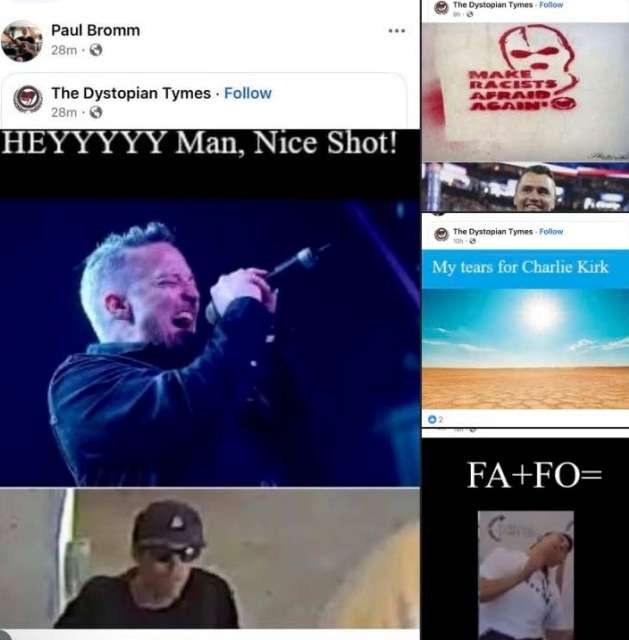
The court dismissed Bromm's First Amendment claim against the individual defendants, finding that it was barred by prosecutorial immunity (as to a prosecutor) and qualified immunity (as to the others). The government defendants didn't move for summary judgment. Here's the underlying post, followed by the meat of the qualified immunity analysis:
When dealing with first amendment retaliation in public employment claims, the question is not whether the right to be free from first amendment retaliation in public employment is clearly established, but "whether the outcome of the Pickering balance so clearly favored [the plaintiff] that it would have been patently unreasonable for the [officials] to conclude that the First Amendment did not protect their speech." The Ninth Circuit has noted that "the law regarding [claims implicating Pickering] will rarely, if ever, be sufficiently 'clearly established' to preclude qualified immunity." Bromm's case is not the exception.
Under the Pickering test, the court first considers whether the employee spoke on a matter of public concern. If so, the court considers whether the government's interest in promoting the efficient provision of public services outweighs the First Amendment value of the speech in question. The second prong is context-specific, and factors in the nature of the employee's role, where and when their speech occurred, the nature of the agency's mission and services, and whether any disruption has occurred or is reasonably likely to occur. On the other side, the Court should consider the relative First Amendment value of the speech—for example, does the speech substantially involve matters of public concern, or is it more akin to an employee grievance? Is it commentary on a matter within the scope of the employee's work-related expertise, entitling it to great weight? Or is it expressed in a derogatory manner, entitling it to less weight? …
[In] Rankin v. McPherson (1987)[, a]fter the attempted assassination of President Reagan in 1981, Arda McPherson, a clerical employee working for the constable's office in Harris County, Texas, remarked to her coworker, "if they go for him again, I hope they get him." Unknown to her, another employee was within earshot and reported the conversation to McPherson's supervisor, Constable Rankin. Rankin … fired [McPherson]….
Although McPherson's statements were made in the workplace, there was no evidence that they had interfered with the efficient functioning of the office …. Constable Rankin testified that the possibility of interruption had not been a consideration in his decision to fire McPherson, nor had he inquired whether the remark had caused any disruption. There also was no evidence that McPherson had discredited the office by making her statement public, or that her statement had been overheard by a member of the public. Considering the non-public, clerical nature of her role and the absence of any disruption to the office's business or public perception, the Court held that McPherson had been fired simply for the content of her speech and the Constable's belief that she was "unworthy" of employment in his agency, and that this was unlawful.
The Court explained that "at some point, such concerns are so removed from the effective functioning of the public employer that they cannot prevail over the free speech rights of the public employee." However, the Court cautioned that even employees with non-public roles could be terminated for their speech if the facts show it "truly injures the public interest," such as where a clerical employee for a law enforcement agency goes on television and identifies themselves as both an employee of that office, and a recruiter for the Ku Klux Klan.
In addition to how public-facing the employee's role is, and the context in which their speech occurs, courts consider the nature of the public employer's business when deciding how much weight to afford their interest in avoiding disruptive speech. For example, the government's interest in reducing tension and maintaining close working relationships among its staff in the context of higher education, where a vigorous exchange of ideas, and any attendant tension or discomfort, is an accepted part of college life. Conversely, courts have recognized a heightened interest in maintaining "discipline, esprit de corps, and uniformity."
The relevance of the employee's speech to the scope of their employment, and the language used, are also relevant factors. For example, the value of government employees' speech on matters relating to the agency or field in which they work has been considered the "apex" of First Amendment protection, such as when teachers speak out on issues in the field of education.
Conversely, derogatory speech will be accorded less weight in the Pickering balance. In Thompson v. Cent. Valley Sch. Dist. No. 365 (9th Cir. 2025), an assistant principal was placed on leave and then demoted for comments he made on Facebook, namely his reaction to the Democratic National Convention, in which he referred to Democrats as "demtards" and suggesting that "the rest of us are sick and tired of your act and going to take you to the woodshed for a proper education." The court concluded that Thompson's post could be construed as commentary on a matter of public concern, but that it was "not speech entitled to the highest constitutional protection" due to the disparaging and violent language used. See also MacRae v. Mattos (1st Cir. 2024) (plaintiff's posts about transgender individuals and immigrants were on a matter of public concern but were entitled to less weigh considering the "mocking, derogatory, and disparaging manner" in which they were conveyed).
Finally, as Rankin made clear, there must be evidence that the speech in question had or will disrupt the employer's operations. A government employer may rely on reasonable predictions of future disruption, even if none has yet occurred, but it must "provide some evidence for the court to evaluate whether the government's claims of disruption appear reasonable." Courts are more likely to accept a government's employer's prediction of future disruption if some disruption has already occurred.
The question now before the Court is whether, in September 2025, it was so "clearly established" that Bromm's interest in sharing memes about the slaying of Charlie Kirk outweighed the County's interests in maintaining the efficiency and public confidence that it would be unreasonable for the defendants to think otherwise. The Court concludes that Bromm has satisfied the first prong of the Pickering test. Viewed in the light most favorable to Bromm, his social media posts constituted commentary on a matter of public concern, namely the assassination of a prominent media figure, and by extension, the views he espoused…. "The inappropriate or controversial character of a statement is irrelevant to the question whether it deals with a matter of public concern." … Bromm asserts he was pushing back against what he viewed as the undeserved lionization of Charlie Kirk.
The second prong is whether it was sufficiently clear to the defendants, at the time of their conduct, that their asserted interests in avoiding disruption to their agencies' operations would be outweighed by Bromm's interest in making these posts.
McCleod argue that Bromm's posts caused disruption to the operations of the coroner's office, threatened to undermine investigations, and brought the coroner's office into disrepute. He has supplied some evidence to that effect. For example, McCleod testifies that he received "multiple calls and emails from citizens complaining about Mr. Bromm's posts." There is also some evidence that Bromm's posts threatened the working relationship between the coroner's office and its partner agencies. Bromm argues that this disruption was not "widespread or sustained," or that it was self-inflicted because the defendants amplified the reach of Bromm's posts, but these are ultimately arguments about how much weight to give the defendants' interests in the balancing test. This is not a case where the government has offered no evidence demonstrating actual or reasonably anticipated disruption such that the defendants' hopes of prevailing under Pickering would have been doomed from the start.
Further, given the public-facing nature of the coroner's office (and of Bromm's role specifically) and the public nature of his comments, the court concludes that it was at least reasonably non-speculative to anticipate that Bromm's statements would cause disruption in the future. Although the coroner's office is not a law enforcement agency, it frequently works alongside law enforcement, and it does occupy a "unique and sensitive position" having "necessary and constant interactions with the public." Bromm's work for the coroner's office was also public-facing, requiring him to interface both with the public and with other agencies….
The defendants also argue, and the Court agrees, that Bromm's posts are entitled to less weight in the Pickering analysis due to their disparaging tone. Some of the posts were memes that Bromm shared, including one with what appears to a photo of the vocalist for the rock band Filter singing with the text "HEYYYYY Man, Nice Shot!" [from a 1995 song -EV] paired with an image of Charlie Kirk's suspected killer. Another combined an image of Charlie Kirk with another photo of the spray-painted words "Make Racists Afraid Again" and the outline of a balaclava. And a third shows the text "FA+FO=" followed by a picture of Charlie Kirk bleeding from his neck. The defendants interpret this as a shorthand for the phrase "fuck around and find out," and Bromm does not dispute this. The defendants also point to a post in which Bromm wrote "I have said it b4- Violence is never the answer but it is part of the equation to get to the answer." … [T]he posts … are plainly mocking and violent in tone. As such, Bromm's posts are entitled to less weight in the Pickering analysis.
On these facts, the Court cannot conclude that McCleod's decision to terminate Bromm violated clearly established law. This conclusion is further supported by the authority cited in the defendants' motion, MacRae and Hussey v. City of Cambridge (1st Cir. 2025), reh'g en banc granted, opinion withdrawn (1st Cir. 2026).
In MacRae, the First Circuit held it was permissible for a school district to fire a teacher who shared social media posts that were derogatory toward transgender individuals and immigrants because it posed a reasonable—if not yet realized—threat of disruption to the classroom environment. And in Hussey the court held that a police officer could be disciplined over social media posts he made disparaging George Floyd because it was reasonable to believe they posed a threat to the department's relationship of trust with the public. {The First Circuit subsequently granted rehearing en banc [in Hussey] but has not yet issued a new opinion. In any case, this opinion was in force during the time in which Bromm's speech and resulting termination occurred, and it is therefore relevant to understanding what a reasonable individual would have understood to be permissible under the law at the time.}
These cases are instructive, particularly because they both held in the government's favor on the merits of the Pickering analysis. As noted, the inquiry for purpose of qualified immunity is not whether the government's anticipation of disruption was reasonable, but whether it was "patently unreasonable," a more lenient standard than the one under which the defendants prevailed in MacRae and Hussey….
I discuss the court's dismissal of the doxing claim in a separate post.
David Edward Bailey (Lewis County Prosecutor's Office) and Elena C. Bundy and Kristofer John Bundy (Bundy Law Group PLLC) represent most of the individual defendants; W. Sean Hornbrook and Jessie L. Harris (Williams Kastner) represent one of the individual defendants.




