

The Volokh Conspiracy
Mostly law professors | Sometimes contrarian | Often libertarian | Always independent
Carnegie Mellon Must Provide Discovery About Relationship with Qatar, in Ex-Student's Lawsuit Alleging Anti-Semitism
The student was explaining the concept of an eruv, a feature of certain Jewish neighborhoods, in class to an architecture professor, who allegedly said the time the student had spent on project "would have been better spent if [Ms. Canaan] had instead explored 'what Jews do to make themselves such a hated group.'" …
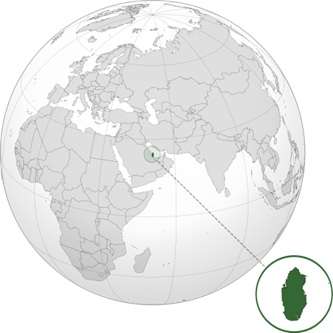
The case is now in discovery, and in yesterday's Canaan v. Carnegie Mellon University, Judge Scott Hardy (W.D. Pa.) allowed a considerable amount of discovery about CMU's relationship with Qatar, where it has a major campus. [UPDATE: For more on the underlying substantive dispute, see this post and this post.] The court concluded the requested discovery was generally relevant (this is just an excerpt from a very long opinion):
Qatari interests partially fund the position of Elizabeth Rosemeyer, because she serves both CMU's Main Campus and its Doha campus as Assistant Vice Provost for DEI and Title IX Coordinator…. Rosemeyer is an integral participant in Canaan's case. She is referenced repeatedly in the Complaint, notably as one of several CMU officials specifically responsible for enforcing CMU's anti-discrimination policies and protecting students from discrimination and harassment. Importantly, Canaan specifically alleges that Rosemeyer aggressively discouraged her from filing a formal complaint, which would have triggered an investigation of Professor Arscott's purported discriminatory mistreatment of her, as well as of the DEI Office's failure to address the misconduct and of Professor Issaias's purported retaliation.
Although CMU downplays any possible Qatari influence in its partial funding of Rosemeyer's position by averring that she was hired by its then Vice-President of Operations and not by any Qatari donor, entity, or representative, such point merely generates, at most, a potential factual dispute about whether or to what extent Qatari funding of Rosemeyer's position and Qatari "consultation" during CMU's identification, review, and selection of Rosemeyer may have influenced Rosemeyer's handling of Canaan's complaints of discrimination, harassment, and retaliation….
Importantly, another relevant connection between Canaan's Title VI claims and CMU's Doha campus is that at least three CMU DEI-related officials involved in Canaan's complaints of antisemitism had work-related visits to CMU's Doha campus. Wanda Heading-Grant, CMU's Chief Diversity Officer, visited the Doha campus twice, once to provide training and education programs regarding "civility, bias, discrimination" and "belonging and inclusion, leadership [and] listening" along with a "couple of other members from [her] office" and a second time for a "professional development engagement." Mark D'Angelo¸ another senior CMU administrator responsible for antidiscrimination efforts, similarly visited the Doha campus for such training. D'Angelo describes the purpose of his visit as follows:
I was there to facilitate—I was there to learn as much as I could about their campus culture and their context and meet colleagues that work in that global campus and also I was there to facilitate the implicit bias workshop and help give some of those staff and facilities the tools to maybe have similar conversations in their context once we were gone, empower them to support their community in the best way.
D'Angelo further describes the workshops and training he helped to facilitate as involving "bias, explicit [sic] bias, how it shows up in system structures, systems of oppression and supporting their community and learning their specific cultural context." {Certain language D'Angelo uses to describe topics covered in CMU's CMU-Q training workshops, such as "systems of oppression," is an ill-defined expression that may extend beyond the scope of protected categories Congress placed in the text of Title VI, Title VII, and Title IX, yet it resembles language contained in the blog "The Funambulist" that Professor Arscott is accused of sending to Canaan for "insightful … perspective" in the context of Professor Arscott's purported refusal to apologize to Canaan, which reads: "[Y]ou never make concessions to the oppressor. If you're going to get punished, and you might, if you piss off Zionists, its always a possibility, right, then stare the oppressor in the face, and take whatever punishment is coming. Don't concede, don't start apologizing … The Palestinians aren't backing down, nor should we … [we] do not make concessions to the oppressor."}
In addition to visiting the Doha campus, D'Angelo also had regular monthly conversations with the "inclusive excellence officer" at the Doha campus. CMU assigns an "inclusive intelligence officer" to every academic unit or college, including CMU-Q, "who's role in some portion is dedicated to doing diversity, equity and inclusion work in their own sphere of influence or college." …
Accordingly, discovery requests seeking to elicit information regarding visits taken to the Doha campus and the contents of any visits, trainings, workshops, and other communications involving CMU's DEI officials … are also highly relevant, as are the "conversations" and other interactions between CMU-Q's "inclusive excellence officers" and D'Angelo and other DEI officials at CMU's Main Campus. Furthermore, there is sufficient basis in the record to conclude that there is enough interaction between the DEI officials at CMU's Main Campus and administrators at its campus in Doha to deem relevant any available particularized accounting for the funding for, as well as the content of, all trainings, workshops, and other communications at or for CMU's Doha campus that involved Main Campus administrators related to discrimination, bias, diversity, equity, belonging and inclusion, and any similar topics regardless of title, euphemism, or label used to describe them.
In relation to faculty selection and support, the CMU-Q Agreement provides that CMU must use its best efforts to ensure that at least half of all faculty at CMU's Doha campus come from existing ranks at its Main Campus, and as a long term goal, CMU must use its best efforts to ensure that at least two-thirds of its Doha faculty come from its Main Campus and serve in Qatar for terms of at least three consecutive years. Additionally, CMU is provided $3 million annually to qualifying facility in Qatar for "seed research funding."
Moreover, CMU's Cooperation Agreement creates the QIA Center, through which CMU receives funding from QIA to support research efforts of CMU-Q faculty in so far as such research aligns with Qatar's "2030 Vision" and "National Development Strategy (2018-2022)." QIA also supports CMU-Q in developing a lecture series with the "input and assistance of subject matter experts from QIA, including guest lecturers, in each case as requested by CMU-Q and as determined appropriate by QIA …." The benefits Qatar has been providing to CMU and its faculty through the CMU-Q Agreement and Cooperation Agreement, along with Qatar's contractual right to influence the content of the research and lectures, is probative of Qatar's possible influence over CMU's motives and intentions and thus may be of consequence in Canaan's Title VI claims.
Importantly, "[a]ll faculty and staff who are hired in the United States to work in the State of Qatar shall participate in an extensive orientation program in Doha designed to orient them to the culture in the State of Qatar and to CMU-Q." So, the faculty at CMU-Q are mainly from its Main Campus, and certain of these faculty members are supplied with research funding.
Notably, Canaan avers that her primary discriminator, Professor Arscott, "spent professional time in Qatar." Professor Arscott testified that she was "running a workshop" for the American universities in Qatar and "collaborating with faculty from the School of Design and faculty who taught alternative semesters at [CMU-Q and Main Campus], who taught architecture as a non-major in Qatar." Accordingly, discovery requests seeking to elicit information about Professor Arscott's time in Qatar, including any orientation she received pursuant to § 4.4 of the CMU-Q Agreement, is also highly relevant.
Also highly relevant is information about any Qatari funding Professor Arscott received to cover her expenses generally for visiting Qatar or funding received specially for research or programs pursuant to the Cooperation Agreement or for "seed research" pursuant to § 4.7 of the CMU-Q Agreement. Moreover, given the averments regarding Professor Arscott's position, influential role, and relationships with her fellow professors and CMU's DEI administrators, any such funding, orientation, instruction, or other connection between Qatar and other members from CMU's Department of Architecture is also highly relevant….
The CMU-Q Agreement and Cooperation Agreement, along with the engagement Professor Arscott and CMU DEI officials have had with CMU's Doha campus, demonstrably tend to make it more probable that CMU's relationship with Qatar may have influenced CMU's policies, practices, and actions related to issues consequential in this case, such as its motivations and intentions for how it handles complaints lodged by students concerning antisemitism by faculty and staff. Even the provisions identified by CMU that contractually empowered it to have full operational control of the Doha campus according to its own policies, core values, and principles, including those relating to non-discrimination, which tend to make Canaan's contentions of discriminatory influence less probable, still supports a relevance.
The court concluded that some of Canaan's discovery requests may have been too burdensome and attenuated, but ultimately concluded that she was entitled to discovery of, among other things,
- Any direction, guidance, communications, and other information [CMU] DEI officials and "inclusive intelligence officers" provided to [or received from] CMU-Q [CMU's Qatari program] pertaining to compliance with laws, regulations, policies, procedures, and practices relating to discrimination, bias, diversity, equity, belonging and inclusion, "systems of oppression," "culture" and "specific cultural contexts," and any similar topics regardless of title, euphemism, or label used to describe them (generally, "nondiscrimination and DEI-related" laws, regulations, policies, procedures, and practices)….
- Any direction, guidance, communications, and other information [CMU] DEI officials and "inclusive intelligence officers" received from CMU and/or Qatar and its affiliates or delegates, pertaining to CMU-Q's "culture and context," along with communications, collaborations, and other efforts reflecting if or how such direction, guidance, or other information was incorporated into, influenced, or otherwise was considered in the development, maintenance, and implementation of CMU's various nondiscrimination and "DEI-related" policies, procedures and practices.
- The meetings, gatherings, "conversations," and other communications (whether in-person, virtual, telephonic, or electronic) by and between CMU-Q's DEI officials or "inclusive intelligence officers" and any of CMU's DEI-related officials, and/or faculty or staff from CMU's Department of Architecture.
- The visits taken to CMU's Doha campus (or Education City in Qatar, generally) by any of CMU's DEI-related officials, Professor Arscott, or any other faculty or staff member from CMU's Department of Architecture.
- The contents of any trainings and workshops offered at or for CMU's Doha campus, and communications regarding same, in which Professor Arscott or any of CMU's DEI officials and "inclusive intelligence officers" participated] ….
- Any instruction, guidance, training, or other orientation programs designed or used to orient faculty and staff members to the culture in the State of Qatar and to CMU-Q [or the obligation] … to abide by laws and regulations of the State of Qatar and to respect the cultural, religious, and social customs of the State of Qatar.
- The particularized accounting of funds received from Qatar or its affiliates or delegates for Elizabeth Rosemeyer's position, any "consultation" CMU had with Qatar or its affiliates or delegates during Rosemeyer's "candidate identification, review, and selection process[,]" Rosemeyer's job functions and responsibilities at each respective campus, and any orientation and instruction or other guidance Rosemeyer received from CMU and/or Qatar or its affiliates or delegates, directly or indirectly, for performing her duties pertaining to CMU-Q.
- The particularized accounting of "seed research funding," other research, lecture, or program funding, or other funding or expense coverage or reimbursement provided by Qatar, its affiliates or delegates, directly or indirectly, to Professor Arscott or others within CMU's Department of Architecture.
- Reports and disclosures previously made to the U.S. Department of Education pursuant to Section 117 of the Higher Education Act of 1965, 20 U.S.C. § 1011f, relating to CMU's relationship with Qatar and its affiliates or delegates.
The court also concluded that CMU had to generally produce information about "the full economic benefit received from its Qatari relationship, comprised of an aggregate number inclusive of the value of Qatar's provision of CMU's campus and infrastructure in Doha, along with annualized 'Allowable Costs' and other specified payments made pursuant to the CMU-Q Agreement."




