

The Volokh Conspiracy
Mostly law professors | Sometimes contrarian | Often libertarian | Always independent
Second Amendment Protects Right to Open Carry, Ninth Circuit Panel Holds (2-1)
If the decision doesn't go en banc, it may go to the Supreme Court, because the Second Circuit held the opposite (and there's thus a circuit split).
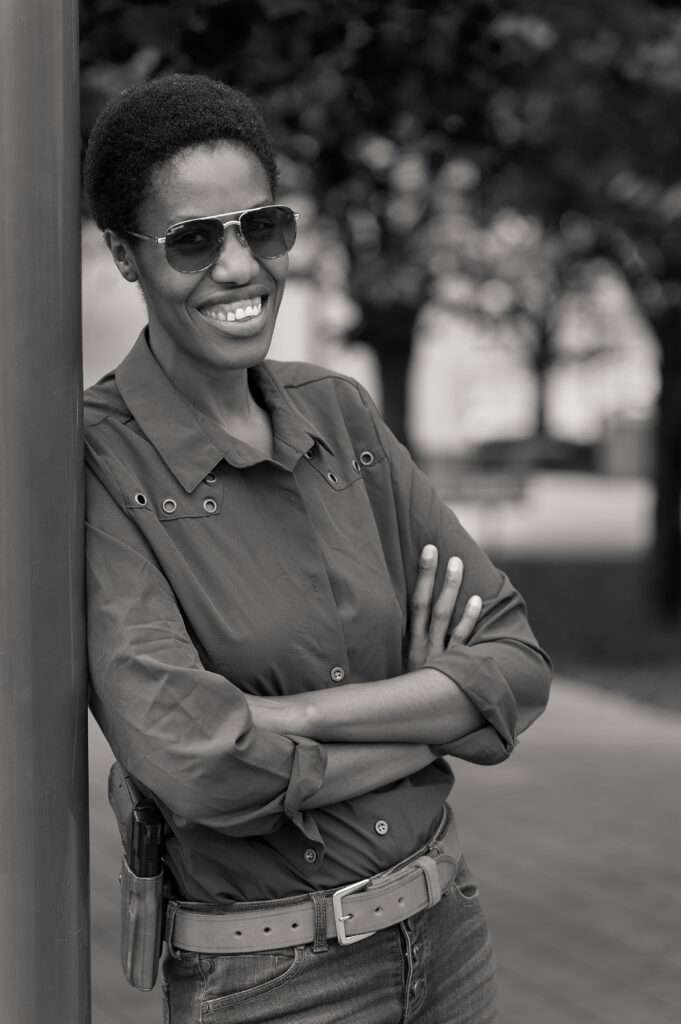
A short excerpt from today's very long opinion in Baird v. Bonta by Judge Lawrence VanDyke, joined by Judge Kenneth Lee:
This case arises out of Appellant Mark Baird's civil rights lawsuit against the Attorney General of California, Appellee Rob Bonta. Baird is a law-abiding citizen who wishes to openly carry a firearm in California, yet California has banned open carry in all counties with populations greater than 200,000. According to the most recent census, those counties are home to roughly 95% of the state's population. The 5% of California's population for whom open carry is not outright banned everywhere in the state are purportedly able to apply for a license that would allow them to exercise their constitutional right to open carry in just their county of residence, although their ability to secure even that license is, on the record before us, at best unclear….
We agree with Baird that California's ban on open carry in counties with a population greater than 200,000 fails under Bruen, and we reverse the district court's grant of summary judgment on this issue. With respect to Baird's as-applied and facial challenges to California's licensing requirements in counties with populations of less than 200,000, we conclude that Baird waived his as-applied challenge by not contesting the district court's dismissal in his opening brief and that Baird's facial challenge fails on the merits on the record of this case….
For most of American history, open carry has been the default manner of lawful carry for firearms. It remains the norm across the country—more than thirty states generally allow open carry to this day, including states with significant urban populations. Indeed, several of our Nation's largest cities and states recently returned to unlicensed open carry by explicitly authorizing it. For example, Texas reauthorized open carry without a license in 2021. Kansas likewise transitioned back to allowing open carry without a permit in 2015. And other states that placed restrictions on open carry in recent decades have also removed those burdens.
Similarly, for the first 162 years of its history open carry was a largely unremarkable part of daily life in California. From 1850, when California first became a state, until the Mulford Act of 1967, public carry of firearms in California (open or concealed) was entirely unregulated….
Faced with this extensive historical support for the conclusion that open carry and concealed carry have never been treated as fungible under the Second Amendment—and the complete absence of any historical precedent for the opposite conclusion—the dissent basically musters one response: "Bruen controls." How? Because Bruen said "history reveals a consensus that States could not ban public carry altogether."
We wholeheartedly agree with the dissent that Bruen expressly forbids States from "ban[ning] public carry altogether." Where we apparently disagree is that we do not read that statement as somehow meaning the opposite—that so long as a state does not "ban public carry altogether," it can do whatever else it wants without violating the Second Amendment. Respectfully, that is not only a basic logical error, but also obviously a wrong way to interpret language in Supreme Court opinions. If the Supreme Court said, "States cannot ban speech altogether," nobody would think it was also implicitly saying that as long as the state allows some speech, it necessarily can ban all other speech. Instead, lower courts would analyze partial speech restrictions under the various rubrics the Supreme Court had provided for doing so.
Here, in addition to directly addressing the relatively easy and narrow circumstance where a state attempts to "ban public carry altogether" (easy answer: it can't), the Court in Bruen also told us how to analyze other situations where the state imposes firearms restrictions short of a complete public carry ban. As our court has now repeatedly recognized, in that circumstance we need to look to the "historical tradition of firearm regulation." The dissent's attempt to short-circuit or predetermine that historical analysis by asserting that Bruen has already directly decided the question presented in this case fails from the get-go. It clearly misreads one statement from Bruen, and then uses that misreading to justify failing to do the historical analysis Bruen expressly prescribed.
The Second Circuit committed a similar error by recently upholding New York's open-carry ban in Frey v. City of New York (2d Cir. 2025). The Second Circuit's analysis relied on a similar misreading of Bruen, as well as approaching historical evidence at too high a level of generality. Like the dissent here, the court there claimed that Bruen treated open carry and concealed carry as fungible, quoting Bruen for the proposition that states "'could lawfully eliminate one kind of public carry—[open carry or] conceal carry—so long as they left open' the other option." But again, that transparently is not what the Supreme Court said in Bruen—indeed, it is telling that the Second Circuit had to modify the Court's language to support its holding. Unaltered, the quotation from Bruen reads: "States could lawfully eliminate one kind of public carry—concealed carry—so long as they left open the option to carry openly."
The Second Circuit then cited a number of historical state laws and cases that upheld concealed-carry bans. Ignoring the fact that not a single one of its examples involved an open-carry ban, the court described these laws and cases as "evinc[ing] a strong historical tradition of regulating, and often criminalizing, one manner of public carry, so long as the government does not 'altogether prohibit public carry.'" The court's own examples demonstrate the flaw in its logic: because those examples upheld concealed-carry bans for reasons unique to concealed carry, they are not "relevantly similar" to New York's open-carry ban. As described above, Chandler (one of Frey's examples) was concerned with "secret advantages and unmanly assassinations" "committed upon unsuspecting persons." Likewise, Reid's rationale was that "it is only when carried openly, that [arms] can be efficiently used for defence." Interpreting these cases—like the Second Circuit did—as supporting a tradition of banning, on generic safety grounds, whatever type of carry the legislature wishes is precisely what Bruen's analogical approach forbids. Instead, a correct understanding of Bruen and of our historical tradition of firearm regulation leads inevitably to the conclusion we reach today….
Judge Randy Smith dissented as to the striking down of the open carry ban in counties of over 200,000 people; again, a short excerpt from the long opinion:
Bruen controls this case. Not because Mark Baird brings a Second Amendment challenge, but because Baird challenges a public carry restriction. Bruen was a public carry case. The Supreme Court held that New York—which banned open carry—could not constitutionally require proper cause for a concealed carry license because "history reveals a consensus that States could not ban public carry altogether." California does not "ban public carry altogether." Californians may publicly carry in a concealed manner throughout the state and in an open manner in less populated counties. California's restrictions on open carry in more populated counties are thus constitutional….
The Supreme Court has interpreted the plain text of the Second Amendment to include either open or concealed carry. Heller defined the "natural meaning of 'bear arms'" as to "wear, bear, or carry … upon the person or in the clothing or in a pocket, for the purpose … of being armed and ready for offensive or defensive action in a case of conflict with another person." Carrying "in the clothing or in a pocket" suggests concealed carry, whereas wearing "upon the person" suggests open carry. Heller included both concealed carry and open carry in its definition of "bear arms." That disjunctive definition is also reflected in Bruen's discussion of "public carry," which clarified that it includes both concealed carry and open carry.
According to Heller's definition, so long as one may "bear arms" by carrying "upon the person or in the clothing or in a pocket," there is no restriction on the Second Amendment right. Because concealed carry is permitted everywhere in California, there is no infringement on the plain text of the Second Amendment. The people of California may keep and bear arms throughout the state in a concealed manner.
As the Supreme Court has stated in each of its recent major Second Amendment opinions, "[f]rom Blackstone through the 19th-century cases, commentators and courts routinely explained that the right was not a right to keep and carry any weapon whatsoever in any manner whatsoever and for whatever purpose." To provide that individuals must conceal their weapons as they carry them is a restriction on the manner of carry, not a restriction on the right to bear arms or to carry in public. Baird's challenge should have been rejected on the basis that his proposed conduct is not covered by the Constitution's plain text….
However, even if Baird had successfully argued that open carriage fell within the plain text of the Second Amendment, the Nation's "historical tradition of firearm regulation" provides an independent reason to reject his challenge…. [T]he nineteenth-century concealed carry bans proffered by California burdened the Second Amendment in a distinctly similar way to the challenged regime for distinctly similar reasons. The historical laws mirror both the "how"—eliminating one manner of public carry—and the "why"—reducing violence and protecting the safety of citizens—of California's regime….
My colleagues focus on the fact that the historical laws restricted only concealed carry. Yet, evaluating the same examples, Bruen drew a more general conclusion: "history reveals a consensus that States could not ban public carry altogether." Given the common difficulty in discerning the appropriate "level of generality" with which to evaluate history after Bruen, the best course in this case is to adopt the level of generality used by Bruen itself. Using Bruen's level of generality is by definition not "a level of generality that is much too high." …
The reasoning of the historical laws—the "why"—is also similar to California's regime. The historical laws eliminated one manner of public carry in accordance with the cultural perception of what type of carry was more peaceable. States banned concealed carry because it "was seen as a dubious practice characteristic only of thugs, robbers, duelers, and other deplorables," as compared to open carry, which was viewed "as appropriate for honest citizens." …
A state may not prohibit the public carriage of firearms by eliminating both open and concealed carry, but a state can lawfully eliminate one manner of carry to protect and ensure the safety of its citizens, as long as they are able to carry in another manner. Permitting states to place restrictions only on concealed carry misreads Bruen and requires a historical twin rather than a historical analogue. No such twin is required to comport with the Constitution….
For some thoughts on whether, even following Bruen, a gun control measure should be upheld (even absent historical analogues) when it's seen as imposing only a modest burden on the right to bear arms, see pp. 1956-62 of my Implementing the Right to Keep and Bear Arms After Bruen. (Of course, people differ on whether open-carry bans do indeed impose only a modest burden.)
Amy L. Bellantoni (Bellantoni Law Firm PLLC) represents plaintiff.




