
An Astronaut Took Tree Seeds to the Moon and Back. They Were Planted on Earth—and Then Forgotten About.
A third-grade class project helped start an effort to identify and document "moon trees" throughout the country.
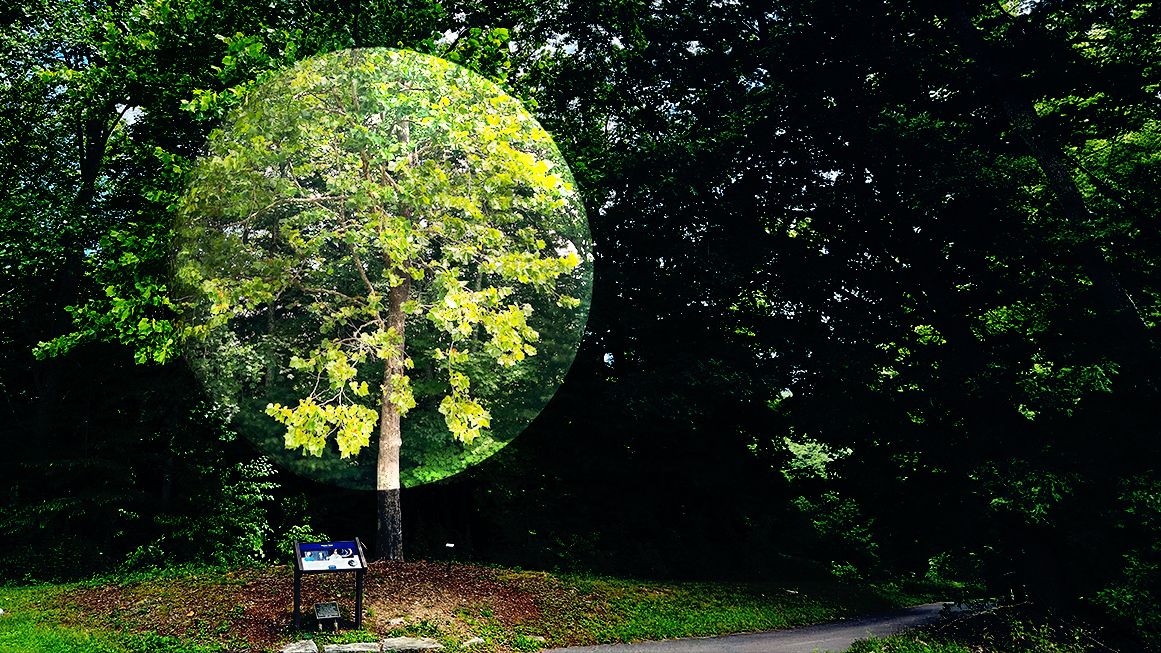
As you ascend the wooded slope that leads to Arlington National Cemetery's Tomb of the Unknown Soldier, you will pass an American sycamore. The tree is thick and towering, its leafy limbs sagging back toward the Earth. It is easy to miss among the cemetery's 9,800 other trees, completely unremarkable apart from an index-card-sized silver placard drilled into its midsection: Platanus occidentalis, American Sycamore, Moon Tree.
This American sycamore watches over the grave of Apollo 14 astronaut Stuart A. Roosa. As a seed, its parent traveled hundreds of thousands of miles from Earth in Roosa's care—only the beginning of an incredible journey.
Before Roosa became an Air Force pilot and one of the two dozen Apollo astronauts to reach the moon, he worked as a smokejumper for the U.S. Forest Service. According to NASA, an old colleague "contacted him about bringing seeds into space," hoping to study whether the journey would affect their growth. Roosa obliged and carried hundreds of seeds in his personal kit in February 1971. As astronauts Alan Shepard and Edgar Mitchell explored the lunar surface, Roosa, the command module pilot, remained in orbit with the seeds. … [Subscribe to continue reading]
Read the full story when when you subscribe to Reason Plus.
Free minds and free markets: Independent journalism on politics, culture, and ideas since 1968.
Become a subscriber
Digital access for $25/year
Unlimited online access & the magazine
- Every article, every issue, every archive going back to 1968
- The print or digital edition delivered monthly
- Subscribers-only newsletter from the editor
- Listen to every article with our audio player
Cancel anytime. Or give a Reason Plus subscription as a gift..
Already have an account?
Log in to keep reading.
Log In
Enter the code from your authenticator app to finish logging in.
You're already a member. Log in to keep reading.
We sent this story to your inbox because you're one of our subscribers. One quick login and you'll be reading in seconds.
- Your subscription includes digital access
- Log in once and stay logged in for 1 year
- Resume reading exactly where the email left off