Review: Argentina's Monetary History on Display in a Museum
The Central Bank Museum in Buenos Aires chronicles the progression from cocoa beans to volatile pesos.
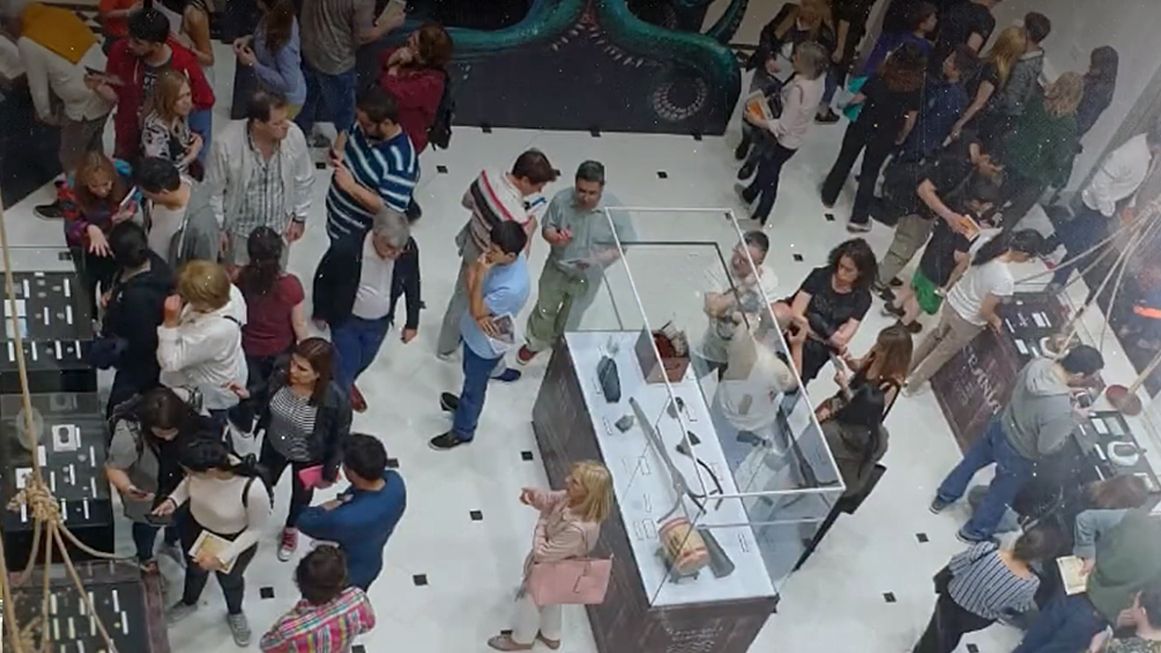
Located a stone's throw from the Central Bank of Argentina in Buenos Aires, the Museo Histórico y Numismático Héctor Carlos Janson, also known as the Central Bank Museum, tells the story of a country plagued by hyperinflation.
The permanent exhibition is located on the first floor, where six rooms display Argentine currency throughout history, plus the tools used to create them. The exhibit begins with the pre-European economy, in which natives used cocoa beans, cowrie shells, and small pieces of metal as units of exchange. Colonial-era coins were minted in Bolivia. One has "VTRAQUE VNUM" written on the front, meaning "Both Are One," referring to Spain and its colonies.
As the exhibit moves on to 19th and 20th century currencies, the economic chaos is evident: The display contains 1 peso notes, 10 peso notes, and 50 peso notes, all the way up to the hyperinflation-era 1,000 peso notes. Under President Juan Perón, government spending increased substantially, and deficits were increasingly financed through the Central Bank, which increased the money supply, accelerating inflation. … [Subscribe to continue reading]
Read the full story when when you subscribe to Reason Plus.
Free minds and free markets: Independent journalism on politics, culture, and ideas since 1968.
Become a subscriber
Digital access for $25/year
Unlimited online access & the magazine
- Every article, every issue, every archive going back to 1968
- The print or digital edition delivered monthly
- Subscribers-only newsletter from the editor
- Listen to every article with our audio player
Cancel anytime. Or give a Reason Plus subscription as a gift..
Already have an account?
Log in to keep reading.
Log In
Enter the code from your authenticator app to finish logging in.
You're already a member. Log in to keep reading.
We sent this story to your inbox because you're one of our subscribers. One quick login and you'll be reading in seconds.
- Your subscription includes digital access
- Log in once and stay logged in for 1 year
- Resume reading exactly where the email left off