

The War on Gifted Education Is Hurting Poor Kids
Schools are ending gifted and talented programs in low-income areas, leaving “kids who are poor but academically gifted” to “suffer the worst of both worlds,” says education researcher Michael Petrilli.
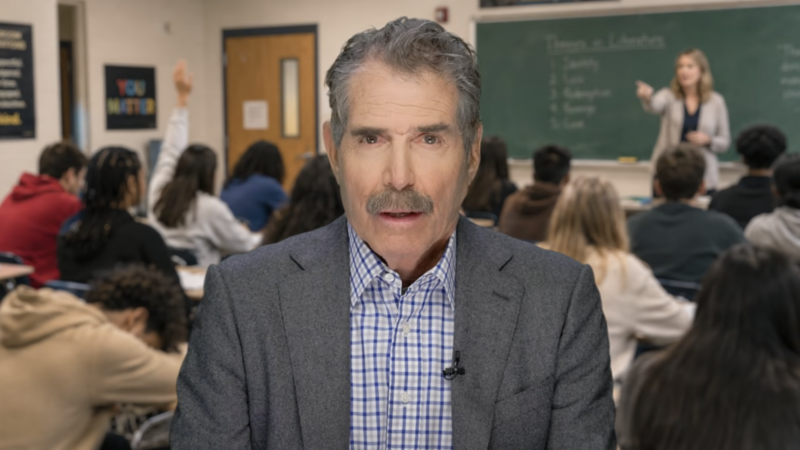
Schools are ending gifted and talented programs. They will no longer separate kids by ability.
Why?
To address "inequity."
"This is so misguided," says education researcher Michael Petrilli in my new video. "These equity people say, 'Oh, we're against gifted education.' At the same time, they're upset that universities aren't very diverse. Guess what? The [equity advocates] are a big part of the problem. They stand in the way of kids of color and low-income kids getting what they need in elementary and middle and high school so they could compete."
Different level classes haven't always been controversial. Testing, then putting kids on different tracks was standard when I was in school.
"It's super hard to teach reading to everybody if some don't know their letters and others are reading Harry Potter," says Petrilli.
The change began in 1985, when education theorist Jeannie Oakes wrote Keeping Track, a book that complained that tracking students created racially segregated classrooms.
Instead of tracking, teachers are supposed to use something called "differentiated instruction" to address different skill levels—adapting methods and expectations to match each student's learning ability.
"Differentiating instruction!" laughs Petrilli. "Magically, you look out at 30 kids and figure out how to teach them all at the same time….This led to a big anti-tracking movement, a big effort to get rid of ability grouping, to just say kids should be mixed together all the time."
I point out that richer parents sometimes hire tutors, and a result is that "disproportionate numbers of white and Asian kids get that fast-track education."
"But it is not mostly about race," replies Petrilli. "It really is mostly about class, family structure, culture."
"Many Asian kids came from severe poverty, and do well," I note.
"Regardless of how poor they tend to be," agrees Petrilli, "culture matters, family matters…a lot….Where this has been shut down is mostly in our poorest neighborhoods. There, you've got kids who are poor but academically gifted, and they suffer the worst of both worlds."
In New York City, former Mayor Bill de Blasio removed the gifted test, saying teachers and administrators should recommend which kids are fast-tracked. Activists said the tests "exclude kids because they're poor."
But Petrilli says, "There's a lot of evidence that [recommendations] are biased, while tests are much less biased."
That's true. A study by the National Bureau of Economic Research shows universal screening leads to "large increases in…economically disadvantaged students and minorities placed in gifted programs."
At what age should tracking start?
My current mayor, Zohran Mamdani, wants to get rid of gifted classes until third grade.
"It actually is reasonable," says Petrilli, "but you need to make sure that you have something for kids, including kindergartners, who show up highly advanced….It doesn't help any of us if kids are coming to school and sitting bored in class because we're not teaching them anything new."
I tried to interview anti-tracking activists to ask why they think racial equity is so much more important than letting smart kids excel. Not one we contacted would agree to an interview.
Today's ideologues rarely want to debate the other side.
COPYRIGHT 2026 BY JFS PRODUCTIONS INC.




