
You Don't Have To Like Kanye West To Hate His Ban From Britain
The British government has stopped the rapper from headlining at the London Wireless music festival. Why is that the British government's business?
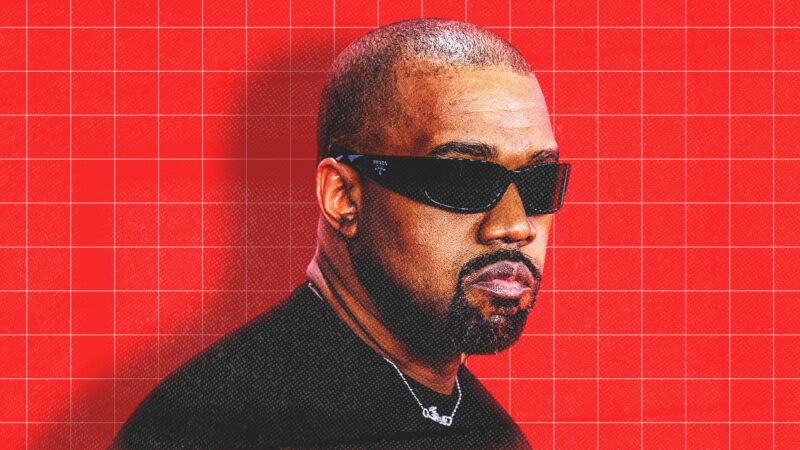
Ye, the artist formerly known as Kanye West, has been barred from entering the United Kingdom over his history of antisemitic statements. He was expected to headline Wireless Festival in North London in July, which has since been cancelled.
West, who is undoubtedly one of the most influential artists of his generation, has had his career derailed by his racist comments. In 2022, he tweeted, "I'm going death con 3 On JEWISH PEOPLE." In 2025, he began selling swastika T-shirts and subsequently released the track "Heil Hitler." However, in January 2026, West took out an advertisement in The Wall Street Journal apologizing for his antisemitism, saying he was "not a Nazi or an antisemite," and that his outbursts were the result of his bipolar disorder.
This apology was not enough for the British government. "Kanye West should never have been invited to headline Wireless," Prime Minister Keir Starmer wrote in a Tuesday X post. "This government stands firmly with the Jewish community, and we will not stop in our fight to confront and defeat the poison of antisemitism."
But in vowing to "confront and defeat the poison of antisemitism," the U.K. government is overstepping and infringing on free speech. Unfortunately, this is a common occurrence in modern Britain. As a result of Section 1 of the Malicious Communications Act 1988 and Section 127 of the Communications Act 2003, which make it illegal to share content of a "grossly offensive or of an indecent, obscene, or menacing character" online, authorities have routinely rounded people up for their online activity. In 2023, police forces across England and Wales made 12,183 arrests (about 33 per day) for offensive online speech.
"Free speech is always difficult. It presents you with moral dilemmas…Kanye West has absolutely, notoriously, internationally renowned, mad, and disgusting views. But that's not the same as saying that his music, what he is going to perform at a festival, is something that the government of a country should be involved in," Claire Fox, member of the House of Lords, tells Reason.
Last year, the Northern Irish band Kneecap was allowed to perform at Glastonbury Festival, despite shouting "up Hamas, up Hezbollah" and telling their audience in 2023 that "the only good Tory is a dead Tory. Kill your [member of parliament]." Despite allowing the performance to take place, the U.K. government subsequently attempted to charge a member of the rap group for terror following his alleged display of a Hezbollah flag at a separate O2 concert.
Fox describes the move to ban Ye from entering the U.K. as "performative," especially seeing as the government has refused to designate Iran's Islamic Revolutionary Guard Corps as a terrorist organization (even though the U.S. and E.U. have) and has "brought in an official definition of anti-Muslim hostility, which will chill any criticism of home-grown Islamist prejudice against Jews." This government's official definition of Islamophobia, which was released in March, has been criticized for being overly broad and creating a de facto ban against all critical speech of Islam. The Free Speech Union, a free speech public interest body, is bringing a judicial review challenging the definition.
"The UK's government is easily convinced to exercise the broad discretionary powers it is granted by law to punish people for what they say, both in an immigration context and in a domestic law enforcement context," Preston Byrne, a tech and free speech lawyer and senior fellow at the London-based Adam Smith Institute, tells Reason.
"What happened to Ye in a border control setting is the same thing that happens to people like Graham Linehan, Andrew Bridgen, Allison Pearson, J.K. Rowling, and tens of thousands of other Britons each and every year who are targeted by either petty complainers or political campaigners who seek to call down the power of the state to regulate the marketplace of ideas," he adds.
Byrne, alongside Michael Reiners and Elijah Granet, has published a "Free Speech Bill," a document aiming to create protections for free speech in the U.K. The model legislation proposes repealing or amending the laws that have caused arrests over free speech, and adopting a Brandenburg test for incitement, which only restricts speech that is "likely to incite…imminent lawless action."
Ye's comments may have been distasteful, but Brits could have voiced their opposition by simply not attending the festival. Instead, the government stepped in, assuming even more power over speech in the United Kingdom. Ye haters may applaud this intervention now, but the precedent it sets can just as easily be used against them.
